
 简体中文
简体中文 Deutsch
 日本語
日本語 한국어
한국어 Tiếng Việt
 Русский
 ไทย
ไทย Bahasa Indonesia
 Bahasa Melayu
 Filipino
 لالعربية
 Français
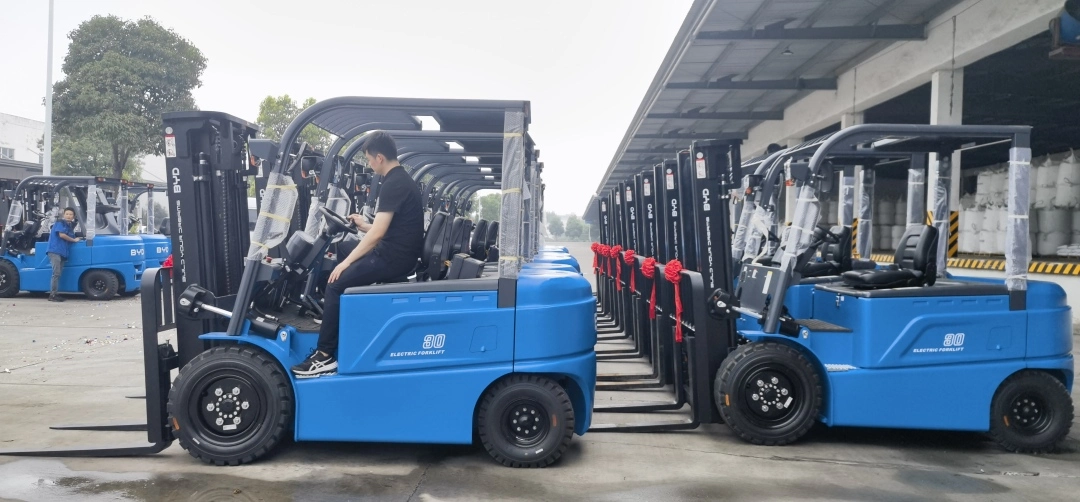
Driving performance Actual landing performance
Basic PTO Performance
In the daily no-load state, the vehicle's speed increase is linearly controllable, and the speed range of different gears is clearly divided, which can adapt to the management requirements of limiting the driving speed in the factory area. The power output remains stable under heavy load, and there will be no sudden power climb. There will be no unnecessary frustration during driving, and it can adapt to the power requirements of conventional handling scenarios.
Different road surface adaptation performance
When driving in a flat epoxy floor operation area, the overall bumping amplitude of the car body is small. When passing through obstacle sections such as splicing joints and small speed bumps, the shock absorption structure can effectively filter excess vibration and reduce the impact of the shaking of the car body on the cargo carried. When driving in a slightly sloped ramp area, there will be no abnormal situation of rolling, meeting the traffic needs of ordinary factory ramps.
Battery life and energy performance
Under the eight-hour operation scenario of conventional warehousing, the remaining power of the vehicle is sufficient, the daily power replenishment operation process is simple, and the energy consumption performance is adapted to the operation requirements of high-frequency and short-distance handling, which can reduce the waiting consumption during non-operation periods and improve the overall operation circulation efficiency.
Comprehensive feedback of actual operation experience
Manipulation fluency performance
The vehicle's steering resistance is moderate, and repeated steering operations for a long time will not place too much burden on the operator's hands. The lifting and lowering lever travel is reasonable, allowing the operator to accurately control the height of the fork and adapt to the operation accuracy requirements of different stacking scenarios. The operation response speed meets the expectations of daily operations.
Detailed performance of human-machine adaptation
The adjustment range of the seat covers the needs of operators of different heights, and the layout of the peripheral operation buttons conforms to the operating habits of most people. It doesn't take a long time to get used to it. The front field of view of the car body is wide, and the surrounding obstacles are observed during driving. The clarity is sufficient to reduce the operation troubles caused by visual blind spots.
Safety redundancy design performance
The various prompt signs of the vehicle configuration are clear, and the early warning feedback when encountering abnormal conditions is timely, which can assist the operator to avoid common operation risks, reduce the hidden dangers of daily handling operations, and also help the operator to quickly develop standardized operation habits.


