简体中文
简体中文 Deutsch
 日本語
日本語 한국어
한국어 Tiếng Việt
 Русский
 ไทย
ไทย Bahasa Indonesia
 Bahasa Melayu
 Filipino
 لالعربية
 Français
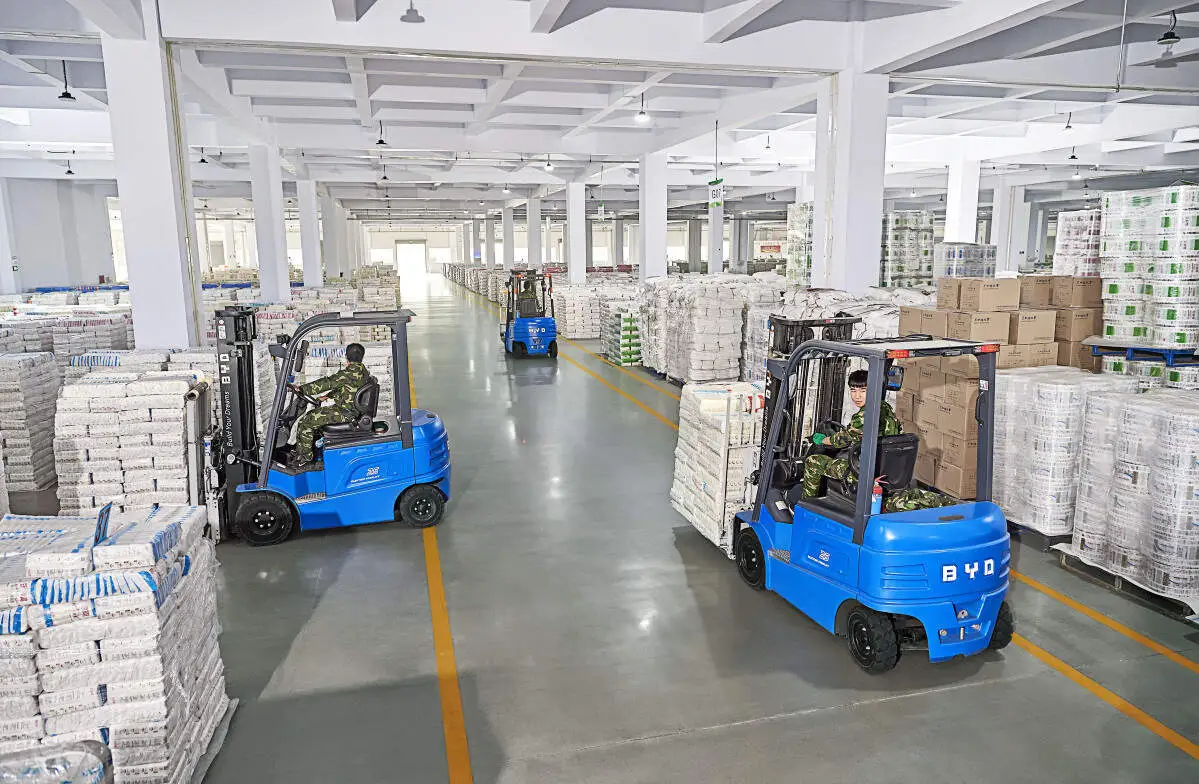
Basic inspection points before daily homework
Door frame system inspection
The high gantry is the core component of the forklift loading operation. Before each operation, check whether the gap between the gantry slide rails is uniform, whether there are any stuck foreign objects, whether the tension of the gantry chain is consistent, whether there are cracks on the surface or wear exceeding the standard. Repeatedly test the lifting action 2 to 3 times under no load to confirm that the gantry runs smoothly without abnormal noise, and the lifting limit device is sensitive to trigger to avoid the problem of goods falling or gantry sticking during the operation.
Walking brake system inspection
Before operation, it is necessary to confirm that the tire pressure meets the standards for use, the tread is not damaged, bulged, or embedded with sharp debris, the brake pedal pedal stroke is within a reasonable range, and the forward, backward, and steering movements are tested under no-load conditions to confirm that the operation is smooth and there is no abnormal sound. The braking distance during emergency braking meets safety standards to avoid the hidden danger of braking failure during operation.
Routine maintenance after the job is completed
Power system maintenance
The power core of an electric forklift is the power battery. After the operation, the dust and stains on the surface of the battery should be cleaned first. If there is any electrolyte leakage residue, it should be wiped clean with a special rag in time. Do not connect the charger immediately to charge. Wait until the battery temperature drops to room temperature before charging. Disconnect the power supply after a single charge as much as possible to avoid frequent shallow charging and shallow discharge affecting the battery life. When the vehicle is idle for a long time, it should be fully charged once a month.
Component placement and cleaning
After the operation is completed, the fork should be lowered to the lowest position, the handbrake should be tightened, and the vehicle should be parked in a dry and ventilated, sun-free and rain-free special parking area. The cargo debris and dust stains on the surface of the vehicle should be cleaned up in a timely manner, and the debris entangled in the steering and transmission parts should be cleaned up to avoid stuck wear and tear when the components are running.
Regular in-depth maintenance recommendations
After the vehicle has accumulated 500 hours of operation, it is recommended to carry out a comprehensive in-depth maintenance, add special grease to the friction parts such as the gantry slide rail, transmission chain, bearing, etc., check whether the insulation layer of the whole car line is damaged or aging, and whether the terminals are loose or oxidized. At the same time, check the oil level and oil quality of the hydraulic system. If the oil is turbid or the liquid level is lower than the standard value, it should be replenished or replaced in time. If the vehicle operates in a harsh environment with high dust and high humidity for a long time, the cycle of in-depth maintenance can be appropriately shortened, and the corresponding records should be made for each maintenance, which is convenient for subsequent troubleshooting.