2026-07-05

BYD GX15 stacker regular maintenance process and parts replacement cycle

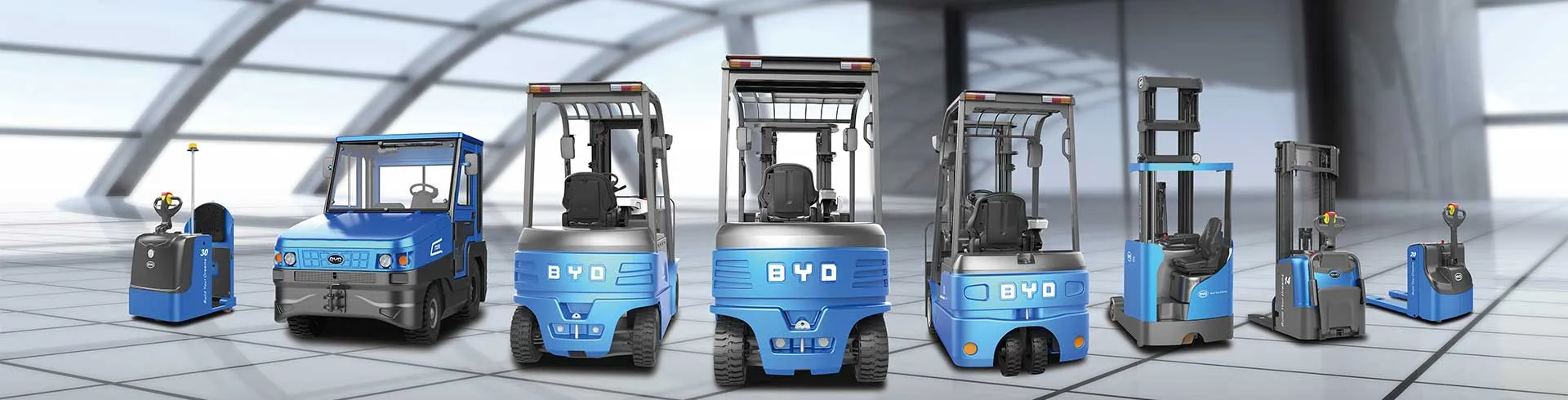
BYD GX15 stacker regular maintenance process and parts replacement cycle(Image1)

As an electric storage operation equipment, regular maintenance of GX15 stacker is the core link to ensure its stable operation and prolong its service life. Scientific and standardized maintenance process and clear parts replacement cycle can effectively reduce the failure rate, improve equipment operation efficiency and reduce later maintenance costs.

The regular maintenance process needs to follow the principle of step by step, from shallow to deep, and is divided into multiple levels and carried out gradually. Daily routine inspection is the basic link of maintenance. Before daily operation, the appearance inspection needs to be completed to confirm that the body is not deformed, cracked, and the fork is not worn and deformed; check the battery power and terminals to ensure that there is no loosening or corrosion; test the braking and steering system to confirm that the braking is sensitive, the steering is smooth, and there is no abnormal noise; check the hydraulic oil level to ensure that it is within the standard range and there is no sign of leakage.

Monthly in-depth maintenance requires a more comprehensive investigation of the equipment. First check the hydraulic system, clean the outside of the hydraulic oil tank, check whether the hydraulic pipeline is aging or damaged, and tighten the pipeline joints if necessary; clean the motor and electrical system, remove surface dust, check whether the circuit is damaged or short-circuited, and test the working status of the contactor and relay; lubricate the connecting rod and pin shaft of the steering system to ensure flexible operation; check the tire wear, confirm that the tire pressure meets the standard, and the tread is free of cracks and bulges.

Quarterly comprehensive investigation needs to go deep into the core components of the equipment. Disassemble and clean the air filter element. If the filter element is damaged or blocked seriously, replace it in time; check the tightness and wear of the transmission chain, adjust the tension of the chain and apply special lubricating oil; carry out wear detection on the brake pads and brake discs of the braking system to measure whether the wear thickness meets the use standards; check the charge and discharge performance of the battery, record the change of battery voltage and capacity, and judge the health status of the battery.

The annual professional overhaul requires a nearly comprehensive dismantling inspection of the equipment. Disassemble the motor and reducer, check the wear of the internal gears and bearings, and replace the deteriorated gear oil; disassemble and clean the hydraulic pump and hydraulic valve, check the aging degree of the seals, and replace the failed sealing parts; comprehensively test the electrical control system, check the parameter settings and operating status of the controller, and calibrate the accuracy of the sensors; conduct flaw detection on the body structure to detect hidden cracks or structural damage.

The replacement cycle of accessories needs to be determined in combination with the strength of the equipment and the working environment. In wearing parts, the brake pads are generally replaced every 2000 hours of operation or when the wear thickness exceeds 1/3 of the original thickness; tires are usually replaced every 3000-5000 hours according to wear conditions. If the working ground is rough, it needs to be checked and replaced in advance. In terms of electrical components, the service life of batteries is generally 3-5 years, depending on the frequency of charge and discharge and maintenance; contactors and relays need to be checked for touchpoint wear every 1500 hours and replaced if necessary. In hydraulic components, the hydraulic oil filter element is replaced every 500 hours, and the hydraulic oil is replaced every 2000 hours; the hydraulic seal is replaced every 3000 hours or when there is leakage. In the transmission parts, the transmission chain is checked for wear every 4000 hours, and replaced if the elongation exceeds 2% of the original length; the gear oil is replaced every 2000 hours.

Following the above maintenance process and replacement cycle of accessories can keep the GX15 stacker in good running condition and provide stable and reliable support for warehousing operations. Operators need to perform maintenance operations in strict accordance with specifications and keep maintenance records in order to detect equipment hidden dangers in time and ensure operation safety and efficiency.

Telephone

WeChat

Whatsapp

E-mail address

We use cookie to improve your online experience. By continuing to browse this website, you agree to our use of cookie.

Cookies

Please read our Terms and Conditions and this Policy before accessing or using our Services. If you cannot agree with this Policy or the Terms and Conditions, please do not access or use our Services. If you are located in a jurisdiction outside the European Economic Area, by using our Services, you accept the Terms and Conditions and accept our privacy practices described in this Policy.
We may modify this Policy at any time, without prior notice, and changes may apply to any Personal Information we already hold about you, as well as any new Personal Information collected after the Policy is modified. If we make changes, we will notify you by revising the date at the top of this Policy. We will provide you with advanced notice if we make any material changes to how we collect, use or disclose your Personal Information that impact your rights under this Policy. If you are located in a jurisdiction other than the European Economic Area, the United Kingdom or Switzerland (collectively “European Countries”), your continued access or use of our Services after receiving the notice of changes, constitutes your acknowledgement that you accept the updated Policy. In addition, we may provide you with real time disclosures or additional information about the Personal Information handling practices of specific parts of our Services. Such notices may supplement this Policy or provide you with additional choices about how we process your Personal Information.


Cookies

Cookies are small text files stored on your device when you access most Websites on the internet or open certain emails. Among other things, Cookies allow a Website to recognize your device and remember if you've been to the Website before. Examples of information collected by Cookies include your browser type and the address of the Website from which you arrived at our Website as well as IP address and clickstream behavior (that is the pages you view and the links you click).We use the term cookie to refer to Cookies and technologies that perform a similar function to Cookies (e.g., tags, pixels, web beacons, etc.). Cookies can be read by the originating Website on each subsequent visit and by any other Website that recognizes the cookie. The Website uses Cookies in order to make the Website easier to use, to support a better user experience, including the provision of information and functionality to you, as well as to provide us with information about how the Website is used so that we can make sure it is as up to date, relevant, and error free as we can. Cookies on the Website We use Cookies to personalize your experience when you visit the Site, uniquely identify your computer for security purposes, and enable us and our third-party service providers to serve ads on our behalf across the internet.

We classify Cookies in the following categories:
 ●  Strictly Necessary Cookies
 ●  Performance Cookies
 ●  Functional Cookies
 ●  Targeting Cookies


Cookie List
A cookie is a small piece of data (text file) that a website – when visited by a user – asks your browser to store on your device in order to remember information about you, such as your language preference or login information. Those cookies are set by us and called first-party cookies. We also use third-party cookies – which are cookies from a domain different than the domain of the website you are visiting – for our advertising and marketing efforts. More specifically, we use cookies and other tracking technologies for the following purposes:

Strictly Necessary Cookies
These cookies are necessary for the website to function and cannot be switched off in our systems. They are usually only set in response to actions made by you which amount to a request for services, such as setting your privacy preferences, logging in or filling in forms. You can set your browser to block or alert you about these cookies, but some parts of the site will not then work. These cookies do not store any personally identifiable information.

Functional Cookies
These cookies enable the website to provide enhanced functionality and personalisation. They may be set by us or by third party providers whose services we have added to our pages. If you do not allow these cookies then some or all of these services may not function properly.

Performance Cookies
These cookies allow us to count visits and traffic sources so we can measure and improve the performance of our site. They help us to know which pages are the most and least popular and see how visitors move around the site. All information these cookies collect is aggregated and therefore anonymous. If you do not allow these cookies we will not know when you have visited our site, and will not be able to monitor its performance.

Targeting Cookies
These cookies may be set through our site by our advertising partners. They may be used by those companies to build a profile of your interests and show you relevant adverts on other sites. They do not store directly personal information, but are based on uniquely identifying your browser and internet device. If you do not allow these cookies, you will experience less targeted advertising.

How To Turn Off Cookies
You can choose to restrict or block Cookies through your browser settings at any time. Please note that certain Cookies may be set as soon as you visit the Website, but you can remove them using your browser settings. However, please be aware that restricting or blocking Cookies set on the Website may impact the functionality or performance of the Website or prevent you from using certain services provided through the Website. It will also affect our ability to update the Website to cater for user preferences and improve performance. Cookies within Mobile Applications

We only use Strictly Necessary Cookies on our mobile applications. These Cookies are critical to the functionality of our applications, so if you block or delete these Cookies you may not be able to use the application. These Cookies are not shared with any other application on your mobile device. We never use the Cookies from the mobile application to store personal information about you.

If you have questions or concerns regarding any information in this Privacy Policy, please contact us by email 17399989919@163.com . You can also contact us via our customer service at our Site.