
 简体中文
简体中文 Deutsch
 日本語
日本語 한국어
한국어 Tiếng Việt
 Русский
 ไทย
ไทย Bahasa Indonesia
 Bahasa Melayu
 Filipino
 لالعربية
 Français

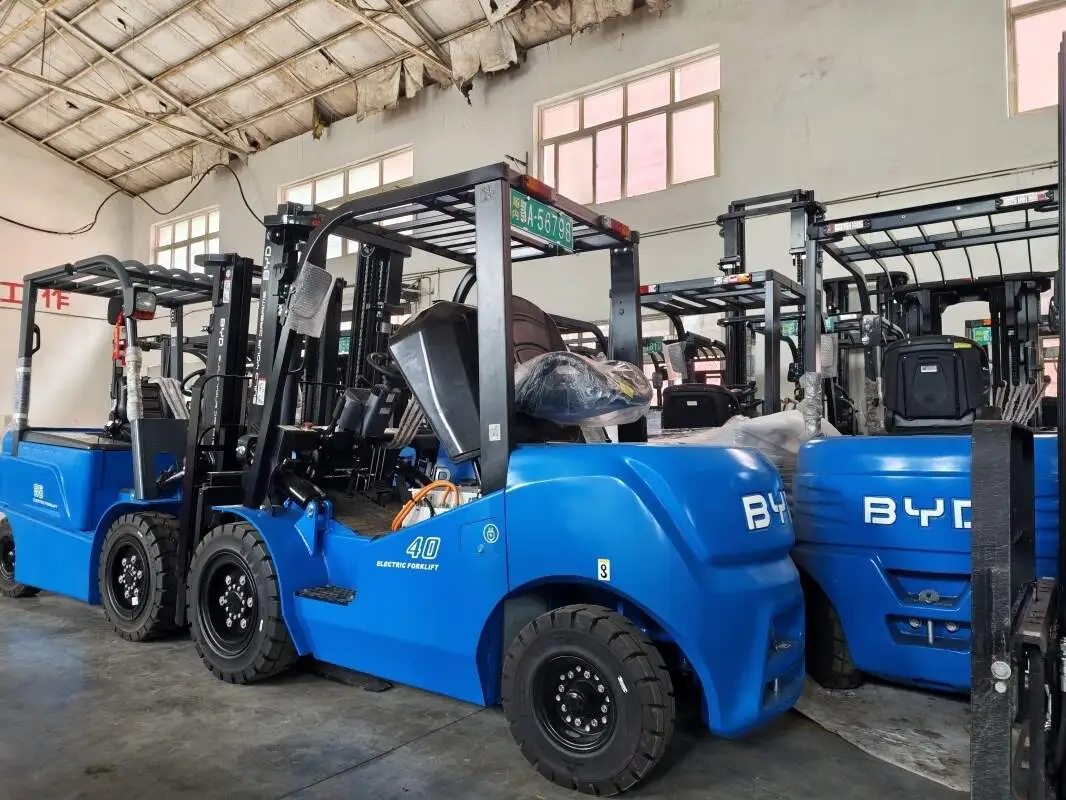
Before installing the fork-and-lift dual-purpose lifting boom on the BYD model electric forklift, a comprehensive preliminary preparation work is required. First of all, the basic performance inspection of the forklift should be carried out to confirm that the hydraulic system and electrical system of the vehicle are free of faults, the body structure is stable, and it can withstand the additional force after the boom is installed. At the same time, check all the supporting accessories of the fork-and-lift dual-purpose lifting boom, including the fixed base, the main body of the boom, the hydraulic connector, the electrical control wiring harness, etc., to ensure that the accessories are complete and free of defects. Prepare special tools such as wrenches, screwdrivers, and hydraulic pressure gauges, and choose an open and flat site to reserve enough operating space to avoid obstacles during the operation.
The first step in the formal installation stage is to fix the base, precisely align the base with the preset installation point of the forklift, ensure that it fits tightly with the body, and use special high-strength bolts to tighten it in sequence. During the tightening process, pay attention to uniform strength to avoid deviation or loosening of the base. Then assemble the main body of the boom. According to the assembly instructions, splice the telescopic section, support structure and other components of the boom one by one. The pin shaft of the connection part needs to be installed in place and a locking device is installed to prevent the risk of falling off during operation.
After completing the assembly of the boom, enter the docking process of the hydraulic system. Connect the hydraulic pipeline of the boom with the reserved interface of the original hydraulic system of the forklift. Before docking, the impurities at the interface need to be cleaned to ensure sealing. After completing the connection, a preliminary pressure test needs to be carried out to check whether the pipeline is leaking. Then connect the electrical circuit, connect the control wiring harness of the boom with the electrical control system of the forklift, and pay attention to the line identification during the docking process to avoid wrong connection and control failure. After the connection is completed, organize the circuit and do a good job of fixed protection.
After the installation is completed, the system needs to be debugged and accepted. First carry out no-load debugging, operate the boom to complete the basic actions such as lifting and telescopic, and observe whether the various components run smoothly, whether the pressure of the hydraulic system is stable, and whether the electrical control is sensitive. Then carry out a load test, apply the test load according to the rated bearing weight of the boom, simulate the actual operation scene, check the stability of the boom and the overall force of the forklift. Finally complete a comprehensive safety inspection, confirm that all the connectors are fastened in place, the hydraulic and electrical systems are running normally, and the performance indicators meet the safety operation specifications to ensure that the modified forklift can be put into normal use.


