简体中文
简体中文 Deutsch
 日本語
日本語 한국어
한국어 Tiếng Việt
 Русский
 ไทย
ไทย Bahasa Indonesia
 Bahasa Melayu
 Filipino
 لالعربية
 Français

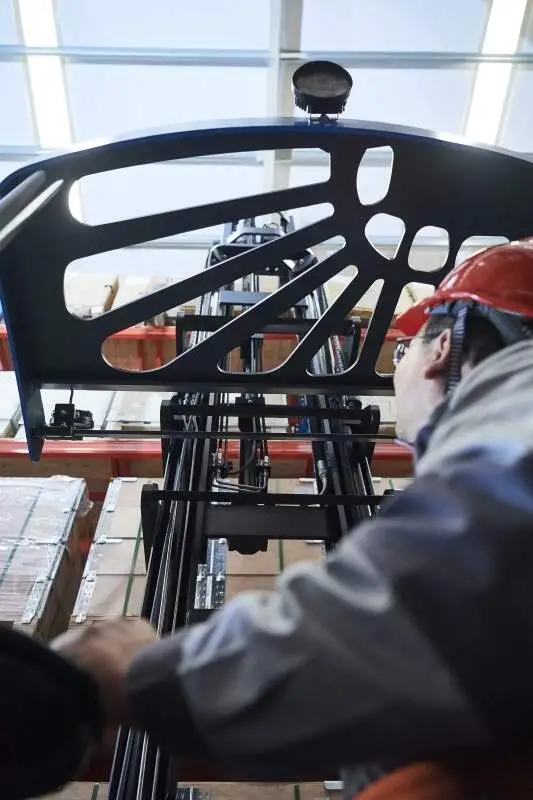
Cold storage is a low-temperature and closed operation scenario, which places high demands on the low-temperature resistance, battery life, and environmental protection of forklifts. Forklift procurement and operating costs are also an important part of cold chain storage costs. Reasonable selection of forklifts can effectively reduce operating expenses.
Cost variances at the acquisition stage
The acquisition cost of traditional forklifts
In the current market, the purchase threshold for traditional fuel and lead-acid powered forklifts is relatively low, and the initial procurement investment is generally lower. To meet the needs of cold storage operations, additional components such as low temperature protection and exhaust gas treatment need to be installed, which will generate certain additional expenses and increase the initial investment cost.
The acquisition cost of lithium battery forklifts
The initial procurement cost of lithium-ion forklifts is relatively higher, but lithium-ion forklifts suitable for low-temperature environments usually come with low-temperature battery modules, without the need for additional cold storage adaptation components, with less additional investment. The initial total investment premium is within a reasonable range.
Cost differences during the operation phase
Energy cost difference
The energy consumption cost per unit operating time of traditional fuel forklifts is generally 3 to 4 times that of lithium-ion forklifts. Lead-acid forklifts can lose more than 30% of their battery capacity in low-temperature environments, with low charging efficiency and high energy replenishment frequency. The cost per unit operating energy consumption is also about twice that of lithium-ion forklifts.
Maintenance cost variance
Traditional fuel forklifts require regular replacement of oil and three filters, and the maintenance frequency is high. The annual maintenance cost is about 8% to 10% of the purchase price; lead-acid forklifts require regular addition of electrolyte, and the plate loss is fast. The complete battery needs to be replaced in 2 to 3 years, and the additional expenditure is high. Lithium-battery forklifts have almost no vulnerable parts and support maintenance-free. The annual maintenance cost is less than 2% of the purchase price. The battery service life can reach 8 to 10 years. There is basically no large replacement cost during the full service cycle.
Operational efficiency loss cost
Traditional lead-acid forklifts lose power quickly at low temperatures, requiring frequent access to and from the cold storage for power replacement and charging. A single power change takes about 20 minutes, delaying at least 1 to 2 hours of operation time per day; fuel forklift exhaust emissions do not meet the requirements of the closed environment of the cold storage, and regular ventilation is required to dissipate odor, which will also reduce operating efficiency. Lithium-ion forklifts have stable low temperature resistance, and can support 8 to 10 hours of continuous operation on a single charge. They support fast charging and replenishment. During the lunch break, 1 hour of replenishment can meet the needs of half a day of operation. There is no additional power replacement time, and the labor cost per unit of operation is lower.
Life Cycle Costing
From the perspective of a 3 to 5 year lifespan, the total cost of using a lithium-ion forklift will be lower than that of a traditional forklift. The longer the lifespan, the more obvious the cost advantage will be, and it will be suitable for the long-term operation needs of medium and large cold storage.