简体中文
简体中文 Deutsch
 日本語
日本語 한국어
한국어 Tiếng Việt
 Русский
 ไทย
ไทย Bahasa Indonesia
 Bahasa Melayu
 Filipino
 لالعربية
 Français

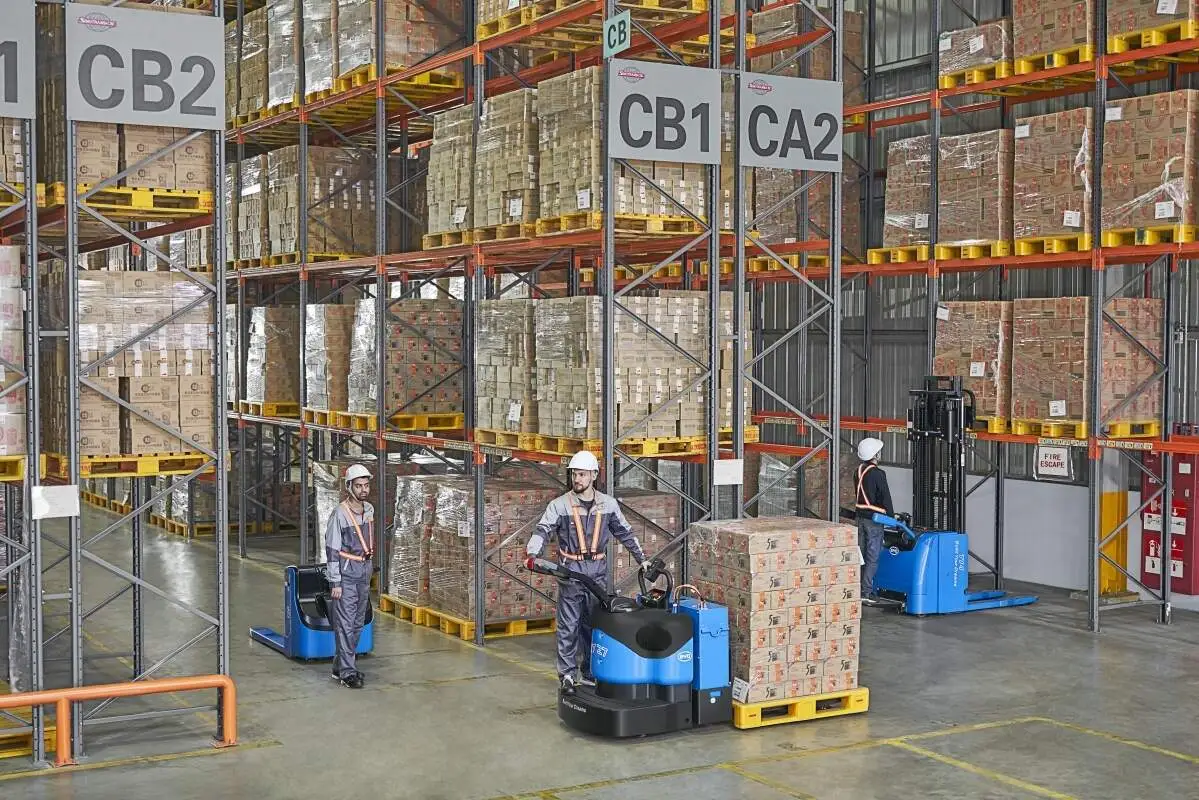
Job Scenario Adaptability Configuration
The height of the gantry matches the load
It is necessary to determine the lifting height of the gantry in combination with the actual shelf height in the logistics park. At present, the height of conventional high-level stacking operations is mostly in the range of 6 meters to 12 meters. When selecting models, ensure that the maximum lifting height of the gantry is 30 cm to 50 cm higher than the highest shelf space, and reserve enough operating space. At the same time, pay attention to the load attenuation characteristics of the high-level gantry. The actual load capacity during high-level operation will decrease to a certain extent compared with the rated load. When selecting models, it is necessary to combine the operating load requirements under the maximum lifting height to leave more than 10% of the load redundancy to avoid the safety risk of overload.
Vision and security configuration
When operating on a high gantry, the driver's field of vision will be blocked by the gantry structure. It is necessary to choose products that optimize the layout of the gantry profile to broaden the driver's forward field of vision as much as possible to ensure that the alignment of the fork, goods and shelf space can be clearly observed during the lifting process. At the same time, the fork positioning reminder and high speed limit function should be selected. When the gantry is lifted to the set height, the vehicle automatically limits the driving speed to avoid the shaking and falling of goods and improve the safety of high-level operations.
Job efficiency related configuration
Power and battery life configuration
The frequency of high-level stacking operations in the logistics park is generally high. It is necessary to choose a power battery pack with suitable capacity to meet the continuous operation needs of 8 to 10 hours a day. At the same time, it is necessary to give priority to supporting the fast charging function. The use of the driver's lunch break and other gaps to make up for energy can cover the follow-up operation needs. Power output adjustment should be adapted to the stable speed requirements of high-level stacking. The starting, lifting and landing processes should be kept smooth without setbacks to avoid the displacement and drop of goods and reduce unnecessary cargo damage.
easy to control configuration
To choose an ergonomic control handle with fork position fine-tuning function, the angle and position of the fork can be accurately adjusted during high-level operation, reducing the driver's operation intensity. If possible, you can also choose a cargo position auxiliary alignment function to help the driver quickly align the shelf space, shorten the time of a single stacking operation, and improve the overall operation efficiency.
long-term operation and maintenance adaptation configuration
The operating environment of the logistics park is relatively complex, and there may be debris, water stains, and even a small amount of corrosive goods on the ground. When selecting models, attention should be paid to the sealing level of the core electrical components of the vehicle to reduce the probability of failure in complex environments. At the same time, the maintenance interface of the core components should be designed reasonably, and the operation steps of daily inspection and replacement of wearing parts should be simplified as much as possible to reduce the long-term operation and maintenance costs of the vehicle.
Before selecting a model, practitioners can first sort out the core parameters such as the average lifting height, peak operating load, and average daily operating time of their own operations, and then match the corresponding configurations. Without blindly pursuing high parameters, they can choose a high-gantry forklift that suits their own needs, effectively enhancing the comprehensive benefits of high-level stacking operations.