简体中文
简体中文 Deutsch
 日本語
日本語 한국어
한국어 Tiếng Việt
 Русский
 ไทย
ไทย Bahasa Indonesia
 Bahasa Melayu
 Filipino
 لالعربية
 Français

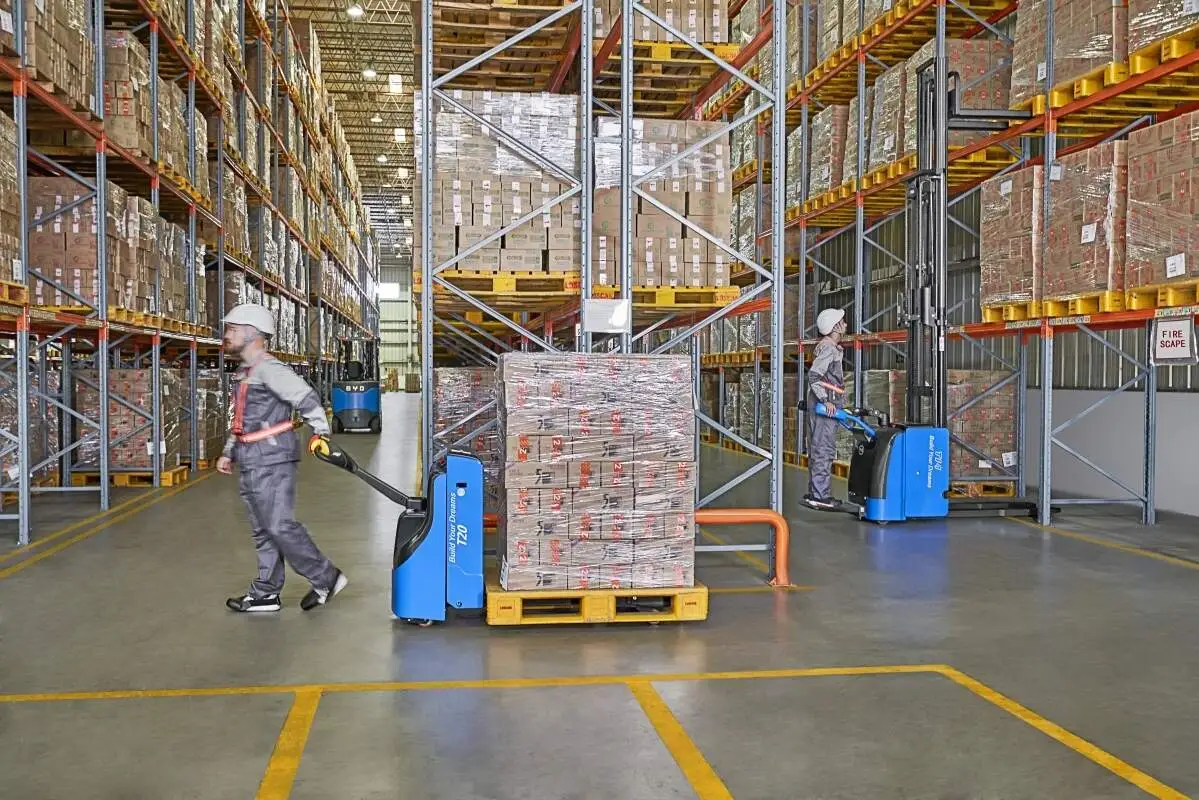
The core challenge of cold storage forklifts in low temperature environments
The cold storage operating environment has been in the range of minus 10 degrees Celsius to minus 40 degrees Celsius for a long time, accompanied by high humidity and easy frost formation. When ordinary forklifts operate in such environments, they are prone to the problems of wire harness brittle fracture and hydraulic system card failure, which directly affects the operation efficiency and equipment service life. Therefore, targeted antifreeze design is one of the core performance indicators of cold storage forklifts.
Detail of antifreeze adaptation of wiring harness system
Harness material and structure optimization
The wiring harness insulation layer of the cold storage forklift is made of low temperature modified polyolefin material, which can maintain flexibility in the environment of minus 40 degrees Celsius, and will not crack and fall off due to low temperature embrittlement. The wire core adopts a multi-strand soft copper stranded structure, which can maintain stable electrical conductivity under frequent bending, thermal expansion and contraction conditions, and avoid failures such as open circuit and poor contact.
Harness protection and layout optimization
All wiring harness interfaces are fully sealed with low temperature resistant sealing aprons, which can isolate moisture and frost in the cold storage and avoid short circuits caused by condensation entering the interface. When wiring layout, avoid frost-prone areas and cold trends in the cold storage as much as possible, and reserve 10% to 15% of the line length allowance to offset the tensile stress caused by material shrinkage in the low temperature environment and reduce the risk of wire harness being broken.
Antifreeze fit details for hydraulic systems
Hydraulic medium and pipeline adaptation
The hydraulic system is pre-installed with low-freezing-point anti-wear hydraulic oil when it leaves the factory. The pour point can be as low as minus 45 degrees Celsius, which can still maintain good fluidity in low temperature environments and will not solidify or get stuck. The hydraulic pipeline is made of low-temperature-resistant nitrile rubber, which can adapt to the deformation caused by temperature difference changes. The low-temperature-resistant sealing gasket is added at the pipeline interface to avoid hydraulic oil leakage.
Optimal design of hydraulic circuit
The hydraulic system adds an automatic pressure relief circuit for shutdown. After the equipment is shut down, the residual pressure in the pipeline can be automatically released to avoid the residual hydraulic oil in the pipeline from expanding and cracking due to low temperature. At the same time, the thermal insulation protective layer is added to the hydraulic valve group to reduce the probability of frost blockage of the valve group and improve the response speed of hydraulic operation in low temperature environment.
In the actual operation and maintenance process, users can also regularly check the status of the wiring harness insulation layer and replace the corresponding hydraulic oil according to the actual temperature range of the cold storage, further prolonging the service life of the cold storage forklift.