简体中文
简体中文 Deutsch
 日本語
日本語 한국어
한국어 Tiếng Việt
 Русский
 ไทย
ไทย Bahasa Indonesia
 Bahasa Melayu
 Filipino
 لالعربية
 Français
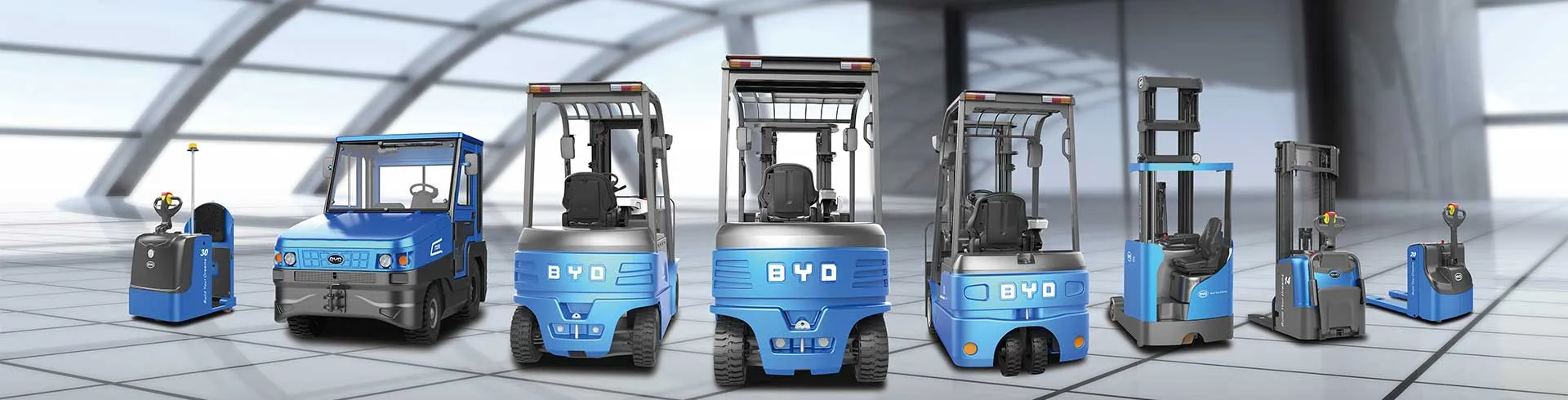
In the process of high-quality development of the logistics and warehousing industry, the integration of digital intelligence has become the core driving force for the upgrading of the industry. With the continuous improvement of warehousing efficiency requirements in e-commerce, manufacturing and other fields, the traditional manual handling mode and ordinary forklifts have been difficult to adapt to the high-density and fast-paced warehousing operation needs, and the construction and improvement of warehouse automation handling system is imminent.
Intelligent electric forklifts, as a key carrier for the intelligent transformation of warehousing, are gradually breaking the limitations of traditional handling with their intelligent functions. Unlike ordinary electric forklifts, intelligent electric forklifts are equipped with advanced sensing equipment, which can identify the shelf position, goods status and surrounding obstacles in the warehouse in real time, and realize accurate positioning and optimal path planning. Without manual operation, it can complete a series of standardized processes such as picking and placing, handling, and stacking of goods, effectively reducing the error rate of manual operation, improving the safety and stability of the handling process, and reducing labor cost investment.
In the context of digital intelligence integration, intelligent electric forklifts can also realize data linkage with warehouse management systems, automatic guidance equipment, etc., and deeply integrate into the overall automated handling system. By uploading handling data in real time and receiving system scheduling instructions, intelligent electric forklifts can flexibly adjust handling routes and task priorities according to the actual needs of warehousing operations, and achieve efficient allocation of warehousing resources. For example, during peak order periods, the system can uniformly dispatch multiple intelligent electric forklifts to work together, maximize the use of warehousing space and equipment resources, shorten the turnaround time of goods, and improve the overall operating efficiency of the warehouse.
The wide application of intelligent electric forklifts is improving the warehouse automation handling system from multiple dimensions. On the one hand, it fills the adaptation gap between traditional forklifts and automated warehousing equipment, and makes the warehousing handling process move from "semi-automatic" to "fully automated", realizing the whole process of unmanned handling of goods from warehousing to outbound. On the other hand, the data analytics module equipped with it can record various data in the handling process, including handling time, weight of goods, route time, etc., providing reliable data support for warehousing operation optimization. By analyzing this data, enterprises can adjust warehouse layout, optimize cargo storage strategies, and further improve storage space utilization and handling efficiency.
With the continuous iteration of digital intelligence technology, the functions of intelligent electric forklifts will continue to expand. In the future, it is expected to combine artificial intelligence algorithms to achieve more intelligent autonomous decisions, such as automatically adjusting the handling speed according to the weight and volume of the goods, or anticipating the failure of storage equipment and issuing early warnings. This will further promote the fine and intelligent development of the warehouse automation handling system, inject continuous impetus into the digital intelligence transformation of the logistics and warehousing industry, and help enterprises improve operational efficiency.