简体中文
简体中文 繁体中文
繁体中文 Deutsch
 日本語
日本語 한국어
한국어 Tiếng Việt
 Русский
 ไทย
ไทย Bahasa Indonesia
 Bahasa Melayu
 Filipino
 لالعربية
 Français
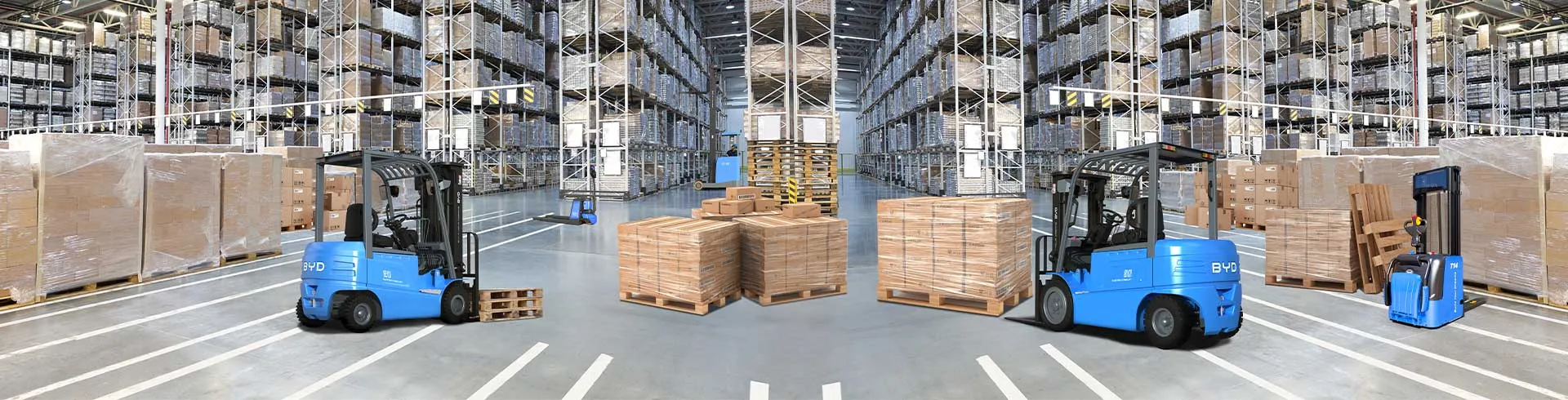
Under the guidance of the dual-carbon goal, the pace of green transformation in the logistics industry has been accelerating. As the core equipment for cargo handling in the park, the batch replacement of internal combustion forklifts has become a key planning direction in many logistics parks, and the popularity of electric forklifts is continuing to accelerate.
As the core hub of cargo turnover, the logistics park has long relied on internal combustion forklifts to complete cargo loading, unloading, handling and other operations. Although this type of internal combustion equipment has strong power, in a closed or semi-closed park environment, exhaust emissions will cause local air pollution, and the noise generated during operation will also affect the surrounding environment of the park and the working experience of the staff. At the same time, the daily maintenance of internal combustion forklifts involves fuel replenishment, engine maintenance and other links, and the long-term operating cost is high. With the strengthening of environmental protection supervision and the improvement of operating cost control needs, the replacement of internal combustion equipment has become an inevitable trend.
Electric forklifts have become the first choice for replacing internal combustion equipment in logistics parks due to their multiple advantages. The first is the outstanding environmental protection attributes. Electric forklifts rely on battery power and achieve zero exhaust emissions during operation, which can effectively reduce air pollution in the park and meet the development requirements of green logistics. Secondly, the operating cost is lower. Compared with the fuel consumption of internal combustion forklifts, the electricity expenditure of electric forklifts is only about one-third of the fuel cost, and the structure is relatively simple. Daily maintenance only needs to pay attention to battery status, circuit inspection and other links, and maintenance costs are greatly reduced. In addition, electric forklifts operate with less noise, which can create a more comfortable working environment for staff, especially suitable for logistics parks with more night operation needs.
At present, many logistics parks in China have started the batch replacement of internal combustion equipment. Many parks have formulated phased replacement plans based on their own operation scale and operational needs, gradually transitioning from scattered replacement to bulk procurement, and some parks have completed the replacement of more than half of internal combustion forklifts. At the same time, in response to the charging problem in the use of electric forklifts, many parks have built special charging sheds, power stations and other facilities, further eliminating the use of enterprises' concerns. With the continuous improvement of relevant supporting facilities, the application scenarios of electric forklifts are expanding from warehousing to short-distance transshipment, loading and unloading and other scenarios in the park, and the coverage continues to expand.
The popularization process of electric forklifts will continue to accelerate. On the one hand, the iterative upgrade of battery technology is constantly improving the battery life and service life of electric forklifts, and the application of fast charging technology also shortens the charging waiting time, further improving the operating efficiency of equipment. On the other hand, the national level of green logistics support policies continue to be introduced, providing certain policy guidance and financial support for the replacement of electric equipment in logistics parks, reducing the replacement cost of enterprises. In the future, as more logistics parks join the replacement ranks, electric forklifts will become the mainstream equipment for cargo handling in the park, promoting the sustainable development of the logistics industry in a green and efficient direction.