2026-06-24

Calcul du cycle de retour du chariot élévateur à batterie au lithium, combien de temps peut récupérer le coût d'achat

Calcul du cycle de retour du chariot élévateur à batterie au lithium, combien de temps peut récupérer le coût dachat(Figure1)

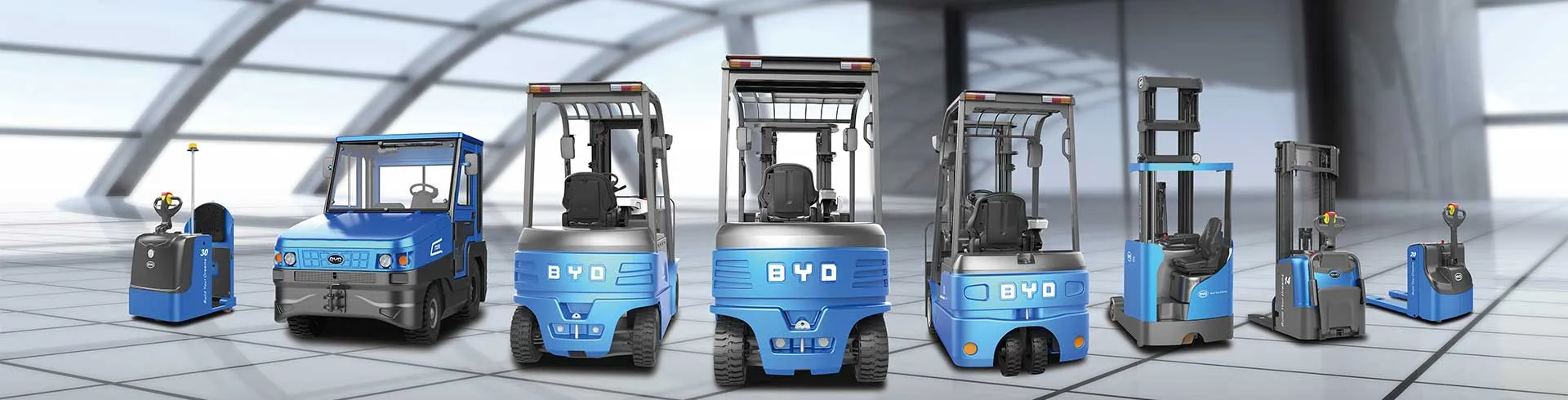
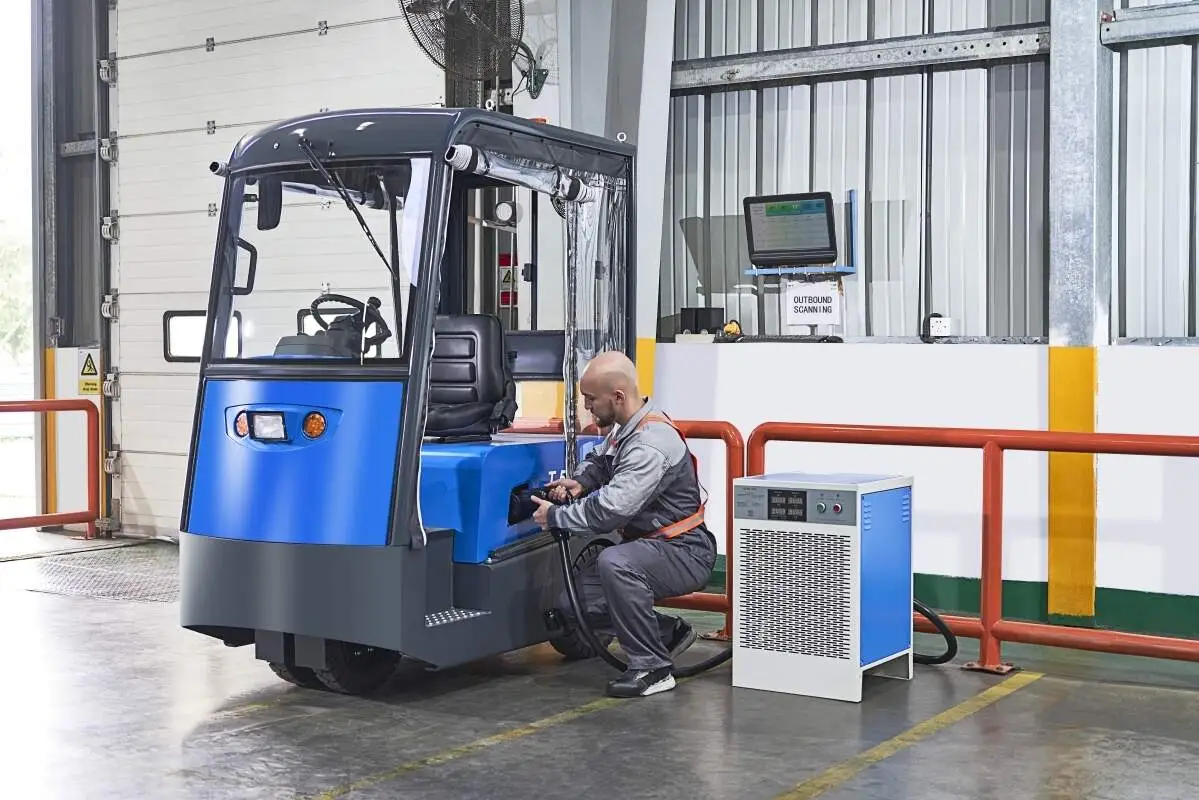
Lors de l'achat de chariots élévateurs, l'une des préoccupations communes de nombreuses entreprises d'entreposage et de logistique est le temps qu'il faut pour récupérer les coûts d'approvisionnement. Par rapport aux chariots élévateurs à combustion interne traditionnels, les chariots élévateurs à batterie au lithium présentent des avantages évidents en termes de coûts d'exploitation, et leur période de récupération peut être calculée par logique fixe.

La structure des coûts des chariots élévateurs à batterie au lithium

Pour calculer le cycle de récupération d'un chariot élévateur à batterie au lithium, il est d'abord nécessaire de clarifier tous les investissements fixes au stade initial, y compris principalement le coût d'achat du véhicule lui-même, le coût de licence et d'assurance conventionnelle, et l'investissement dans les premières installations de charge de soutien. Ce sont tous les coûts qui doivent être payés en une seule fois pendant la phase d'approvisionnement, à l'exclusion des changements dans le processus d'utilisation ultérieure.

L'avantage des coûts d'exploitation des chariots élévateurs à batterie au lithium

Coût énergétique quotidien

Les chariots élévateurs à batterie au lithium sont alimentés à l'électricité et consomment environ 1,5 à 3 degrés d'électricité par heure. Selon le prix moyen de l'électricité industrielle, le coût par heure n'est que d'environ 1 à 2 yuans, ce qui est bien inférieur au coût du carburant de 5 à 8 yuans par heure pour les chariots élévateurs à combustion interne de la même spécification. L'avantage de consommation d'énergie d'une utilisation à long terme est très évident.

Coût de maintenance

Les chariots élévateurs à batterie au lithium n'ont pas les parties vulnérables nécessaires des chariots élévateurs à combustion interne tels que les moteurs, les boîtes de vitesses et les filtres à carburant. Ils n'ont besoin que d'effectuer quotidiennement un entretien de base tel que l'inspection des pneus et la lubrification des roulements. Le coût d'entretien annuel moyen n'est que de 20 % à 30 % de celui des chariots élévateurs à combustion interne du même niveau, ce qui peut réduire davantage les dépenses au stade de l'exploitation.

La méthode de calcul spécifique de la période de retour

Lors du calcul de ce cycle, tout d'abord, nous devons compter la durée de fonctionnement annuelle moyenne des chariots élévateurs dans nos propres scénarios. Dans la plupart des scénarios d'entreposage ordinaires, la durée d'utilisation annuelle moyenne des chariots élévateurs est d'environ 2000 heures. Selon le coût de consommation d'énergie d'économiser 4 yuans par heure par rapport aux chariots élévateurs à combustion interne, seule la consommation d'énergie peut économiser 8 000 yuans par an, plus le coût de maintenance annuel moyen de 3 000 à 5 000 yuans, ce qui peut économiser 11 000 à 13 000 yuans par an.

Si le coût d'achat d'un chariot élévateur à batterie au lithium de même spécification est supérieur de 4 à 60 000 yuans à celui d'un chariot élévateur à combustion interne, il ne faudra que 3 à 5 ans pour récupérer le coût d'achat plus élevé. Si le chariot élévateur est utilisé plus fréquemment et que la durée d'utilisation annuelle moyenne dépasse 3 000 heures, le cycle de récupération peut être encore raccourci à 2 à 3 ans.

Le cycle de récupération dans différents scénarios variera dans une certaine mesure. Dans des scénarios tels que la chaîne du froid et le chargement lourd en plein air, les chariots élévateurs ont une consommation d'énergie plus élevée, des économies de coûts plus considérables et des vitesses de récupération plus rapides. Dans les petits entrepôts à faible utilisation, le cycle de récupération sera relativement prolongé et les entreprises peuvent ajuster les paramètres de mesure en fonction de leur utilisation réelle pour obtenir des résultats de récupération qui répondent mieux à leurs propres besoins.
Téléphone

WeChat

WhatsApp

Adresse e-mail

We use cookie to improve your online experience. By continuing to browse this website, you agree to our use of cookie.

Cookies

Please read our Terms and Conditions and this Policy before accessing or using our Services. If you cannot agree with this Policy or the Terms and Conditions, please do not access or use our Services. If you are located in a jurisdiction outside the European Economic Area, by using our Services, you accept the Terms and Conditions and accept our privacy practices described in this Policy.
We may modify this Policy at any time, without prior notice, and changes may apply to any Personal Information we already hold about you, as well as any new Personal Information collected after the Policy is modified. If we make changes, we will notify you by revising the date at the top of this Policy. We will provide you with advanced notice if we make any material changes to how we collect, use or disclose your Personal Information that impact your rights under this Policy. If you are located in a jurisdiction other than the European Economic Area, the United Kingdom or Switzerland (collectively “European Countries”), your continued access or use of our Services after receiving the notice of changes, constitutes your acknowledgement that you accept the updated Policy. In addition, we may provide you with real time disclosures or additional information about the Personal Information handling practices of specific parts of our Services. Such notices may supplement this Policy or provide you with additional choices about how we process your Personal Information.


Cookies

Cookies are small text files stored on your device when you access most Websites on the internet or open certain emails. Among other things, Cookies allow a Website to recognize your device and remember if you've been to the Website before. Examples of information collected by Cookies include your browser type and the address of the Website from which you arrived at our Website as well as IP address and clickstream behavior (that is the pages you view and the links you click).We use the term cookie to refer to Cookies and technologies that perform a similar function to Cookies (e.g., tags, pixels, web beacons, etc.). Cookies can be read by the originating Website on each subsequent visit and by any other Website that recognizes the cookie. The Website uses Cookies in order to make the Website easier to use, to support a better user experience, including the provision of information and functionality to you, as well as to provide us with information about how the Website is used so that we can make sure it is as up to date, relevant, and error free as we can. Cookies on the Website We use Cookies to personalize your experience when you visit the Site, uniquely identify your computer for security purposes, and enable us and our third-party service providers to serve ads on our behalf across the internet.

We classify Cookies in the following categories:
 ●  Strictly Necessary Cookies
 ●  Performance Cookies
 ●  Functional Cookies
 ●  Targeting Cookies


Cookie List
A cookie is a small piece of data (text file) that a website – when visited by a user – asks your browser to store on your device in order to remember information about you, such as your language preference or login information. Those cookies are set by us and called first-party cookies. We also use third-party cookies – which are cookies from a domain different than the domain of the website you are visiting – for our advertising and marketing efforts. More specifically, we use cookies and other tracking technologies for the following purposes:

Strictly Necessary Cookies
These cookies are necessary for the website to function and cannot be switched off in our systems. They are usually only set in response to actions made by you which amount to a request for services, such as setting your privacy preferences, logging in or filling in forms. You can set your browser to block or alert you about these cookies, but some parts of the site will not then work. These cookies do not store any personally identifiable information.

Functional Cookies
These cookies enable the website to provide enhanced functionality and personalisation. They may be set by us or by third party providers whose services we have added to our pages. If you do not allow these cookies then some or all of these services may not function properly.

Performance Cookies
These cookies allow us to count visits and traffic sources so we can measure and improve the performance of our site. They help us to know which pages are the most and least popular and see how visitors move around the site. All information these cookies collect is aggregated and therefore anonymous. If you do not allow these cookies we will not know when you have visited our site, and will not be able to monitor its performance.

Targeting Cookies
These cookies may be set through our site by our advertising partners. They may be used by those companies to build a profile of your interests and show you relevant adverts on other sites. They do not store directly personal information, but are based on uniquely identifying your browser and internet device. If you do not allow these cookies, you will experience less targeted advertising.

How To Turn Off Cookies
You can choose to restrict or block Cookies through your browser settings at any time. Please note that certain Cookies may be set as soon as you visit the Website, but you can remove them using your browser settings. However, please be aware that restricting or blocking Cookies set on the Website may impact the functionality or performance of the Website or prevent you from using certain services provided through the Website. It will also affect our ability to update the Website to cater for user preferences and improve performance. Cookies within Mobile Applications

We only use Strictly Necessary Cookies on our mobile applications. These Cookies are critical to the functionality of our applications, so if you block or delete these Cookies you may not be able to use the application. These Cookies are not shared with any other application on your mobile device. We never use the Cookies from the mobile application to store personal information about you.

If you have questions or concerns regarding any information in this Privacy Policy, please contact us by email at . You can also contact us via our customer service at our Site.