
 简体中文
简体中文 Deutsch
 日本語
日本語 한국어
한국어 Tiếng Việt
 Русский
 ไทย
ไทย Bahasa Indonesia
 Bahasa Melayu
 Filipino
 لالعربية
 Français
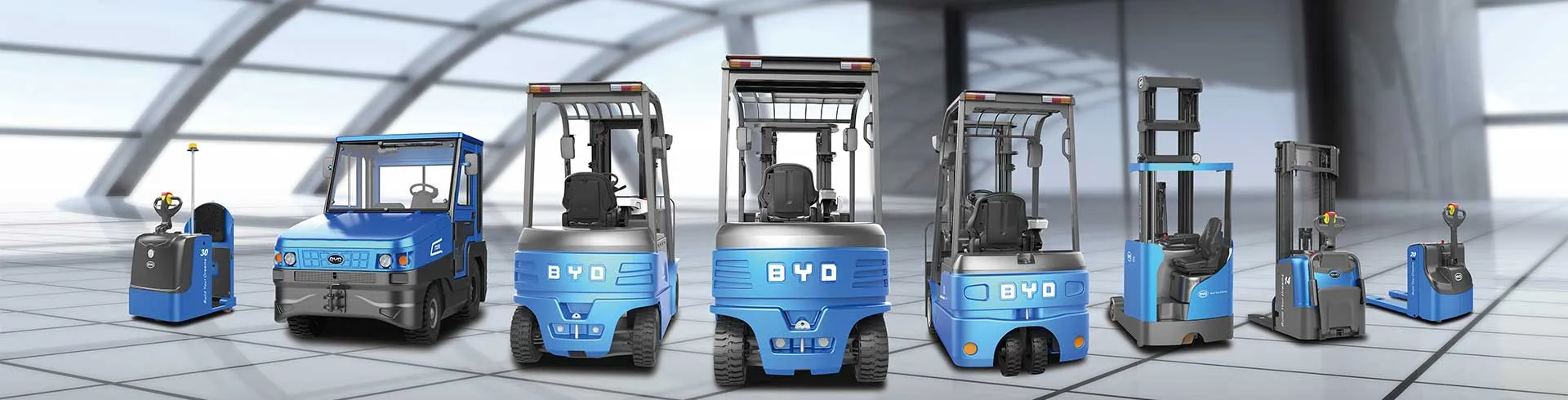
In daily storage and handling scenarios, counterbalanced electric forklifts are widely used as handling equipment. Many users are prone to confusion about the differences in attributes between three-point and four-point models when selecting models. We use the high-circulation CPD18S 1.8-ton electric forklift truck on the market as a reference to disassemble the different characteristics of the two types of products.
core structure difference
Steering system difference
The three-pivot model mostly adopts the single-wheel steering design of the rear wheel, which has higher overall steering flexibility, and the coverage of the wheel track during rotation is smaller, which will not take up too much excess activity space. The four-pivot model adopts the dual-rear-wheel synchronous steering design, which has a more uniform force distribution during the steering process, smoother steering operation feedback under different working conditions, and lower threshold for operators to get started.
Support layout difference
The three support points of the three-pivot model are triangular and stable, the overall body does not need to occupy redundant counterweight space, the chassis structure is more compact, and the overall size of the body can be controlled in a smaller range. The four support points of the four-pivot model are evenly distributed in the four corners of the body chassis, the overall chassis coverage is larger, the arrangement space of the counterweight module is more sufficient, and the vehicle counterweight design is more flexible.
Actual job performance variance
Bearing and stability differences
Based on the parameters of the CPD18S model, the minimum turning radius of the three-point model under the same tonnage can be controlled in a smaller range when no-load, and the operation stability of the flat hard road surface under full load can meet the conventional needs. The four-point model has more abundant lateral support, and its performance is more stable in the stacking scene of uneven road surface and lateral force, and it can also maintain the stability of the body when encountering sudden lateral force.
Application scenario difference
The three-pivot model is more suitable for narrow-channel dense storage warehouses, especially high-level stacking scenarios with a channel width of less than two meters. It can flexibly shuttle between shelves to complete picking and unloading operations without scratching the shelves. The four-pivot model is more suitable for large-flow handling scenarios of outdoor hardened sites and medium and low shelves. It has a higher degree of adaptation for operations that frequently reprint heavier goods, and the performance of long-term high-frequency operations is more stable. When users choose a model, they can comprehensively judge the channel width of their own warehouse, the conditions of the working road surface, and the conventional bearing requirements. Selecting equipment that suits their own operating rhythm can effectively improve the overall handling efficiency.


