
 简体中文
简体中文 Deutsch
 日本語
日本語 한국어
한국어 Tiếng Việt
 Русский
 ไทย
ไทย Bahasa Indonesia
 Bahasa Melayu
 Filipino
 لالعربية
 Français

Key Considerations for the Purchase of Heavy Duty Handling Equipment
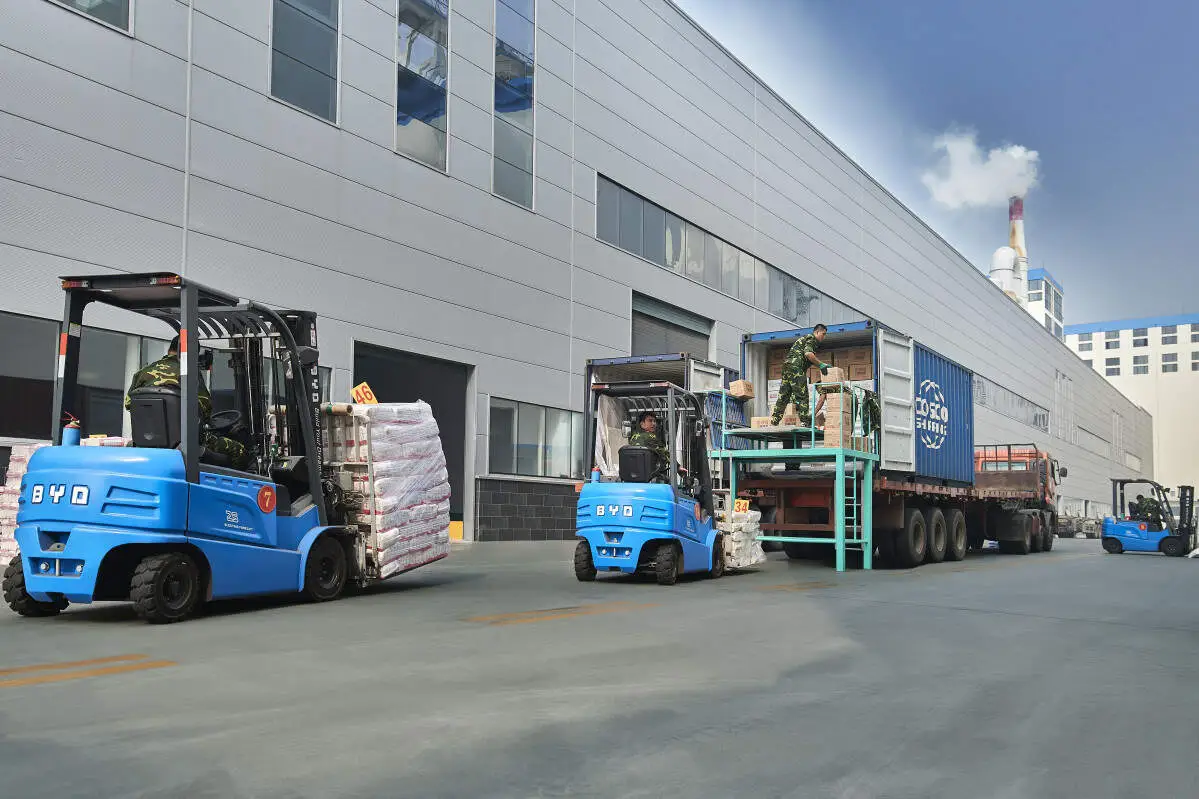
In the heavy-duty handling scenarios of logistics, warehousing, manufacturing and other industries, the selection of equipment directly affects the operation efficiency and cost control. Three core dimensions should be prioritized when purchasing: first, the load matching degree, which needs to be determined according to the peak weight of the daily handling goods to avoid overload or waste of production capacity; second, the adaptability of the operation scene, the indoor narrow space and the outdoor open field have different requirements for the flexibility and stability of the model; third, the battery life and maintenance costs, which need to match the operation time and the later operation and maintenance convenience.
BYD CPD series electric forklift full model analysis
Model characteristics of medium and small load sections
The 2-ton and 3-ton series models are compact and have a small turning radius. They are suitable for operation scenarios with narrow spaces such as indoor warehouses and e-commerce sorting centers, and can be flexibly shuttled between shelves. The equipped battery system can meet the needs of continuous operation for about 8 hours, and is suitable for heavy-duty handling tasks in small and medium batches. The body is lightweight and reduces the work intensity of operators.
Medium and heavy load section model characteristics
The 3.5-ton and 4-ton series models, on the basis of retaining flexibility, strengthen the body structure and power output, improve the climbing capacity and load stability. It is suitable for raw material handling, finished product transshipment in the manufacturing plant, and medium-batch cargo loading and unloading operations in the logistics park. It can cope with the undulating road surface and frequent start and stop operations in the factory area.
Large load section model characteristics
The 5-ton and 7-ton series models are designed for heavy-duty cargo handling scenarios. The chassis is solid, the counterweight is reasonable, and the operation stability is excellent. It is suitable for heavy-duty scenarios such as container auxiliary handling at ports and stone and steel transshipment in the building materials market. The power system is strong, which can support long-term high-load operations and meet the efficient handling needs of heavy-duty goods.
Key tips for selecting a model
First of all, it is necessary to accurately count the maximum load peak of daily handling goods, rather than the average load, to ensure that the model can cope with extreme operation requirements; secondly, if outdoor open-air operation is involved, it is necessary to pay attention to the waterproof and dustproof configuration of the model to improve the durability of the equipment; in addition, the battery life needs to match the daily operation time, and different capacity battery configurations can be selected according to needs; finally, the model with high maintenance convenience is preferred to reduce the operation and maintenance costs in long-term use.


