
 简体中文
简体中文 Deutsch
 日本語
日本語 한국어
한국어 Tiếng Việt
 Русский
 ไทย
ไทย Bahasa Indonesia
 Bahasa Melayu
 Filipino
 لالعربية
 Français

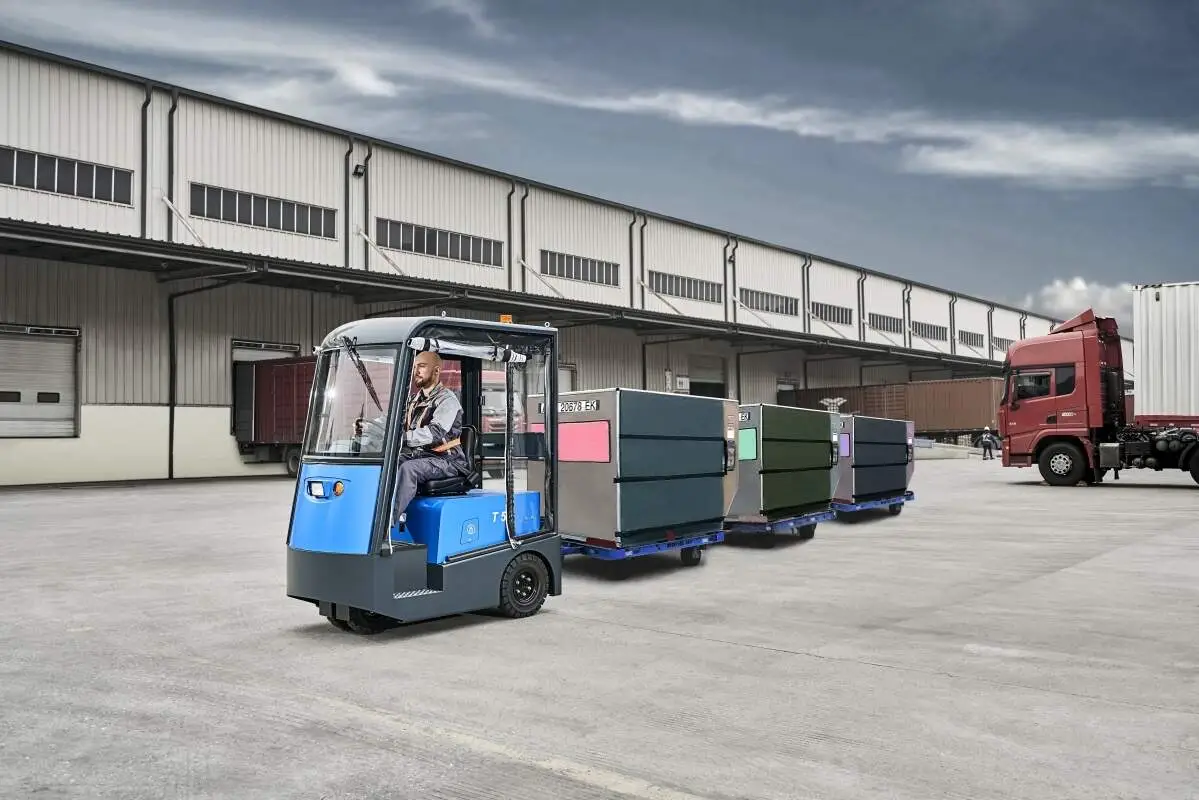
Heavy cargo handling in a factory often faces challenges such as frequent turnover of large-tonnage materials and diverse operating environments. Choosing the right electric forklift is the key to improving handling efficiency and ensuring operation safety.
Precise selection according to handling load
Match regular overload requirements
Electric forklifts with different load ranges are suitable for different material types. Models of 6-8 tons are suitable for handling heavy-duty parts, boxes of pallet goods and other conventional heavy-duty items, which can meet the daily heavy-duty handling needs of most factories; models of 9-12 tons are more suitable for large-scale production equipment and heavy raw material transshipment, which can cope with cross-regional heavy-duty operations inside and outside the workshop; models of 13-16 tons are designed for oversized goods, such as large steel structure parts, heavy containers, etc. In such scenarios, it is necessary to ensure that the forklift load has a reasonable margin to avoid long-term overload affecting the life of the equipment.
Adapt the model according to the operation scene
Indoor closed scene adaptation
In indoor closed scenes such as factories and warehouses, the advantage of electric forklifts without exhaust emissions is more prominent. When selecting models, attention should be paid to the steering flexibility of forklifts to ensure smooth operation in narrow passages. At the same time, low-noise models are preferred to reduce interference to the workshop production environment. In addition, the indoor ground is relatively flat, which can focus on improving the lifting stability and control accuracy of forklifts.
Outdoor complex scene adaptation
Factory outdoor operations often face complex situations such as uneven road surfaces, rain and snow. At this time, it is necessary to choose a model with a solid chassis structure and non-slip tires to ensure driving stability. At the same time, outdoor operations have higher battery life requirements. It is necessary to choose a battery of appropriate capacity according to the daily operation time to avoid power outages affecting the work progress.
Pay attention to battery life and charging efficiency
Heavy-duty handling operations in the factory usually last a long time, and the battery life directly affects the overall efficiency. When selecting a model, it is necessary to count the daily handling frequency and driving distance, and calculate the required battery capacity. In addition, models that support the fast charging function can effectively shorten the charging waiting time. You can choose the appropriate charging scheme according to the layout of the charging facilities in the factory to ensure that the forklift is always available.
Consider core performance configuration
In addition to load and scene adaptation, the core configuration of the forklift cannot be ignored. The lifting height needs to match the needs of the factory shelves or stacking to avoid being unable to complete the operation due to insufficient height; the heavy-duty braking system needs to have reliable braking performance to ensure the safety of large-tonnage cargo handling; humanized control design, such as shock-absorbing seats and convenient operation handles, can reduce the operator's work fatigue and improve the continuity of the operation.
Only by selecting models based on multi-dimensional requirements can 6-16-ton electric forklifts be fully effective and provide efficient and safe solutions for heavy cargo handling in the factory.


