简体中文
简体中文 Deutsch
 日本語
日本語 한국어
한국어 Tiếng Việt
 Русский
 ไทย
ไทย Bahasa Indonesia
 Bahasa Melayu
 Filipino
 لالعربية
 Français
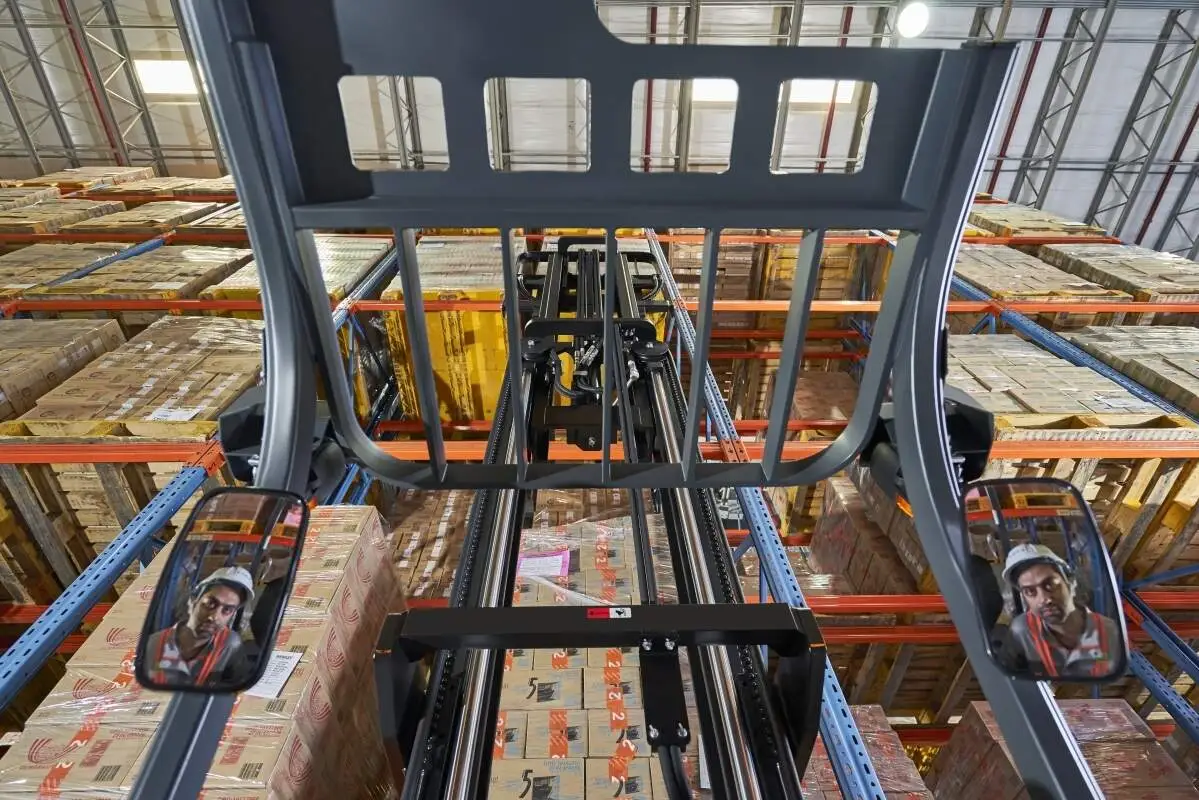
Pharmaceutical warehousing is an important part of drug circulation, and its operation standardization directly affects drug quality and management compliance. In the pharmaceutical warehousing scene, electric forklifts have gradually become the preferred solution to replace traditional fuel forklifts due to their advantages of zero emissions, low noise, and easy cleaning. However, the requirements for equipment in pharmaceutical warehousing are not limited to performance, but also need to meet the strict specifications of GSP (Quality Management Practice for Pharmaceutical Operation) on storage environment, operation safety and traceability management. Starting from the special needs of pharmaceutical warehousing, this paper will systematically sort out the key points of lithium-ion forklifts selection and configuration that meet GSP specifications, and help pharmaceutical companies achieve a balance between compliance and efficiency in equipment procurement.
Special requirements for forklifts in pharmaceutical warehousing
The particularity of the pharmaceutical storage environment determines that the selection of forklifts needs to take into account multiple constraints. The first is the cleanliness requirement. Drug storage is highly sensitive to dust and particulate pollution. The debris, oil and other pollutants generated during the operation of the forklift may directly affect the quality of the drug. Therefore, the forklift needs to have a low dust design and easy cleaning characteristics to avoid secondary pollution in the storage area. Secondly, there are safety requirements. Pharmaceutical storage involves cold chain drugs, special controlled drugs, etc. The handling of goods needs to avoid violent vibration and collision, to prevent damage to the drug packaging or abnormal fluctuations in temperature and humidity. At the same time, the operator needs to have a stable operating environment to prevent safety accidents caused by equipment failure. In addition, GSP requires storage equipment to be traceable, including operation records, maintenance records, etc. Therefore, the control system of the forklift needs to support data recording and traceability to ensure that the entire operation process can be checked.
Second, the core configuration of lithium-ion forklift trucks in line with GSP specifications
1. Battery system compliance configuration
As a power source for electric forklifts, the safety and stability of lithium batteries are directly related to the compliance of medical warehousing. Lithium forklifts that comply with GSP should choose lithium battery packs with excellent sealing performance, and the shell should be designed with leak-proof liquid to avoid electrolyte leakage from contaminating the drug storage area. The battery management system needs to have triple protection functions of overcharge, overdischarge and short circuit to prevent safety hazards caused by abnormal batteries. At the same time, the battery life capacity needs to meet the operational needs of medical warehousing. It is usually recommended that the battery life of a single charge covers one work shift to reduce the impact of charging times on the continuity of operations. The charging system should support intelligent charging management, with timing charging, power monitoring and automatic power-off functions when fully charged to ensure battery life and safety.
2. Operation and driving performance configuration
Pharmaceutical storage channels are usually narrow, the storage density of goods is high, and the speed of forklifts needs to be controlled within a safe range to avoid collisions caused by excessive speed. The steering system should have a flexible minimum turning radius to ensure easy steering in areas with dense shelves and reduce the risk of cargo scratches. The operation interface design should be ergonomic, and the key operation buttons (such as lift, forward/backward, emergency stop) should be conspicuous and easy to operate to avoid cargo falling or equipment damage due to operation errors. In addition, forklifts need to be equipped with non-slip foot pedals and handrails to prevent operators from slipping during handling and ensure operation safety.
3. Security system configuration
The body structure needs to adopt a stable design, and key parts (such as forks and frames) should be equipped with anti-collision beams and buffer devices to reduce the impact force when colliding with shelves or goods. Forklifts need to have sound and light warning systems, which automatically trigger voice prompts and flashing lights when reversing to avoid accidents caused by blind spots of sight. The response time of the emergency braking system should be less than 0.5 seconds to ensure that it can stop quickly in emergencies to prevent goods from losing control or equipment damage. In addition, the control system needs to have a static protection design to avoid the impact of static electricity accumulation on drugs or packaging materials, and meet the requirements of medical warehousing for anti-static environment.
4. Environmental adaptability and clean design
The surface material of the forklift should be stainless steel or corrosion-resistant coating, with acid and alkali resistance, anti-corrosion properties, to prevent rust and contamination of drugs after long-term use. The body design needs to reduce exposed parts and gaps to avoid dust accumulation and dead ends. The surface needs to be smooth and easy to clean, support high-pressure flushing and disinfection treatment, and meet the cleaning and disinfection needs of medical warehousing. The equipment protection level should reach IP54 or above to prevent dust intrusion and slight water spraying to ensure stable operation in dry or high humidity storage environments.
5. compliance certification and traceability system
Lithium-battery forklifts that comply with GSP specifications need to have relevant industry certifications, such as medical apparatus production quality management specification (GMP) related equipment certification, to ensure that the equipment quality meets pharmaceutical industry standards. Forklift control system should support data recording function, which can automatically store key data such as operation time, mileage, battery status, etc., to form a complete equipment use traceability file, to meet GSP's requirements for storage equipment operation traceability. In addition, the equipment needs to pass the relevant national safety standards certification, such as GB/T 3805-2008 "Electric Vehicle Safety Requirements", etc., to ensure the overall safety and compliance of the equipment.
III. Comprehensive considerations when selecting models
The selection of lithium battery forklifts for pharmaceutical warehousing needs to comprehensively evaluate the long-term applicability of the equipment based on the actual warehousing environment and business needs. First, the type of forklift needs to be determined according to the layout of the warehousing space. For example, a forward forklift can be selected for narrow aisle areas, and a counterbalanced forklift can be selected for large space storage areas. Secondly, it is necessary to consider the characteristics of the goods, including the weight, volume and packaging type of the goods, and select the appropriate fork size and load-bearing capacity to avoid overload or space waste. At the same time, it is necessary to reserve space for future business expansion to ensure that the equipment can still meet the operational needs after the expansion of the warehousing scale. Finally, it is necessary to establish an equipment maintenance plan and select a supplier with a complete after-sales service system to ensure the long-term stable
In pharmaceutical warehousing, the selection of lithium-ion forklifts is not only a consideration of equipment performance, but also a strict implementation of GSP specifications. Through the rational configuration of battery systems, safety protection, clean design and compliance certification and other key elements, pharmaceutical companies can achieve efficient storage operations and compliance, escort drug quality.