
 简体中文
简体中文 Deutsch
 日本語
日本語 한국어
한국어 Tiếng Việt
 Русский
 ไทย
ไทย Bahasa Indonesia
 Bahasa Melayu
 Filipino
 لالعربية
 Français
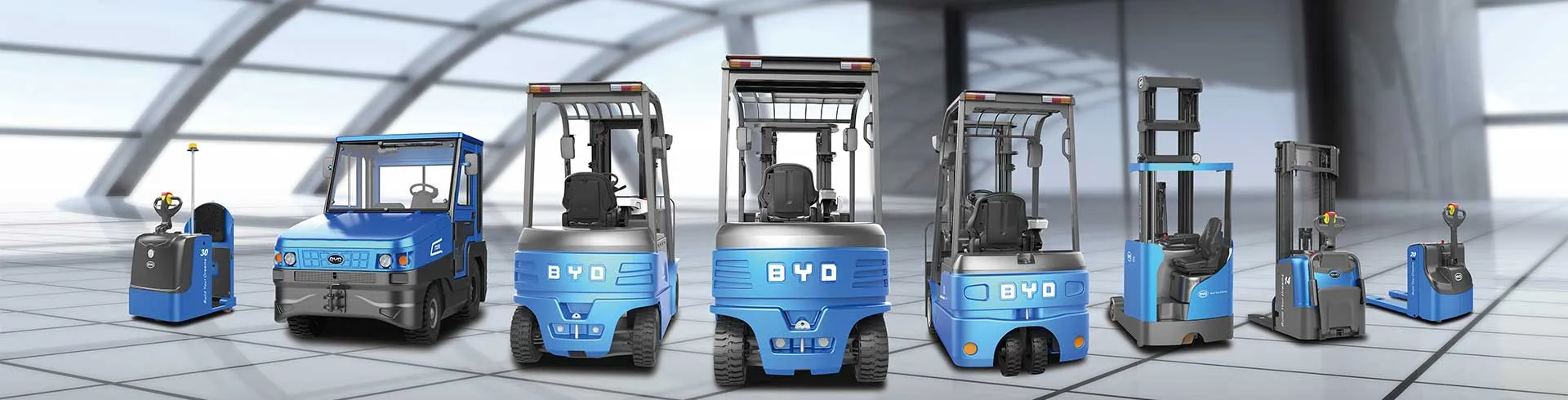
In the logistics industry, electric forklifts have become the mainstream equipment for warehousing and handling operations due to their advantages of low noise and zero emissions. Among many types of electric forklifts, counterbalanced, three-point and forward lithium-ion forklifts show obvious differences in application scenarios and operation efficiency due to structural design differences. Understanding the core characteristics of these types can help to choose the appropriate equipment according to actual needs and avoid improper selection affecting the operation effect.
The counterweight type lithium battery forklift is one of the most widely used types in the market. Its core structural feature is that the front part of the vehicle body is equipped with a fork, and the rear part is equipped with an independent counterweight block. This design ensures the stability of the vehicle body during the loading and unloading process through the counterweight balance principle of the front and rear axles. The steering system of the counterweight type forklift usually adopts the rear wheel steering method, the overall length of the body is long, and the turning radius is relatively large. In actual operation, it is suitable for outdoor handling, long-distance transportation and large-scale cargo stacking scenarios, such as container loading and unloading in ports, cargo transfer in large storage centers, etc. With the development of lithium-ion battery technology, counterbalanced lithium-ion forklifts have become an environmentally friendly alternative to traditional fuel counterbalanced forklifts. Battery life and charging efficiency have become important indicators for users, and their range can generally meet the needs of 8-12 hours of continuous operation.
The three-pivot electric forklift is famous for its compact structural design. Its support structure adopts three pivot points that contact the ground. The common forms are front-wheel two-wheel steering, rear-wheel single-wheel drive, or front-wheel single-wheel steering and rear-wheel two-wheel drive. This design significantly reduces the width of the vehicle body, and the turning radius is only two-thirds of that of the counterweight forklift, making it perform well in narrow passages. The steering system of the three-pivot forklift is responsive, suitable for scenes with limited space such as supermarket warehouses and workshops, and can flexibly cope with narrow passage operations between shelves. Due to its compact body, its overall weight is relatively light, and its energy consumption is well controlled. It is suitable for short-distance and high-frequency cargo handling, such as the turnover of sorting areas in e-commerce warehouses, and the transfer of raw materials in small factories. The diameter of the steering wheel is generally 10% to 15% smaller than that of the counterweight type to accommodate narrower channels. The battery capacity is usually designed to be 48V/50Ah, supporting 4-6 hours of continuous operation, which can meet the daily turnover needs of small and medium-sized warehouses.
Reach-type lithium-ion forklifts focus on high-level shelf operation scenarios, and their unique gantry forward mechanism is the core feature. The fork of this type of forklift can be moved back and forth along the guide rail through the hydraulic system, and the stacking operation can be completed in the shelf area without steering. The double front wheel support design ensures the stability of the vehicle body during high-level operation. The stacking height of the forward-moving forklift can usually reach more than 5 meters, which can efficiently access the goods in the high-rise shelves. It is widely used in e-commerce three-dimensional warehouses, pharmaceutical cold chain warehousing and other places that require high space utilization. Compared with the first two types, the working radius of the forward-moving forklift is smaller, and the steering system mainly controls the overall movement of the vehicle body, which is more suitable for precise stacking operations in fixed areas. The door frame forward speed can reach 0.5-1 m/s, improve the operation efficiency, the battery system uses lithium iron phosphate battery, the cycle life can reach more than 2000 times, to meet the daily stacking needs of more than 100 times.
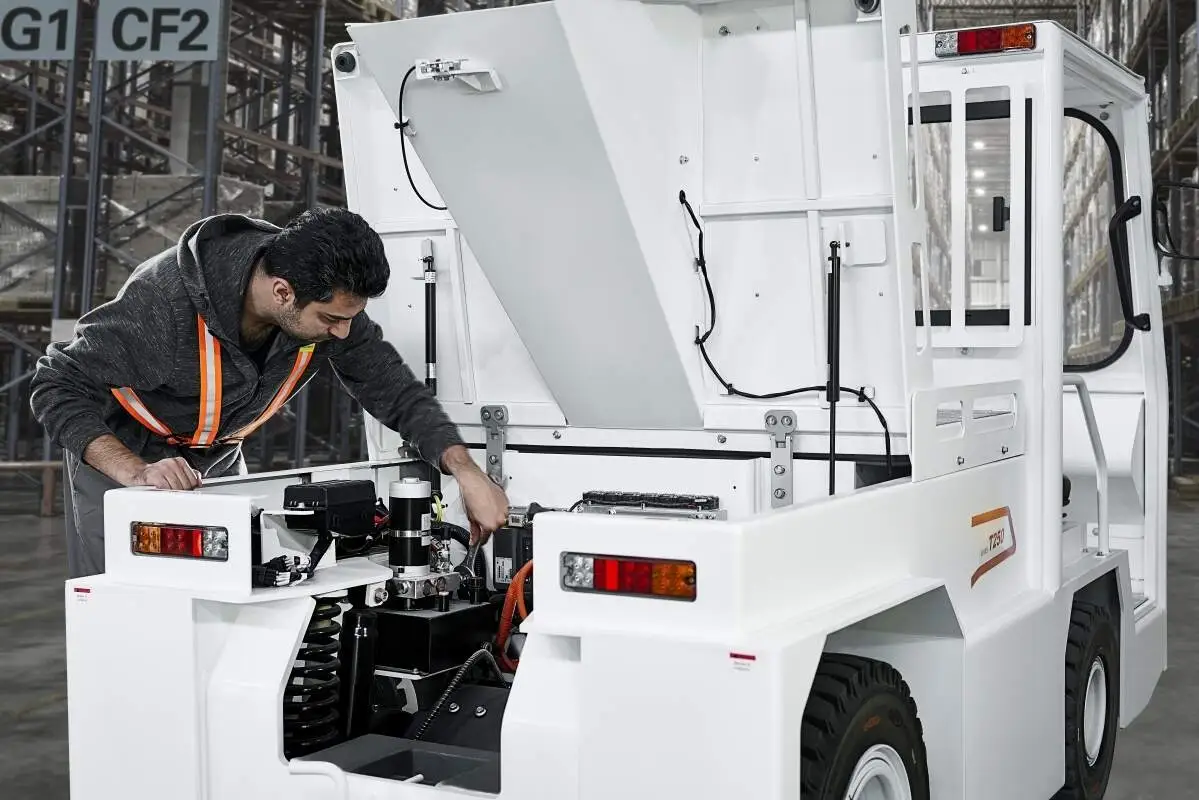
In the actual selection, three types can be distinguished by three key characteristics: in the support structure, the counterweight type relies on the balance of the counterweight block, the three fulcrum points rely on the triangle support, and the forward type optimizes the space by moving forward through the gantry; in terms of steering characteristics, the counterweight type has a large steering radius, three fulcrum steering is flexible, and the forward steering is mainly based on the overall movement of the car body; in the applicable scenario, the counterweight type is suitable for long-distance heavy loads, the three fulcrum points are suitable for short distances in narrow passages, and the forward type is suitable for high-rise shelf operations. In addition, under the trend of lithium electrification, these three types have all launched electric versions. While paying attention to parameters such as battery life and charging efficiency, users need to comprehensively consider the specific needs of the operation scene to choose the most suitable forklift type.


