
 简体中文
简体中文 Deutsch
 日本語
日本語 한국어
한국어 Tiếng Việt
 Русский
 ไทย
ไทย Bahasa Indonesia
 Bahasa Melayu
 Filipino
 لالعربية
 Français
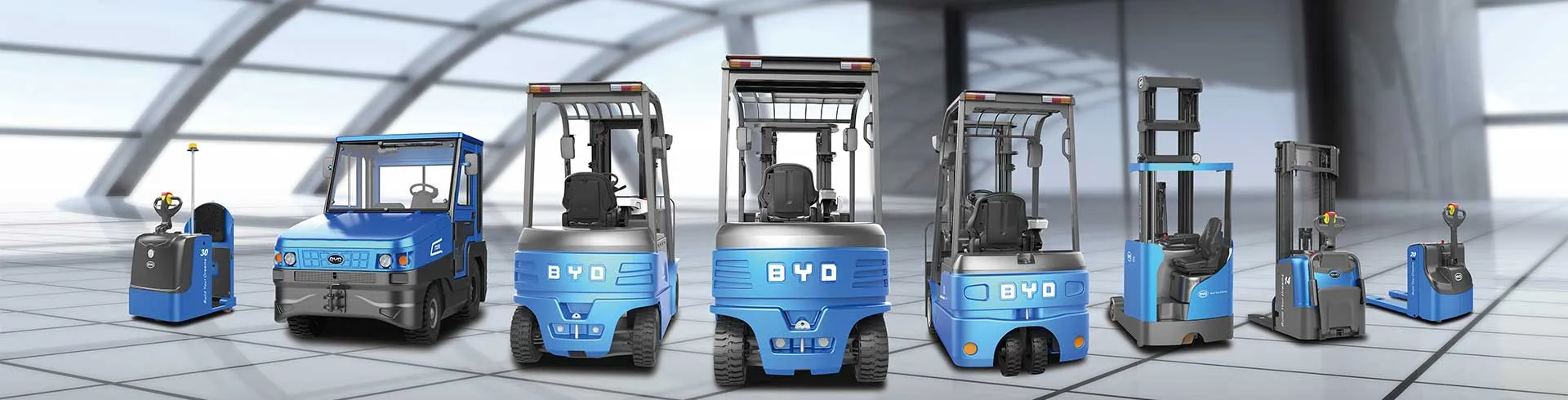
With the wide application of electric forklifts in warehousing and logistics and other scenarios, lithium-ion forklifts have gradually become the mainstream choice due to their environmentally friendly and efficient advantages. In the process of use, the "charge as you go" ability of lithium-ion forklift batteries and related misunderstandings have always been the focus of users' attention. This article will analyze common misunderstandings in use in combination with the working characteristics of lithium-ion batteries, and help users correctly understand and maintain batteries, prolong service life, and improve equipment efficiency.
Myth 1: Lithium forklifts must be fully charged before use
Many users believe that in order to ensure that the forklift is fully charged, the battery must be fully charged before being put into use. In fact, unlike traditional lead-acid batteries, lithium-ion batteries do not have an obvious "memory effect" and do not need to be activated through a "full discharge-full charge" cycle. On the contrary, excessive discharge (such as less than 10% of the battery) will instead lead to difficulties in embedding lithium ions inside the battery, affecting the stability of the electrode material, which will reduce the battery capacity and cycle life in the long run. The correct way is to start charging when the battery power drops to 20% -30% to avoid using it after it is completely exhausted, which can not only ensure the continuity of operation, but also reduce the damage to the battery caused by deep discharge.
Myth 2: Frequent charging will shorten battery life
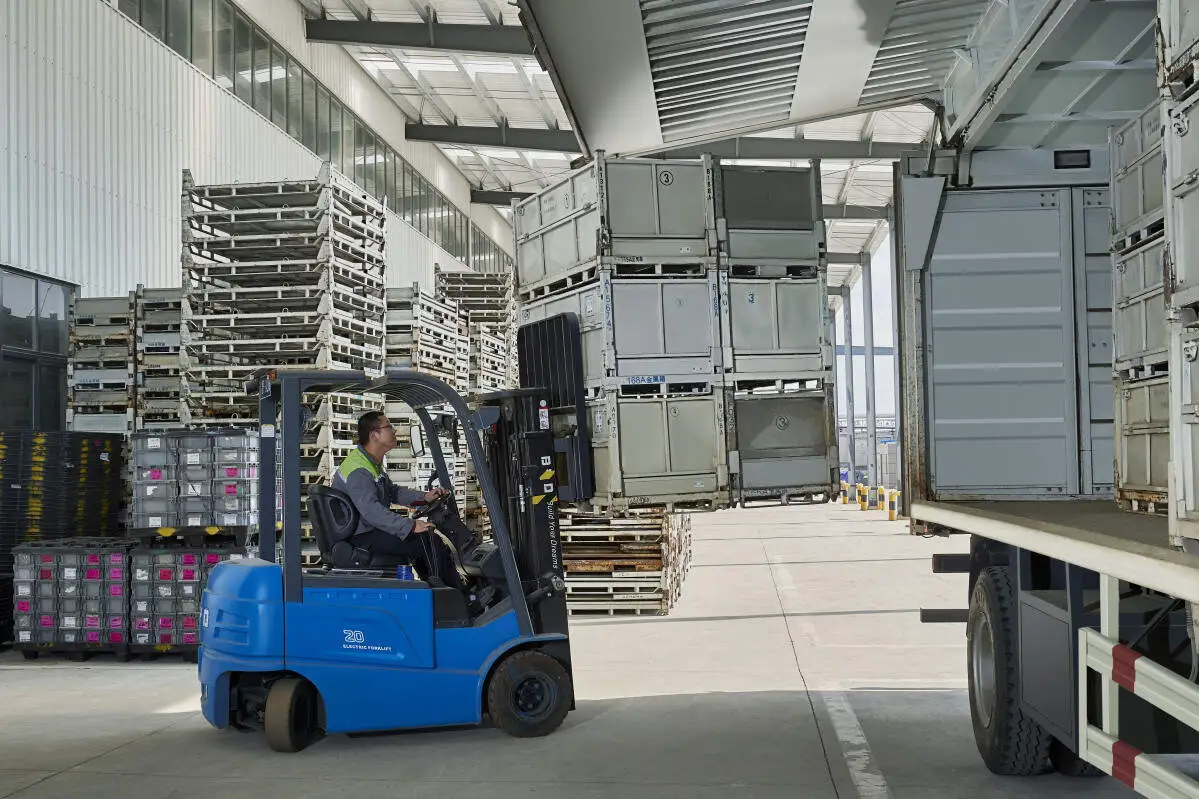
Some users are concerned that frequent charging of lithium-ion forklifts will accelerate battery aging. However, from the perspective of the charging and discharging principle of lithium-ion batteries, battery life mainly depends on the "number of deep discharges" and "high temperature environment". If each charge is "shallow charge and shallow discharge" (such as each use from 80% to 20% of full charge), it is equivalent to reducing the number of deep discharges, which will help prolong the battery cycle life. For example, if the forklift operates 3 times a day, each time the battery is used from 80% to 20%, the total discharge is 60%, which is much lower than the deep cycle of booster charge after full discharge. Therefore, within a reasonable range (such as replenishing the battery between daily operations), frequent charging has little impact on battery life, and there is no need to worry too much.
Myth 3: The longer the charging time, the more fully charged the battery
Some users are accustomed to charging the battery for a long time at night or during non-working hours, thinking that "the longer the charging time, the more power". But in fact, lithium-ion forklift batteries are usually equipped with intelligent protection circuits. When the battery is fully charged, it will automatically enter the floating charge or trickle charge state. At this time, the charging efficiency is extremely low, and the battery is continuously in a high voltage state may cause the electrode material to heat up and the electrolyte to decompose, which will affect the battery performance and life. Generally speaking, follow the standard charging time set by the charger manual. It is recommended to power off in time after it is fully charged to avoid long-term charging.
Myth 4: It cannot be used if the charging efficiency is low in a low temperature environment
In the low temperature environment in winter, the battery activity of the lithium battery forklift will be reduced, and the charging speed may be slower. Some users therefore think that "it cannot be used at low temperature". In fact, the impact of low temperature on the battery is reversible: if the forklift is operated in a low temperature environment, the battery can be moved to an indoor environment (temperature above 5 ° C) for charging, or a charger with temperature compensation function can be selected to adapt to the low temperature by adjusting the charging current and voltage. The surface temperature of the battery can be increased to about 15 ° C before charging, which can effectively improve the charging efficiency. In addition, avoid storing the fully discharged battery in a low temperature environment for a long time, which can properly maintain 20% -30% of the power and reduce the damage of low temperature to the battery.
Myth 5: The battery is dead, it doesn't matter if the booster charges
Some users believe that "the battery can be used normally if it is dead and recharged", but excessive discharge (such as less than 5% of the battery) will cause it to be difficult for the lithium metal ions inside the battery to be fully embedded in the negative electrode material, forming "lithium dendrites", which may pierce the diaphragm and cause safety hazards, while irreversibly reducing the battery capacity. Therefore, when the power display is lower than 20%, the charging should be started in time to avoid excessive discharge of the battery. In daily use, it is recommended to develop the habit of "replenishing small power in time, and not exhausting large power", so that the battery is always in a reasonable charge and discharge range, which can not only ensure safety but also prolong the service life.
Summary: The ability to "charge at any time" of a lithium-ion forklift battery essentially depends on correct usage habits. By avoiding excessive discharge, reasonably controlling charging time, and optimizing usage strategies in low-temperature environments, users can effectively prolong battery life and improve forklift operation efficiency. In actual operation, it is necessary to combine equipment instructions and battery characteristics, and scientifically maintain in order to give full play to the advantages of lithium-ion forklifts.


