简体中文
简体中文 Deutsch
 日本語
日本語 한국어
한국어 Tiếng Việt
 Русский
 ไทย
ไทย Bahasa Indonesia
 Bahasa Melayu
 Filipino
 لالعربية
 Français
As the requirements for operation efficiency and space utilization in the warehousing and logistics industry continue to increase, the site adaptability of electric forklifts has become one of the core considerations for enterprise selection and warehousing planning. As an electric forklift widely used in warehousing scenarios, the matching degree of its body size with the storage channel directly affects the fluency and space utilization of daily operations.
Body core size analysis
Vehicle basic size parameters
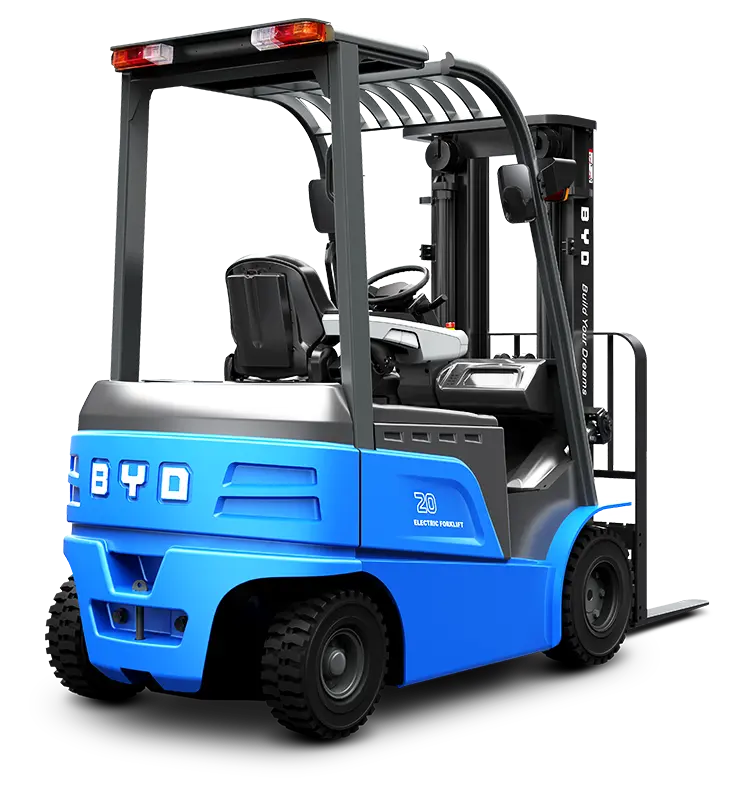
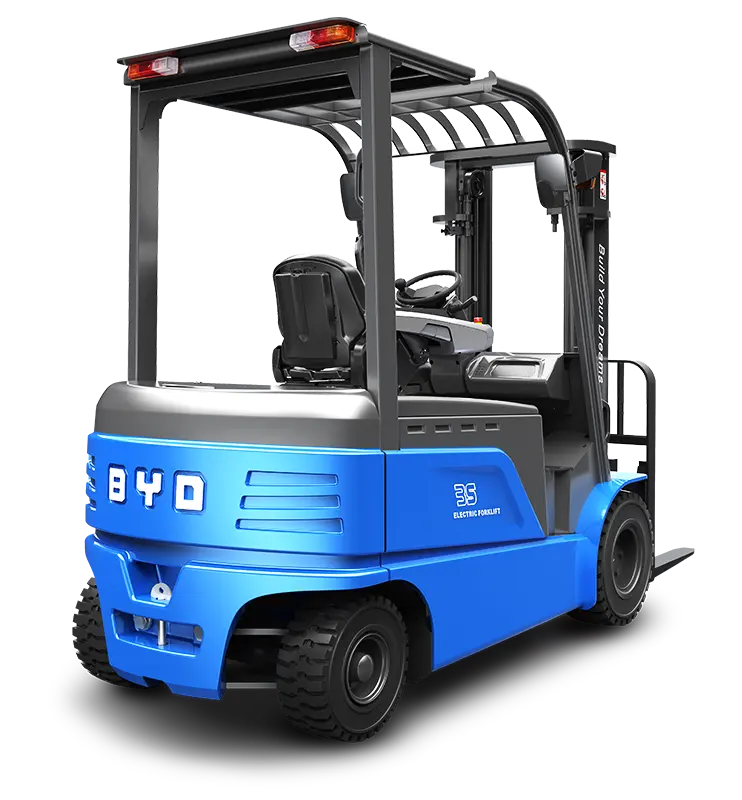
The basic size of the BYD P30PS vehicle is suitable for most storage scenarios. The length of the body without forks is about 1.8 meters, and the total length after matching the standard forks is about 3.2 meters; the width of the body is about 1.2 meters, and the height of the roof guard is about 2.1 meters. These parameters determine the basic occupation range of the forklift in the storage space and are the basic basis for channel planning.
Minimum turning radius parameter
The turning flexibility of forklifts is crucial for narrow channel operations. The minimum turning radius of the BYD P30PS is about 1.5 meters. This parameter means that the minimum space required for forklifts to turn is a key indicator for planning turning channels and right-angle areas.
Core elements of storage channel adaptation
Channel width adaptation standard
When planning the storage channel, the width should be determined according to the operation mode: the width of the one-way passage should be at least 0.5 meters larger than the width of the forklift body to ensure that there is enough safety margin when the forklift is running; the two-way passage should be more than twice the width of the body plus 0.8 meters to meet the space requirements when the two vehicles meet and avoid the risk of scratches.
Key points of turning space adaptation
For right-angle turning areas, the channel width should be greater than the minimum turning radius of the forklift plus 0.3 meters, and a safe distance between the shelf and the forklift should be reserved to prevent the forklift from colliding with the shelf during the steering process. For areas that require frequent steering, the channel width can be appropriately expanded to improve operation fluency.
Stacking operation space adaptation
When stacking operations, in addition to the channel width, it is also necessary to consider the lateral space margin after the forklift lifts the goods to ensure that the forklift does not come into contact with the shelves or goods on both sides when adjusting the fork position. Generally, a lateral safety distance of at least 0.4 meters should be reserved.
Suggestions for adaptation to different storage scenarios
Narrow alley storage scene
Narrow roadway storage space is limited, it is necessary to give priority to confirming whether the channel width meets the one-way traffic requirements. At the same time, combined with the minimum turning radius of the forklift, a reasonable turning area is planned to avoid the operation being blocked due to insufficient space. If the shelf spacing is narrow, consider replacing the fork of suitable length to further optimize space utilization.
Flat warehouse storage scene
Flat warehouse storage usually involves multiple forklifts operating at the same time, and a two-way passage needs to be planned to ensure sufficient space for the meeting. In addition, according to the location of the cargo loading and unloading area, sufficient forklift turn-around space should be reserved to improve the efficiency of loading and unloading operations.
3D storage scene
The three-dimensional storage has a relatively compact entry and exit space. It is necessary to combine the turning radius of the forklift with the length of the body to plan the appropriate entry and exit channels to ensure that the forklift can enter and exit the shelf area smoothly. At the same time, attention should be paid to the vertical space between the bottom shelf and the forklift to avoid collisions during lifting.
Reasonably grasping the body size parameters of the BYD P30PS and planning the channel space according to the actual needs of the storage scene can effectively improve the operation efficiency and reduce space waste. When enterprises carry out storage planning, they can make appropriate adjustments to the channel size according to the actual operation process and the type of goods to ensure the optimal fit between the forklift and the site.