2026-06-21

BYD P30PS Gehäusegröße, Speicherkanalanpassung Referenz

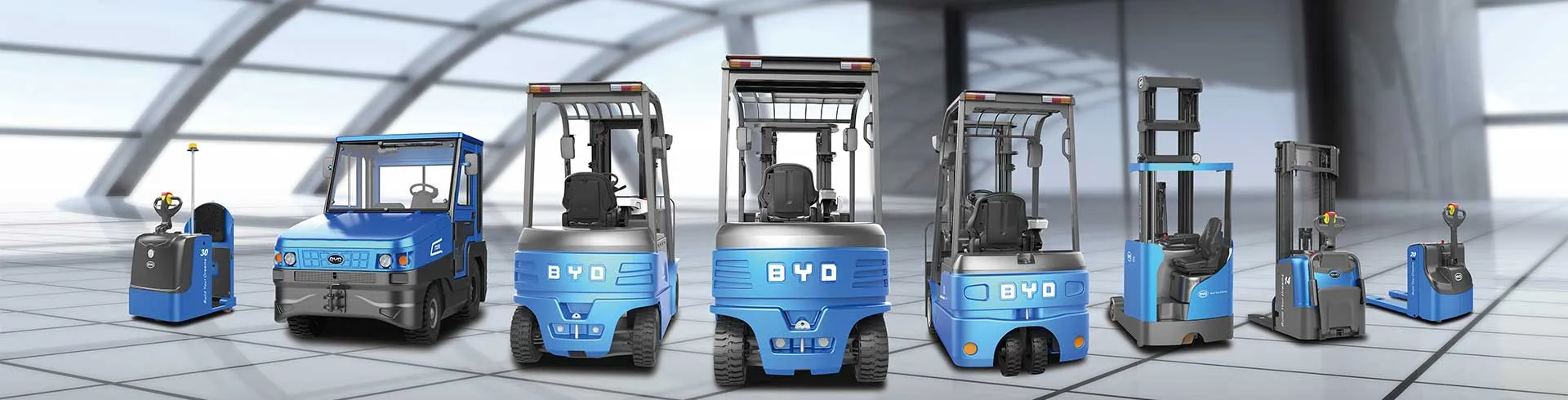
BYD P30PS Gehäusegröße, Speicherkanalanpassung Referenz(Figur1)

Da die Anforderungen an die Betriebseffizienz und die Raumnutzung in der Lager- und Logistikbranche weiter steigen, ist die Standortanpassungsfähigkeit von Elektrostaplern zu einer der wichtigsten Überlegungen bei der Unternehmensauswahl und der Lagerplanung geworden. Da es sich um einen Elektrostapler handelt, der in Lagersituationen weit verbreitet ist, wirkt sich der Grad der Abstimmung seiner Karosseriegröße mit dem Lagerkanal direkt auf die Durchgängigkeit und Raumnutzung des täglichen Betriebs aus.

Analyse der Körperkerngröße

Grundlegende Parameter der Fahrzeuggröße

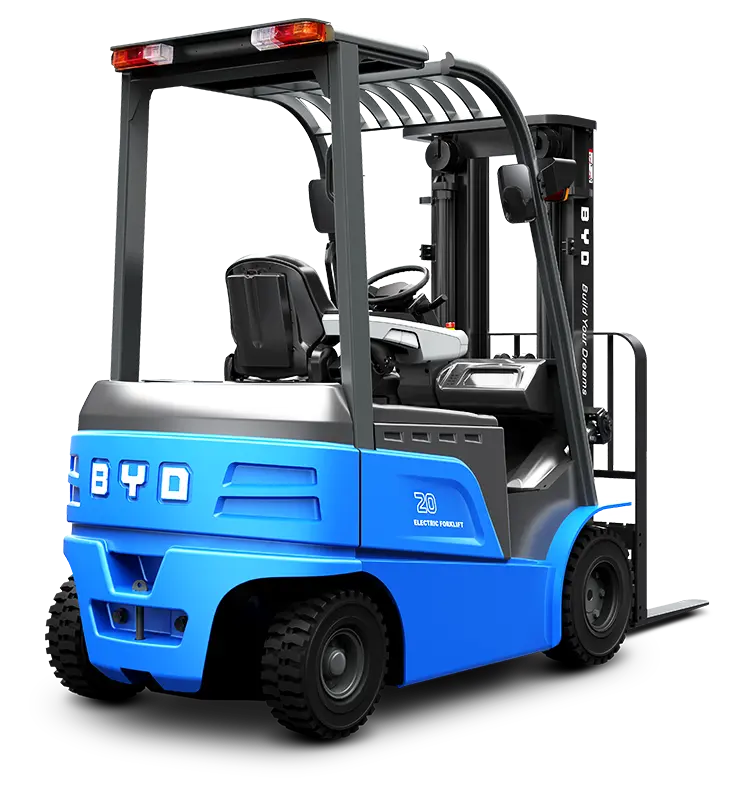
Die Grundgröße des BYD P30PS Fahrzeugs ist für die meisten Lagerszenarien geeignet. Die Länge der Karosserie ohne Gabeln beträgt etwa 1,8 Meter, und die Gesamtlänge nach Anpassung an die Standardgabeln beträgt etwa 3,2 Meter; die Breite der Karosserie beträgt etwa 1,2 Meter und die Höhe des Dachschutzes beträgt etwa 2,1 Meter. Diese Parameter bestimmen den Grundbelegungsbereich des Gabelstaplers im Lagerraum und sind die grundlegende Grundlage für die Kanalplanung.

Parameter minimaler Wenderadius

Die Wendeflexibilität von Gabelstaplern ist entscheidend für den Betrieb in engen Kanälen. Der minimale Wenderadius des BYD P30PS beträgt etwa 1,5 Meter. Dieser Parameter bedeutet, dass der minimale Platzbedarf für Gabelstapler ein wichtiger Indikator für die Planung von Wendekanälen und rechtwinkligen Bereichen ist.

Kernelemente der Speicherkanalanpassung

Standard zur Anpassung der Kanalbreite

Bei der Planung des Lagerkanals sollte die Breite entsprechend der Betriebsart bestimmt werden: Die Breite des Einwegkanals sollte mindestens 0,5 Meter größer sein als die Breite des Gabelstapleraufbaus, um sicherzustellen, dass bei laufendem Gabelstapler ein ausreichender Sicherheitsspielraum vorhanden ist; der Zweiwegdurchgang sollte mehr als doppelt so breit sein wie die Karosserie plus 0,8 Meter, um den Platzbedarf beim Zusammentreffen der beiden Fahrzeuge zu decken und das Risiko von Kratzern zu vermeiden.

Eckpunkte der Wenderaumanpassung

Bei rechtwinkligen Wendebereichen sollte die Kanalbreite größer sein als der minimale Wenderadius des Gabelstaplers plus 0,3 Meter, und es sollte ein Sicherheitsabstand zwischen dem Regal und dem Gabelstapler reserviert werden, um zu verhindern, dass der Gabelstapler während des Lenkvorgangs mit dem Regal kollidiert. In Bereichen, die häufiges Lenken erfordern, kann die Kanalbreite entsprechend erweitert werden, um den Arbeitsablauf zu verbessern.

Anpassung des Stapelvorgangs an den Raum

Beim Stapeln ist neben der Kanalbreite auch die seitliche Abstandsspanne zu berücksichtigen, nachdem der Gabelstapler die Güter angehoben hat, um sicherzustellen, dass der Gabelstapler beim Einstellen der Gabelposition nicht mit den Regalen oder Gütern auf beiden Seiten in Berührung kommt. Generell sollte ein seitlicher Sicherheitsabstand von mindestens 0,4 Metern eingehalten werden.

Vorschläge zur Anpassung an unterschiedliche Lagerszenarien

Lagerszene in schmalen Gassen

Da der Stauraum auf schmalen Fahrbahnen begrenzt ist, muss vorrangig geprüft werden, ob die Kanalbreite den Anforderungen des Einbahnverkehrs entspricht. Gleichzeitig wird in Verbindung mit dem minimalen Wenderadius des Gabelstaplers ein angemessener Wendebereich geplant, um zu vermeiden, dass der Betrieb aufgrund von Platzmangel blockiert wird. Wenn der Regalabstand eng ist, sollte die Gabel mit geeigneter Länge ausgetauscht werden, um die Raumnutzung weiter zu optimieren.

Flache Lagerszene

Bei der Lagerung in flachen Lagern sind in der Regel mehrere Gabelstapler gleichzeitig im Einsatz, und es muss ein Durchgang in beide Richtungen geplant werden, um ausreichend Platz für die Besprechung zu gewährleisten. Darüber hinaus sollte je nach Lage des Be- und Entladebereichs ausreichend Platz für den Gabelstapler reserviert werden, um die Effizienz der Be- und Entladevorgänge zu verbessern.

3D-Speicherszene

Die dreidimensionale Lagerung hat einen relativ kompakten Ein- und Ausstiegsraum. Es ist notwendig, den Wenderadius des Gabelstaplers mit der Länge der Karosserie zu kombinieren, um die geeigneten Ein- und Ausstiegskanäle zu planen, damit der Gabelstapler reibungslos in den Regalbereich ein- und ausfahren kann. Gleichzeitig sollte auf den vertikalen Abstand zwischen dem unteren Regal und dem Gabelstapler geachtet werden, um Kollisionen beim Heben zu vermeiden.

Ein vernünftiges Erfassen der Körpergrößenparameter des BYD P30PS und die Planung des Kanalraums entsprechend den tatsächlichen Bedürfnissen der Lagerszene können die Betriebseffizienz effektiv verbessern und die Platzverschwendung reduzieren. Bei der Lagerplanung können Unternehmen die Kanalgröße entsprechend dem tatsächlichen Betriebsprozess und der Art der Güter entsprechend anpassen, um die optimale Passform zwischen Gabelstapler und Standort zu gewährleisten.
Whatsapp

WeChat

Kontaktieren Sie uns

Verhandeln.

We use cookie to improve your online experience. By continuing to browse this website, you agree to our use of cookie.

Cookies

Please read our Terms and Conditions and this Policy before accessing or using our Services. If you cannot agree with this Policy or the Terms and Conditions, please do not access or use our Services. If you are located in a jurisdiction outside the European Economic Area, by using our Services, you accept the Terms and Conditions and accept our privacy practices described in this Policy.
We may modify this Policy at any time, without prior notice, and changes may apply to any Personal Information we already hold about you, as well as any new Personal Information collected after the Policy is modified. If we make changes, we will notify you by revising the date at the top of this Policy. We will provide you with advanced notice if we make any material changes to how we collect, use or disclose your Personal Information that impact your rights under this Policy. If you are located in a jurisdiction other than the European Economic Area, the United Kingdom or Switzerland (collectively “European Countries”), your continued access or use of our Services after receiving the notice of changes, constitutes your acknowledgement that you accept the updated Policy. In addition, we may provide you with real time disclosures or additional information about the Personal Information handling practices of specific parts of our Services. Such notices may supplement this Policy or provide you with additional choices about how we process your Personal Information.


Cookies

Cookies are small text files stored on your device when you access most Websites on the internet or open certain emails. Among other things, Cookies allow a Website to recognize your device and remember if you've been to the Website before. Examples of information collected by Cookies include your browser type and the address of the Website from which you arrived at our Website as well as IP address and clickstream behavior (that is the pages you view and the links you click).We use the term cookie to refer to Cookies and technologies that perform a similar function to Cookies (e.g., tags, pixels, web beacons, etc.). Cookies can be read by the originating Website on each subsequent visit and by any other Website that recognizes the cookie. The Website uses Cookies in order to make the Website easier to use, to support a better user experience, including the provision of information and functionality to you, as well as to provide us with information about how the Website is used so that we can make sure it is as up to date, relevant, and error free as we can. Cookies on the Website We use Cookies to personalize your experience when you visit the Site, uniquely identify your computer for security purposes, and enable us and our third-party service providers to serve ads on our behalf across the internet.

We classify Cookies in the following categories:
 ●  Strictly Necessary Cookies
 ●  Performance Cookies
 ●  Functional Cookies
 ●  Targeting Cookies


Cookie List
A cookie is a small piece of data (text file) that a website – when visited by a user – asks your browser to store on your device in order to remember information about you, such as your language preference or login information. Those cookies are set by us and called first-party cookies. We also use third-party cookies – which are cookies from a domain different than the domain of the website you are visiting – for our advertising and marketing efforts. More specifically, we use cookies and other tracking technologies for the following purposes:

Strictly Necessary Cookies
These cookies are necessary for the website to function and cannot be switched off in our systems. They are usually only set in response to actions made by you which amount to a request for services, such as setting your privacy preferences, logging in or filling in forms. You can set your browser to block or alert you about these cookies, but some parts of the site will not then work. These cookies do not store any personally identifiable information.

Functional Cookies
These cookies enable the website to provide enhanced functionality and personalisation. They may be set by us or by third party providers whose services we have added to our pages. If you do not allow these cookies then some or all of these services may not function properly.

Performance Cookies
These cookies allow us to count visits and traffic sources so we can measure and improve the performance of our site. They help us to know which pages are the most and least popular and see how visitors move around the site. All information these cookies collect is aggregated and therefore anonymous. If you do not allow these cookies we will not know when you have visited our site, and will not be able to monitor its performance.

Targeting Cookies
These cookies may be set through our site by our advertising partners. They may be used by those companies to build a profile of your interests and show you relevant adverts on other sites. They do not store directly personal information, but are based on uniquely identifying your browser and internet device. If you do not allow these cookies, you will experience less targeted advertising.

How To Turn Off Cookies
You can choose to restrict or block Cookies through your browser settings at any time. Please note that certain Cookies may be set as soon as you visit the Website, but you can remove them using your browser settings. However, please be aware that restricting or blocking Cookies set on the Website may impact the functionality or performance of the Website or prevent you from using certain services provided through the Website. It will also affect our ability to update the Website to cater for user preferences and improve performance. Cookies within Mobile Applications

We only use Strictly Necessary Cookies on our mobile applications. These Cookies are critical to the functionality of our applications, so if you block or delete these Cookies you may not be able to use the application. These Cookies are not shared with any other application on your mobile device. We never use the Cookies from the mobile application to store personal information about you.

If you have questions or concerns regarding any information in this Privacy Policy, please contact us by email at . You can also contact us via our customer service at our Site.


WhatsApp avatar

Click to Chat.

Im online now.

Hey, my name is Tim. The CPO of JXD, how can I assist you today?

WhatsApp Us

WhatsApp us