
 简体中文
简体中文 Deutsch
 日本語
日本語 한국어
한국어 Tiếng Việt
 Русский
 ไทย
ไทย Bahasa Indonesia
 Bahasa Melayu
 Filipino
 لالعربية
 Français

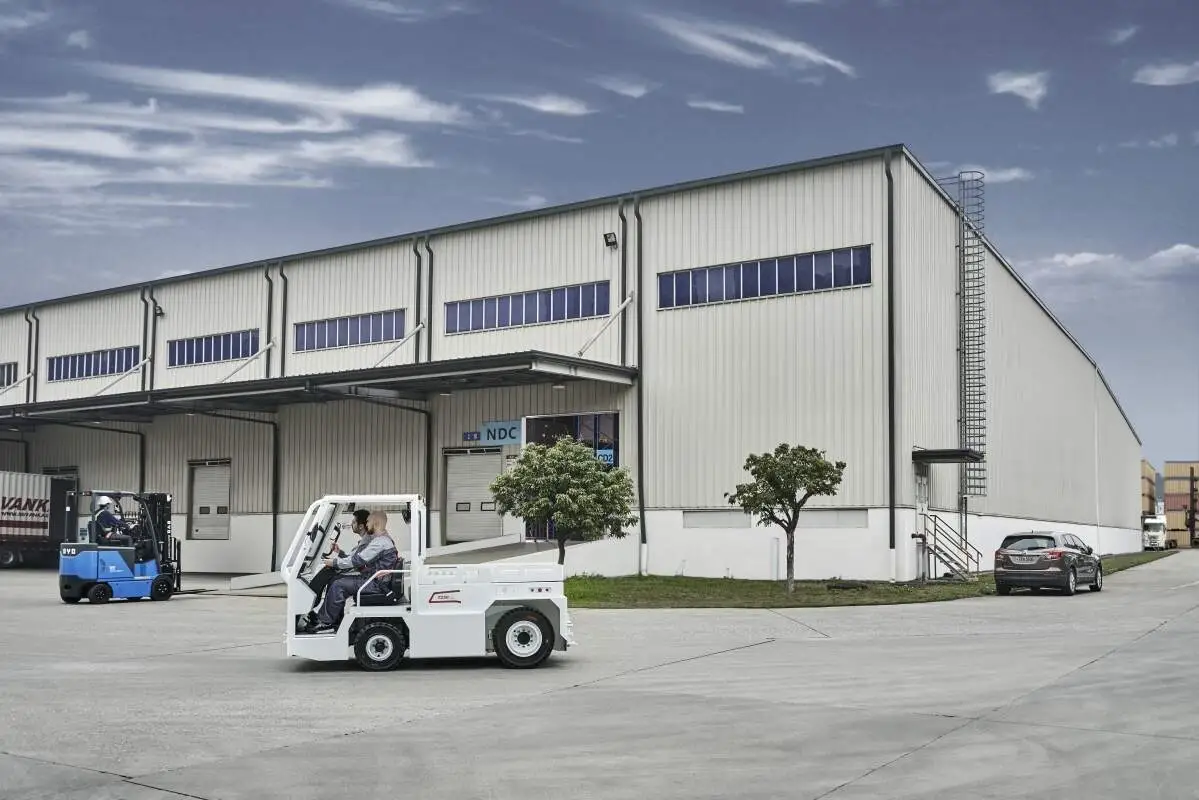
At present, many manufacturing plants and bulk commodity warehousing scenarios use 4.5-ton counterweight lithium-ion forklifts as the core handling equipment. Many purchasers are prone to being torn when comparing two popular models of the same tonnage. To clarify the actual differences between the two, they can match their own operational needs and select highly adaptable handling equipment.
Condition adaptation scenario difference
Adaptation scenario of CPD45
The wheelbase of this model has been slightly lengthened, which makes the vehicle more stable during operation. It is suitable for high-cargo stacking and long-distance transfer of heavy goods. It can operate smoothly even on non-hardened roads with less undulations. The roll control performance under heavy load is better, and the scene adaptation of often handling overweight irregular goods is better.
Adaptation scenarios for ECB45
The body of this model has been tightened and adjusted, with a smaller minimum turning radius. It is suitable for intensive warehousing scenarios with limited channel widths. It is more efficient in scenarios with frequent turns and narrow channels for picking and unloading goods. It can make full use of the limited space of warehousing, and is more suitable for old warehouses with insufficient channel reserved widths.
core configuration performance differences
Battery life and power performance
Both models are equipped with a large-capacity lithium battery power unit. The lithium battery pack of the CPD45 supports greater current output, more abundant power reserve for heavy-duty climbing, and higher battery life redundancy for more than 8 hours of continuous full-load operation. It is suitable for production plants that operate continuously in multiple shifts. The power adjustment of the ECB45 is biased towards energy consumption optimization, and the power loss under the same working conditions is lower. With a small-sized body, the energy consumption cost of daily short-distance transportation is more advantageous.
Control and maintenance experience
The driving space of the CPD45 has been widened, the damping adjustment of the operating handle is softer, the fatigue of the driver is lower after long-term operation, the wearing parts of the whole car are looser, the operation difficulty of daily maintenance and disassembly is smaller, and the time cost of subsequent operation and maintenance is reduced. The control system of the ECB45 integrates more auxiliary features, such as automatic deceleration into corners, intelligent prompts for cargo positions, etc. The novice driver has a shorter start-up cycle, which is suitable for the use of enterprises with larger personal flow.
Users don't need to blindly pursue redundant configurations when purchasing, but can choose cost-effective equipment with strong adaptability based on their own site conditions, operating hours, and cargo attributes.


