
 简体中文
简体中文 Deutsch
 日本語
日本語 한국어
한국어 Tiếng Việt
 Русский
 ไทย
ไทย Bahasa Indonesia
 Bahasa Melayu
 Filipino
 لالعربية
 Français

As the core area of textile production, the environmental characteristics of the textile workshop put forward special requirements for storage and handling equipment. On the one hand, the raw materials, work in progress, and finished products in the workshop are mostly fine materials such as fibers and fabrics, which are extremely sensitive to dust pollution, and any small pollutants may affect product quality. On the other hand, the workshop is densely equipped and frequently operated by personnel, which strictly limits the operation noise. Excessive noise not only affects the comfort of employees, but also may interfere with the normal operation of precision textile equipment. In this context, electric forklifts (especially lithium-powered forklifts) show unique advantages in the storage and handling scenes of textile workshops due to their technical characteristics.
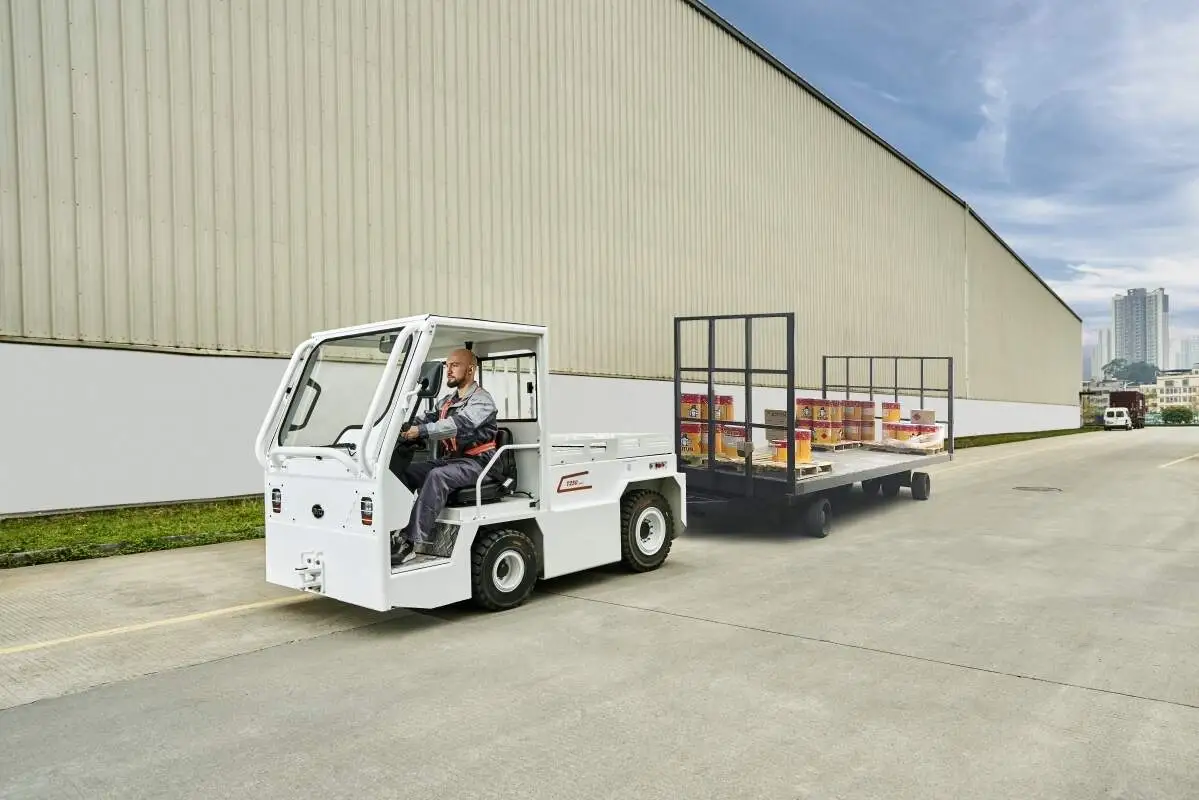
The dust-free operation advantage of lithium-ion forklifts is first and foremost reflected in the cleanliness of the energy system. Traditional internal combustion forklifts rely on fuel combustion to provide power, and exhaust gas is emitted during operation. The particulate matter, hydrocarbons and other pollutants contained in the exhaust gas not only pollute the air in the workshop, but also may adhere to the surface of textile raw materials or finished products, resulting in product defects and even batch quality problems. Lithium-ion forklifts are powered by electricity, and batteries are used as the core energy source. There is no exhaust gas emission, which fundamentally avoids the pollution risk caused by exhaust gas. At the same time, the power system design of lithium-ion forklifts pays more attention to sealing and low dust characteristics. During the handling process, the friction between the tire and the ground and the lifting of the fork are not easy to raise the suspended dust in the workshop, ensuring that the workshop environment is continuously clean and providing a stable operating foundation for textile production.
In terms of low-noise operation, lithium-ion forklifts also have significant advantages. The engine operation of traditional internal combustion forklifts generates high decibels of mechanical noise. Being in this environment for a long time not only affects the hearing health of employees, but also may interfere with the operation accuracy of quality inspection equipment and precision textile machinery in the workshop. The drive motor mounted on the lithium-ion forklift adopts a low-noise design, and its operating noise mainly comes from the motor operation and component friction, which reduces the noise decibels by more than 60% compared with internal combustion forklifts. In addition, by optimizing the transmission system and selecting low rolling resistance silent tires and other details, the additional noise during the operation is further reduced. This low-noise feature not only meets the needs of the textile workshop for a quiet environment, but also reduces the equipment failure caused by noise, which indirectly improves the stability and continuity of the production process.
Specific to the storage and handling scenarios of textile workshops, the suitability of lithium-ion forklifts is reflected in multi-link collaborative operations. In the process of raw material warehousing, textile factories often need to handle rolled yarns, bundles of fibers and other materials. The low noise characteristics of lithium-ion forklifts can avoid disturbing textile workers who are working, and at the same time, dust-free operations ensure that raw materials are not polluted. In the work in progress turnover process, the workshop has narrow channels and dense equipment. With flexible steering performance and precise control, lithium-ion forklifts can efficiently complete material transfer in a limited space. The dual advantages of low noise and dust-free make the production process smoother. In the process of finished product outbound, the finished product packaging has extremely high cleanliness requirements. The dust-free operation of lithium-ion forklifts can directly guarantee the quality of finished product packaging and avoid secondary cleaning costs.
To sum up, the requirements of the textile workshop for storage and handling equipment are essentially a dual consideration of environmental cleanliness and production continuity. The lithium-ion forklift meets the strict requirements of the workshop for cleanliness through the dust-free operation characteristics of no exhaust gas and low dust; at the same time, it adapts to the needs of the workshop for a quiet environment with low noise operation characteristics. This technical feature not only solves the pain points of traditional equipment in textile scenes, but also helps enterprises achieve green production and efficient operation, making it an ideal choice for storage and handling in modern textile workshops.


