
 简体中文
简体中文 Deutsch
 日本語
日本語 한국어
한국어 Tiếng Việt
 Русский
 ไทย
ไทย Bahasa Indonesia
 Bahasa Melayu
 Filipino
 لالعربية
 Français
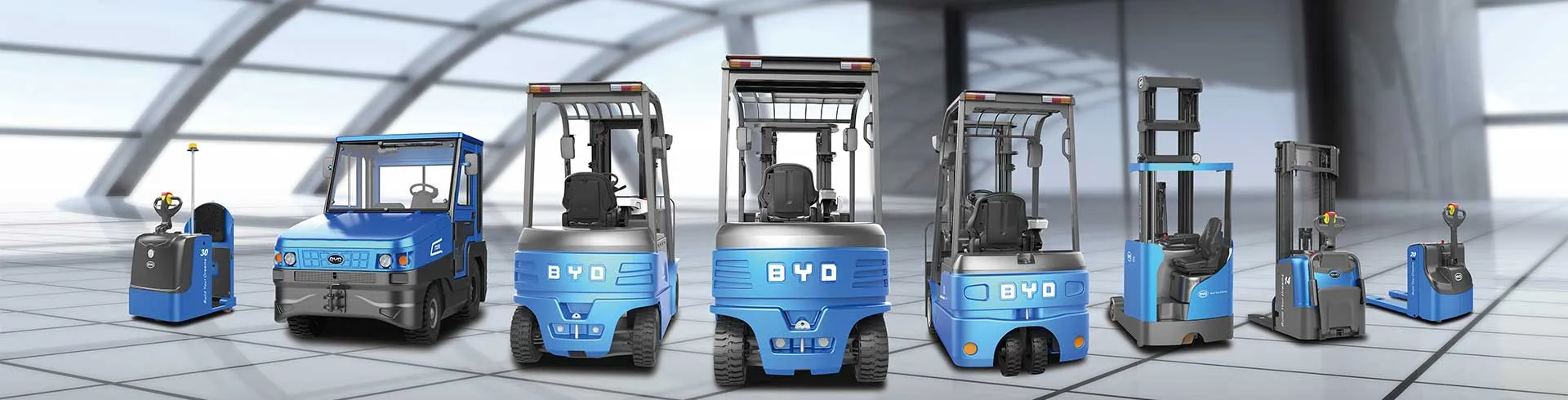
During the e-commerce promotion period, consumers' shopping demand was released in a centralized manner. As the core hub of commodity turnover, warehousing faced multiple challenges such as surge in order volume, accelerated goods circulation, and optimized space utilization. Efficient cargo flow management is not only related to the timeliness of order performance, but also directly affects warehousing operation costs and user experience. In this context, electric forklifts, as the core equipment of warehousing and handling operations, its performance and application strategies are crucial to ensuring the stable operation of warehousing systems.
The core challenge of warehouse cargo flow management during the e-commerce promotion period
In the e-commerce promotion scenario, warehousing cargo flow management faces three core challenges. The first is the dual pressure of order volume and processing timeliness. In a short period of time, the order volume may reach several times the daily, and the whole process operations such as sorting, handling, and outbound need to be completed quickly. The traditional manual handling method is difficult to meet the timeliness requirements. Secondly, the complexity of the flow of goods is increased. The flow of goods with different flows such as multi-category goods, returned and exchanged goods, and pre-sold goods is intertwined, which puts forward higher requirements for warehousing path planning and cargo space scheduling. Finally, there is the requirement of storage space utilization efficiency, which realizes high-density storage and fast turnover in limited storage space to avoid operation delays caused by chaotic storage spaces.
The key role of efficient handling equipment in warehouse operation
With its technical characteristics and operational advantages, high-efficiency electric forklifts have become the core support for solving the above challenges.
Improve the efficiency of handling operations and shorten the turnaround cycle
Electric forklifts significantly improve the efficiency of single handling operations through automation and humanized design. Compared with traditional internal combustion forklifts, its electric drive system has lower energy consumption, less noise, and stable operation speed, which can complete the loading, unloading, transfer and palletizing of goods in a short time. For example, in the sorting area, electric forklifts can quickly respond to the demand for goods extraction of different orders, avoid the stagnation of operations due to equipment cards or insufficient power, effectively shorten the turnaround time of goods in the warehouse, and ensure the timeliness of order performance.
#Optimize storage management and inventory turnover
Modern electric forklifts are often equipped with intelligent dispatching systems or data interfaces, which can be linked with the warehouse management system (WMS) to provide real-time feedback on cargo space occupancy, cargo weight, and other information to assist warehouse managers in optimizing cargo space planning. Through accurate cargo space allocation, goods search time can be reduced and picking efficiency can be improved. At the same time, combined with the multi-directional handling capability of electric forklifts, it can flexibly shuttle between high-density shelves to achieve fast stacking and replenishment of goods, avoid inventory backlog, and improve overall inventory turnover.
#Ensure job safety and operating standards
The operation stability and safety protection design of electric forklifts can effectively reduce the risk of warehousing accidents. For example, equipped with anti-skid tires, braking systems, and body stabilization devices, it can maintain operation stability in complex ground environments; some electric forklifts also have functions such as fork height limit and automatic alarm to avoid goods falling or colliding. In addition, the operation process of electric forklifts is relatively standardized. Through standardized operation training, manual operation errors can be reduced, warehousing operations can be ensured, and the risk of cargo flow interruption caused by safety accidents can be reduced.
#Adapt to the needs of multi-scenario operations and flexibly respond to changes in cargo flow
During the e-commerce promotion period, there are various cargo flow scenarios, and electric forklifts can be adapted to a variety of operation needs through different configurations. For example, narrow-channel electric forklifts are suitable for cargo handling in dense shelf warehouses, high-level picking forklifts can efficiently complete high-rise shelf cargo access, and forward forklifts can realize long-distance forward operations in limited space. This flexibility allows warehouse managers to quickly adjust equipment configurations according to the characteristics of freight flow at different times (such as receipt peak, sorting peak, delivery peak) to avoid cargo congestion caused by equipment mismatch.
conclusion
The management of warehousing and cargo flow during the e-commerce promotion period is essentially a comprehensive test of the response speed, space utilization rate and operation specification of the warehousing system. High-efficiency electric forklifts have become the "power engine" of warehousing operation by improving operation efficiency, optimizing cargo space management, ensuring operation safety, and adapting to multi-scenario needs. Choosing electric forklifts with mature technology and adapting to their own warehousing scale and cargo flow characteristics is a key link to ensure the stable and efficient operation of the warehousing system during the promotion period, and it is also an important guarantee for e-commerce enterprises to reduce costs and increase efficiency and improve user experience.
.webp "During the e-commerce promotion period, cargo flow management, efficient handling equipment ensure warehousing operation(Image1)")


