2026-06-09

Indoor storage safety operation specifications, low noise and low emission advantages of electric forklifts

With the rapid development of the warehousing and logistics industry, the safety management and environmental protection requirements of indoor warehousing operations have received increasing attention. Standardized operation procedures and environmentally friendly equipment selection can not only improve the efficiency of warehousing operations, but also ensure the health of operators and reduce environmental impact. The following are the main points of indoor warehousing safety operation specifications and the advantages of electric forklifts.

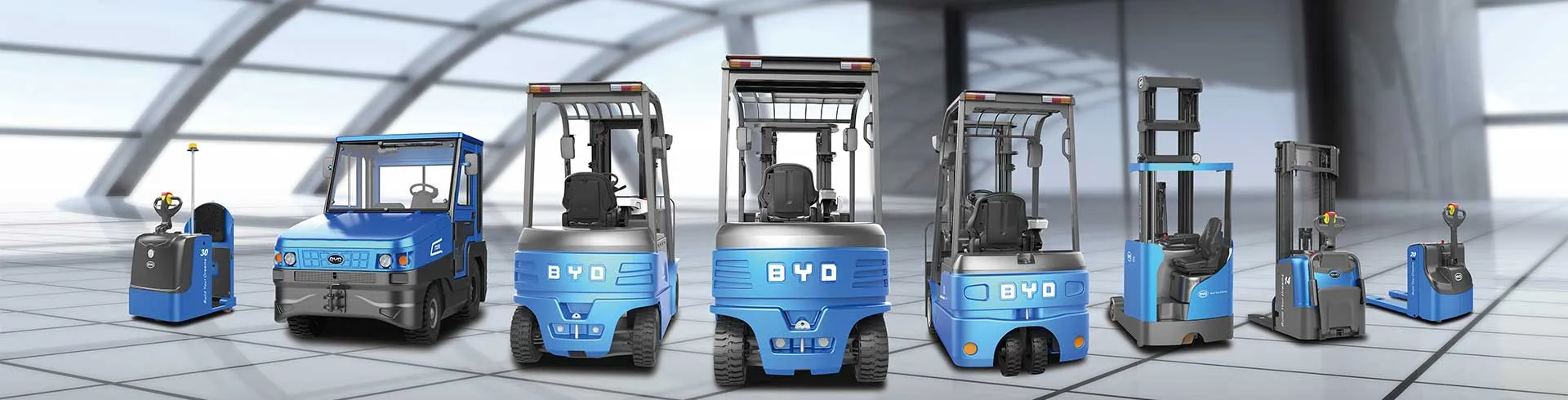
Indoor storage safety operation specifications, low noise and low emission advantages of electric forklifts(Image1)

Key points of safety operation specifications for indoor warehousing

#Personnel operation specifications

Operators need to go through professional Security Training and be certified to work. Before operation, they should be familiar with the equipment operation manual and emergency handling procedures. Check their own status before operation, and it is strictly forbidden to work after fatigue or drinking. During operation, the speed limit should be strictly observed. Turn, ramp, and narrow passages need to slow down and keep a safe distance. At the same time, operators need to regularly participate in safety drills to ensure quick response to emergencies, such as goods falling, equipment failure, etc.

#Equipment usage specifications

Storage equipment (including electric forklifts) needs to establish a regular inspection system to check the braking system, steering performance, lighting and battery power before daily operation; overloading and partial loading are strictly prohibited during operation, and the stacking height of goods needs to meet safety standards to avoid unstable center of gravity due to excessive height. Special charging piles should be used when charging, private wires are prohibited, and battery maintenance needs to be operated by professionals to prevent safety hazards such as liquid leakage and short circuit.

#Environmental management practices

Storage passages need to be kept open, the ground signs are clear, and warning signs such as speed limit and avoidance are set; the goods should be stably and neatly placed, and the principle of "heavy or light, big or small" should be followed to avoid the collapse of goods. The lighting system needs to meet the brightness requirements of the working area. Fire protection facilities (such as fire extinguishers and fire hydrants) should be fully equipped and easy to use. The width of the passage needs to meet the equipment access standards to ensure smooth evacuation in emergency situations.

Low noise and low emission advantages of electric forklifts in storage operations

Low noise advantage

Compared with fuel forklifts, electric forklifts operate with significantly lower noise (usually less than 65 decibels), which can reduce the long-term impact on the operator's hearing and improve work comfort. A quiet working environment also facilitates communication and coordination among personnel to avoid operation errors caused by noise interference, especially for storage scenarios that are sensitive to sound (such as food and medical storage areas). At the same time, the low noise characteristics are in line with the "people-oriented" management philosophy of modern warehouses, which helps to reduce personnel occupational health risks.

Low emission advantage

Electric forklifts have no exhaust emissions, which can effectively improve the air quality inside the warehouse, avoid carbon monoxide, particulate matter and other pollutants generated by fuel combustion, and reduce the potential impact on stored goods. In the context of stricter environmental protection policies, the low emission characteristics of electric forklifts can help enterprises meet environmental compliance requirements and enhance the image of green warehousing. In addition, the energy consumption cost of electric forklifts is lower than that of fuel equipment, and energy expenditure can be reduced in long-term operation, achieving a win-win situation between economic and environmental benefits.

To sum up, indoor storage safety operation standards are the foundation for ensuring the orderly development of storage activities, and electric forklifts can fundamentally improve the safety and environmental protection level of storage operations by virtue of their low-noise and low-emission advantages. When selecting storage equipment, enterprises need to consider the requirements of safety standards, give priority to electric forklifts with reliable performance and environmental protection standards, and achieve efficient, safe and sustainable development of warehouse management through standardized management and equipment optimization.

Whatsapp

WeChat

Contact Us

Send Inquiry

We use cookie to improve your online experience. By continuing to browse this website, you agree to our use of cookie.

Cookies

Please read our Terms and Conditions and this Policy before accessing or using our Services. If you cannot agree with this Policy or the Terms and Conditions, please do not access or use our Services. If you are located in a jurisdiction outside the European Economic Area, by using our Services, you accept the Terms and Conditions and accept our privacy practices described in this Policy.
We may modify this Policy at any time, without prior notice, and changes may apply to any Personal Information we already hold about you, as well as any new Personal Information collected after the Policy is modified. If we make changes, we will notify you by revising the date at the top of this Policy. We will provide you with advanced notice if we make any material changes to how we collect, use or disclose your Personal Information that impact your rights under this Policy. If you are located in a jurisdiction other than the European Economic Area, the United Kingdom or Switzerland (collectively “European Countries”), your continued access or use of our Services after receiving the notice of changes, constitutes your acknowledgement that you accept the updated Policy. In addition, we may provide you with real time disclosures or additional information about the Personal Information handling practices of specific parts of our Services. Such notices may supplement this Policy or provide you with additional choices about how we process your Personal Information.


Cookies

Cookies are small text files stored on your device when you access most Websites on the internet or open certain emails. Among other things, Cookies allow a Website to recognize your device and remember if you've been to the Website before. Examples of information collected by Cookies include your browser type and the address of the Website from which you arrived at our Website as well as IP address and clickstream behavior (that is the pages you view and the links you click).We use the term cookie to refer to Cookies and technologies that perform a similar function to Cookies (e.g., tags, pixels, web beacons, etc.). Cookies can be read by the originating Website on each subsequent visit and by any other Website that recognizes the cookie. The Website uses Cookies in order to make the Website easier to use, to support a better user experience, including the provision of information and functionality to you, as well as to provide us with information about how the Website is used so that we can make sure it is as up to date, relevant, and error free as we can. Cookies on the Website We use Cookies to personalize your experience when you visit the Site, uniquely identify your computer for security purposes, and enable us and our third-party service providers to serve ads on our behalf across the internet.

We classify Cookies in the following categories:
 ●  Strictly Necessary Cookies
 ●  Performance Cookies
 ●  Functional Cookies
 ●  Targeting Cookies


Cookie List
A cookie is a small piece of data (text file) that a website – when visited by a user – asks your browser to store on your device in order to remember information about you, such as your language preference or login information. Those cookies are set by us and called first-party cookies. We also use third-party cookies – which are cookies from a domain different than the domain of the website you are visiting – for our advertising and marketing efforts. More specifically, we use cookies and other tracking technologies for the following purposes:

Strictly Necessary Cookies
These cookies are necessary for the website to function and cannot be switched off in our systems. They are usually only set in response to actions made by you which amount to a request for services, such as setting your privacy preferences, logging in or filling in forms. You can set your browser to block or alert you about these cookies, but some parts of the site will not then work. These cookies do not store any personally identifiable information.

Functional Cookies
These cookies enable the website to provide enhanced functionality and personalisation. They may be set by us or by third party providers whose services we have added to our pages. If you do not allow these cookies then some or all of these services may not function properly.

Performance Cookies
These cookies allow us to count visits and traffic sources so we can measure and improve the performance of our site. They help us to know which pages are the most and least popular and see how visitors move around the site. All information these cookies collect is aggregated and therefore anonymous. If you do not allow these cookies we will not know when you have visited our site, and will not be able to monitor its performance.

Targeting Cookies
These cookies may be set through our site by our advertising partners. They may be used by those companies to build a profile of your interests and show you relevant adverts on other sites. They do not store directly personal information, but are based on uniquely identifying your browser and internet device. If you do not allow these cookies, you will experience less targeted advertising.

How To Turn Off Cookies
You can choose to restrict or block Cookies through your browser settings at any time. Please note that certain Cookies may be set as soon as you visit the Website, but you can remove them using your browser settings. However, please be aware that restricting or blocking Cookies set on the Website may impact the functionality or performance of the Website or prevent you from using certain services provided through the Website. It will also affect our ability to update the Website to cater for user preferences and improve performance. Cookies within Mobile Applications

We only use Strictly Necessary Cookies on our mobile applications. These Cookies are critical to the functionality of our applications, so if you block or delete these Cookies you may not be able to use the application. These Cookies are not shared with any other application on your mobile device. We never use the Cookies from the mobile application to store personal information about you.

If you have questions or concerns regarding any information in this Privacy Policy, please contact us by email at . You can also contact us via our customer service at our Site.


WhatsApp avatar

Click to Chat.

Im online now.

Hey, my name is Tim. The CPO of JXD, how can I assist you today?

WhatsApp Us

WhatsApp us