
 简体中文
简体中文 Deutsch
 日本語
日本語 한국어
한국어 Tiếng Việt
 Русский
 ไทย
ไทย Bahasa Indonesia
 Bahasa Melayu
 Filipino
 لالعربية
 Français
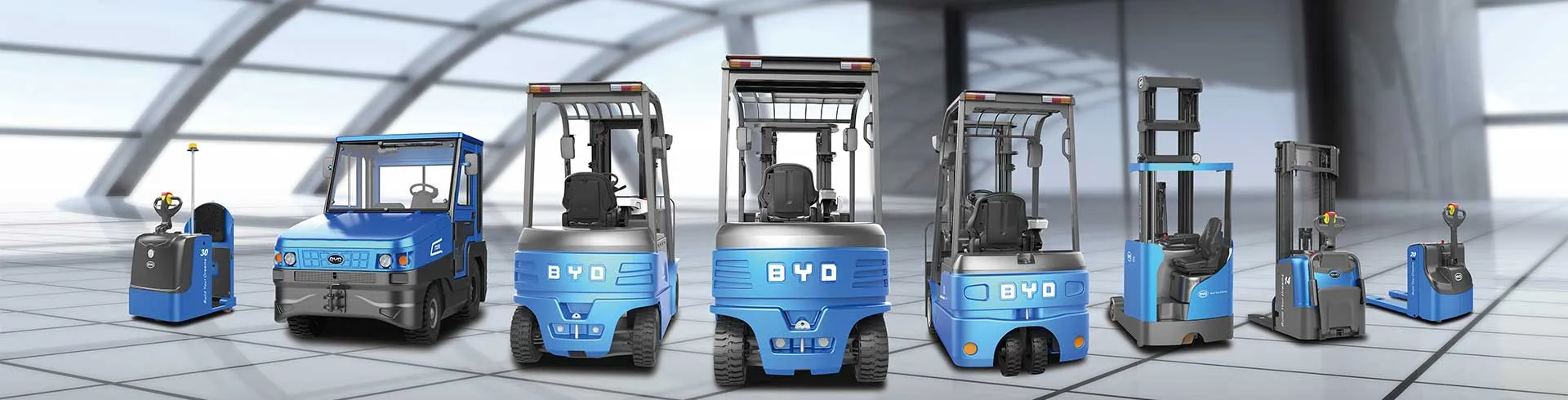
In industrial production, the high temperature and high load operating environment poses a special challenge to the operation performance of electric forklifts. As the core equipment of warehouse logistics and factory handling, the stability and battery life of electric forklifts in high temperature environments directly affect the operation efficiency and safety. This paper will analyze from three dimensions: environmental impact, performance performance and coping strategies.
First, the comprehensive impact of high temperature and high load environment on electric forklifts
High-temperature and high-load operating environments usually refer to scenarios where the temperature exceeds 35 ° C, the equipment works continuously for more than 8 hours, and the load rate reaches more than 80%. In such environments, electric forklifts face multiple pressures: on the one hand, high temperature accelerates the attenuation of battery active substances and electrolyte evaporation, resulting in a decrease in battery capacity; on the other hand, continuous heavy-load operation superimposes the load of the motor and transmission system, intensifies the thermal expansion and contraction of metal parts, and accelerates the aging rate of seals. In addition, the decrease in the viscosity of hydraulic oil and the decrease in the elasticity of rubber parts in high-temperature environments will also have a potential impact on the stability of
Second, the key factors affecting the stability of electric forklifts
#2.1 The role of the battery system in stability
The battery is the core of the power output of the electric forklift. Under high temperature environment, the internal chemical reaction rate of the lithium battery accelerates, which may lead to voltage fluctuations and a decrease in charge and discharge efficiency. When the voltage difference of the battery cell exceeds 0.05V, the motor power output will fluctuate instantaneously, especially when driving on heavy loads or ramps, which is easy to cause body shaking and affect the operation stability. In addition, high temperature may also increase the risk of thermal runaway of the battery, further threatening the safety of equipment.
#2.2 Structural design and component reliability
The stability of electric forklifts depends on the coordination of the mechanical structure and the control system. In high temperature environments, the welding joints of the frame may be slightly deformed due to thermal expansion and contraction, which affects the rigidity of the chassis; the aging of the seals of the hydraulic valve group in the steering system will lead to delayed steering response and increase the risk of steering deviation. At the same time, the friction plate of the braking system is prone to thermal recession at high temperature, and the braking torque decreases, which may affect the stability during emergency braking.
#2.3 Load conditions and operating specifications
In actual operation, overload operation will cause uneven distribution of tire grounding pressure and exacerbate the load of the steering system; frequent start-stop and sudden acceleration will cause the motor to be in a high current state frequently, and heat accumulation will accelerate. In addition, operators feel fatigue in high temperature environments. If they do not operate according to specifications (such as keeping the throttle fully open for a long time), it is easy to cause the power output to mismatch the load demand, further reducing stability.
III. The influence mechanism of electric forklift truck battery life performance
#3.1 Battery Thermal Management and Capacity Decay
The battery life of an electric forklift is closely related to the battery thermal management system. In a high temperature environment, the battery pack capacity decays by about 5% -8% for every 10 ° C increase in temperature. If the cooling system is inefficient, after the battery temperature exceeds 45 ° C, the activity of chemically active substances decreases, and the actual usable capacity is only 70% -80% of that at room temperature. At the same time, high temperature leads to an increase in the risk of lithium precipitation during charging, and long-term use will shorten the battery cycle life and indirectly affect the battery life.
#3.2 Energy efficiency losses in the energy system
The energy efficiency of the motor and control system will naturally shrink at high temperatures. The magnetic properties of the rare earth permanent magnet of the permanent magnet synchronous motor decrease at high temperatures, resulting in a reduction in the efficiency of the motor by about 3% -5%; the power device of the controller needs additional energy to maintain heat dissipation due to the increase in temperature. In addition, the leakage of the hydraulic system increases with the increase of oil temperature, further reducing the energy utilization efficiency, resulting in an increase in energy consumption per unit operation.
3.3 Relationship between work intensity and energy consumption
When operating at high load, the electric forklift is in continuous full load operation, the motor power output is close to the rated value, and the energy consumption increases non-linearly with the load rate. The data shows that when the load rate is increased from 60% to 90%, the energy consumption per unit operation increases by about 25%. In high temperature environments, the equipment requires additional energy consumption for heat dissipation, further amplifying the energy consumption gap, resulting in a 30% -40% reduction in battery life compared to normal temperature environments.
IV. Suggestions for improving the performance of electric forklifts in high-temperature and high-load environments
#4.1 Equipment selection optimization
Preference is given to electric forklifts that are suitable for high temperature environments, such as lithium iron phosphate batteries (better high temperature resistance than ternary lithium batteries), fully wrapped motor cooling structures, and intelligent temperature control systems. The steering system can choose a double-sealed hydraulic valve group to improve the sealing and response speed at high temperatures.
#4.2 Daily maintenance and inspection
Establish a regular maintenance mechanism: check the battery cell voltage and temperature every week to ensure that the temperature difference does not exceed 3 ° C; clean the cooling system every month to check the fan speed and heat sink cleanliness; check the viscosity and leakage of hydraulic oil every quarter, and replace the aging seals in time.
#4.3 Operational specifications and load management
Plan the operation route rationally to reduce frequent steering and ramp driving; avoid continuous full load operation for more than 2 hours, and arrange 10-15 minutes of downtime every hour for heat dissipation; strictly enforce load restrictions, prohibit overload operation, and ensure that the motor and battery are in a safe working range.
conclusion

Under high-temperature and high-load operating environments, the stability and battery life of electric forklifts need to be comprehensively optimized from multiple dimensions such as equipment selection, daily maintenance, and operation specifications. Through scientific management and technological upgrades, the impact of environmental factors on equipment performance can be effectively reduced, ensuring the efficiency and safety of industrial operations.


