2026-07-08

Penyumbatan elemen filter hidrolik forklift menyebabkan kelemahan pengangkatan, berbagi proses penggantian suku cadang

Penyumbatan elemen filter hidrolik forklift menyebabkan kelemahan pengangkatan, berbagi proses penggantian suku cadang(tokoh1)

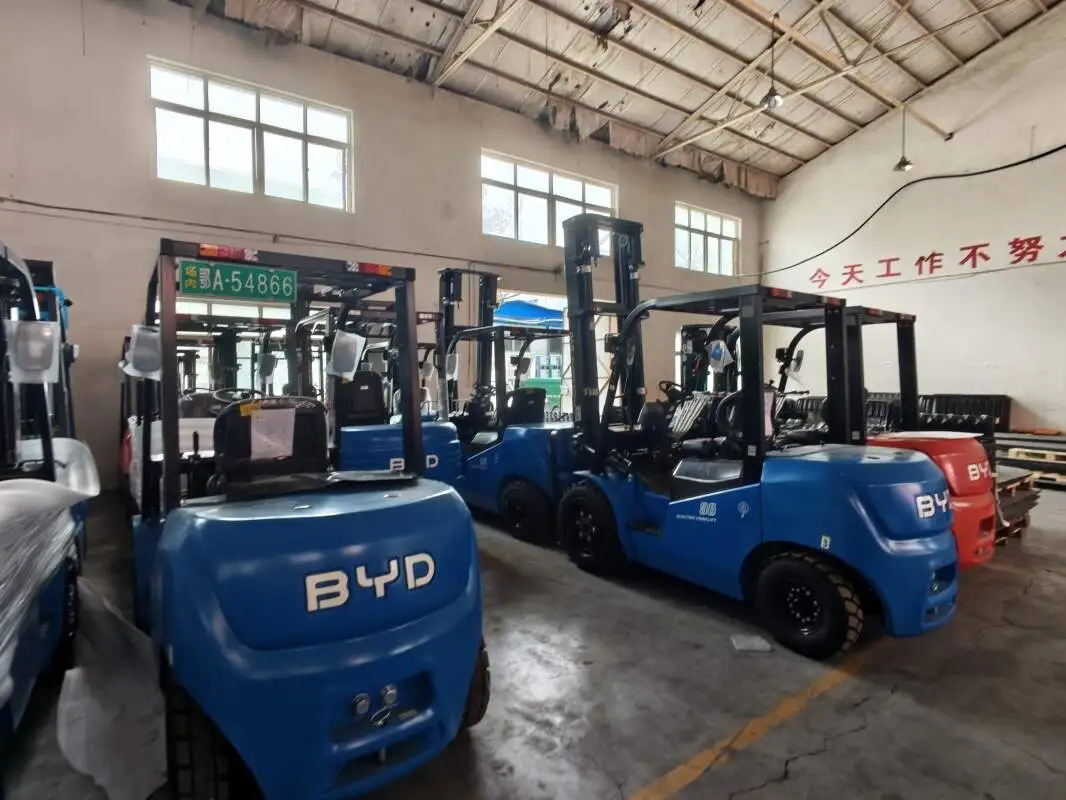
Dalam pengoperasian harian forklift listrik, ketidakmampuan untuk mengangkat adalah kegagalan yang lebih umum. Banyak operator seringkali tidak memiliki cara untuk memulai ketika menghadapi masalah seperti itu. Faktanya, berkali-kali pelakunya adalah penyumbatan elemen filter hidrolik. Sebagai sumber daya inti dari fungsi pengangkatan forklift listrik, elemen filter hidrolik memainkan peran kunci dalam menyaring kotoran dalam oli dan memastikan kebersihan oli. Setelah elemen filter diblokir, itu akan secara langsung mempengaruhi operasi normal sistem hidrolik.

Prinsip penyumbatan elemen filter hidrolik yang menyebabkan kelemahan pengangkatan tidak rumit. Tindakan pengangkatan forklift listrik bergantung pada pompa hidrolik untuk mengangkut oli bertekanan tinggi untuk mendorong silinder, dan elemen filter hidrolik bertanggung jawab untuk mencegat puing-puing logam, debu, koloid, dan kotoran lainnya dalam oli. Ketika elemen filter digunakan terlalu lama, atau ada banyak kotoran di lingkungan kerja, lubang filter elemen filter secara bertahap akan diblokir, mengakibatkan peningkatan ketahanan aliran oli, dan pompa hidrolik tidak dapat memberikan tekanan yang cukup untuk silinder. Akhirnya, pengangkatan akan lambat atau bahkan tidak mungkin. Selain itu, penyumbatan jangka panjang juga dapat memperburuk keausan pompa hidrolik, silinder, dan komponen lainnya, yang menyebabkan kegagalan yang lebih serius.

Sebelum mengganti elemen filter hidrolik, perlu melakukan persiapan yang memadai. Pertama, parkir forklift listrik di area datar dan berventilasi baik, tarik rem tangan dan matikan catu daya untuk memastikan pengoperasian yang aman. Kedua, siapkan elemen filter hidrolik baru, kunci pas, wadah penerima oli, lap pembersih dan alat serta aksesori lainnya. Perhatikan bahwa model elemen filter baru harus cocok dengan sistem hidrolik forklift untuk menghindari penyegelan yang buruk atau efek filtrasi yang buruk karena perbedaan model. Terakhir, konsultasikan manual operasi forklift terlebih dahulu untuk memahami lokasi pemasangan spesifik elemen filter hidrolik.

Proses penggantian spesifik dapat dibagi menjadi langkah-langkah berikut: Langkah pertama adalah mengalirkan oli hidrolik lama. Temukan port pembuangan oli tangki oli hidrolik, letakkan wadah penerima oli di bawah, buka perlahan katup pembuangan oli, dan tutup katup setelah oli lama benar-benar habis. Perhatikan membuang oli lama yang terkumpul dengan benar untuk menghindari polusi lingkungan. Langkah kedua adalah membongkar elemen filter lama. Gunakan kunci pas untuk membuka elemen filter lama dengan hati-hati. Selama proses, hindari kotoran pada elemen filter agar tidak jatuh ke sirkuit oli hidrolik. Setelah dibongkar, Anda dapat mengamati tingkat polusi pada permukaan elemen filter untuk lebih memastikan penyebab kegagalan. Langkah ketiga adalah membersihkan dudukan pemasangan. Lap permukaan kontak kursi pemasangan elemen filter dengan lap pembersih untuk memeriksa apakah gasket penyegel rusak atau menua. Jika ada masalah, ganti segel baru tepat waktu untuk mencegah kebocoran oli berikutnya. Langkah keempat adalah memasang elemen filter baru. Oleskan sedikit oli hidrolik bersih ke cincin penyegel elemen filter baru, lalu kencangkan elemen filter ke kursi pemasangan dengan tangan. Setelah cincin penyegel dipasang, kencangkan perlahan dengan kunci pas. Berhati-hatilah untuk tidak menggunakan kekuatan berlebihan untuk menghindari kerusakan pada elemen filter atau kursi pemasangan. Langkah kelima adalah menambahkan oli hidrolik baru. Sesuai dengan standar level oli yang ditentukan dalam manual forklift, tambahkan oli hidrolik yang sesuai ke tangki oli hidrolik. Selama proses penambahan, hindari oli bercampur dengan kotoran. Langkah keenam adalah menguji fungsi pengangkatan. Mulai forklift, operasikan pegangan pengangkat berulang kali, amati apakah tindakan pengangkatan kembali normal, dan periksa apakah ada kebocoran oli di sistem hidrolik untuk memastikan bahwa sistem yang diganti beroperasi dengan stabil.

Selain penggantian setelah kegagalan, perawatan harian juga penting. Disarankan untuk mengganti elemen filter hidrolik secara teratur sesuai dengan siklus perawatan forklift. Umumnya, dapat diganti setiap 500 jam atau lebih. Setelah operasi sehari-hari, debu dan puing-puing di permukaan forklift harus dibersihkan tepat waktu untuk mengurangi kemungkinan kotoran masuk ke sistem hidrolik. Periksa secara teratur warna dan kondisi oli hidrolik. Jika oli ditemukan keruh atau hitam, perlu diganti tepat waktu untuk mengurangi risiko penyumbatan elemen filter dari sumbernya.
Telepon

WeChat

Whatsapp

Alamat email

We use cookie to improve your online experience. By continuing to browse this website, you agree to our use of cookie.

Cookies

Please read our Terms and Conditions and this Policy before accessing or using our Services. If you cannot agree with this Policy or the Terms and Conditions, please do not access or use our Services. If you are located in a jurisdiction outside the European Economic Area, by using our Services, you accept the Terms and Conditions and accept our privacy practices described in this Policy.
We may modify this Policy at any time, without prior notice, and changes may apply to any Personal Information we already hold about you, as well as any new Personal Information collected after the Policy is modified. If we make changes, we will notify you by revising the date at the top of this Policy. We will provide you with advanced notice if we make any material changes to how we collect, use or disclose your Personal Information that impact your rights under this Policy. If you are located in a jurisdiction other than the European Economic Area, the United Kingdom or Switzerland (collectively “European Countries”), your continued access or use of our Services after receiving the notice of changes, constitutes your acknowledgement that you accept the updated Policy. In addition, we may provide you with real time disclosures or additional information about the Personal Information handling practices of specific parts of our Services. Such notices may supplement this Policy or provide you with additional choices about how we process your Personal Information.


Cookies

Cookies are small text files stored on your device when you access most Websites on the internet or open certain emails. Among other things, Cookies allow a Website to recognize your device and remember if you've been to the Website before. Examples of information collected by Cookies include your browser type and the address of the Website from which you arrived at our Website as well as IP address and clickstream behavior (that is the pages you view and the links you click).We use the term cookie to refer to Cookies and technologies that perform a similar function to Cookies (e.g., tags, pixels, web beacons, etc.). Cookies can be read by the originating Website on each subsequent visit and by any other Website that recognizes the cookie. The Website uses Cookies in order to make the Website easier to use, to support a better user experience, including the provision of information and functionality to you, as well as to provide us with information about how the Website is used so that we can make sure it is as up to date, relevant, and error free as we can. Cookies on the Website We use Cookies to personalize your experience when you visit the Site, uniquely identify your computer for security purposes, and enable us and our third-party service providers to serve ads on our behalf across the internet.

We classify Cookies in the following categories:
 ●  Strictly Necessary Cookies
 ●  Performance Cookies
 ●  Functional Cookies
 ●  Targeting Cookies


Cookie List
A cookie is a small piece of data (text file) that a website – when visited by a user – asks your browser to store on your device in order to remember information about you, such as your language preference or login information. Those cookies are set by us and called first-party cookies. We also use third-party cookies – which are cookies from a domain different than the domain of the website you are visiting – for our advertising and marketing efforts. More specifically, we use cookies and other tracking technologies for the following purposes:

Strictly Necessary Cookies
These cookies are necessary for the website to function and cannot be switched off in our systems. They are usually only set in response to actions made by you which amount to a request for services, such as setting your privacy preferences, logging in or filling in forms. You can set your browser to block or alert you about these cookies, but some parts of the site will not then work. These cookies do not store any personally identifiable information.

Functional Cookies
These cookies enable the website to provide enhanced functionality and personalisation. They may be set by us or by third party providers whose services we have added to our pages. If you do not allow these cookies then some or all of these services may not function properly.

Performance Cookies
These cookies allow us to count visits and traffic sources so we can measure and improve the performance of our site. They help us to know which pages are the most and least popular and see how visitors move around the site. All information these cookies collect is aggregated and therefore anonymous. If you do not allow these cookies we will not know when you have visited our site, and will not be able to monitor its performance.

Targeting Cookies
These cookies may be set through our site by our advertising partners. They may be used by those companies to build a profile of your interests and show you relevant adverts on other sites. They do not store directly personal information, but are based on uniquely identifying your browser and internet device. If you do not allow these cookies, you will experience less targeted advertising.

How To Turn Off Cookies
You can choose to restrict or block Cookies through your browser settings at any time. Please note that certain Cookies may be set as soon as you visit the Website, but you can remove them using your browser settings. However, please be aware that restricting or blocking Cookies set on the Website may impact the functionality or performance of the Website or prevent you from using certain services provided through the Website. It will also affect our ability to update the Website to cater for user preferences and improve performance. Cookies within Mobile Applications

We only use Strictly Necessary Cookies on our mobile applications. These Cookies are critical to the functionality of our applications, so if you block or delete these Cookies you may not be able to use the application. These Cookies are not shared with any other application on your mobile device. We never use the Cookies from the mobile application to store personal information about you.

If you have questions or concerns regarding any information in this Privacy Policy, please contact us by email at . You can also contact us via our customer service at our Site.