
 简体中文
简体中文 Deutsch
 日本語
日本語 한국어
한국어 Tiếng Việt
 Русский
 ไทย
ไทย Bahasa Indonesia
 Bahasa Melayu
 Filipino
 لالعربية
 Français

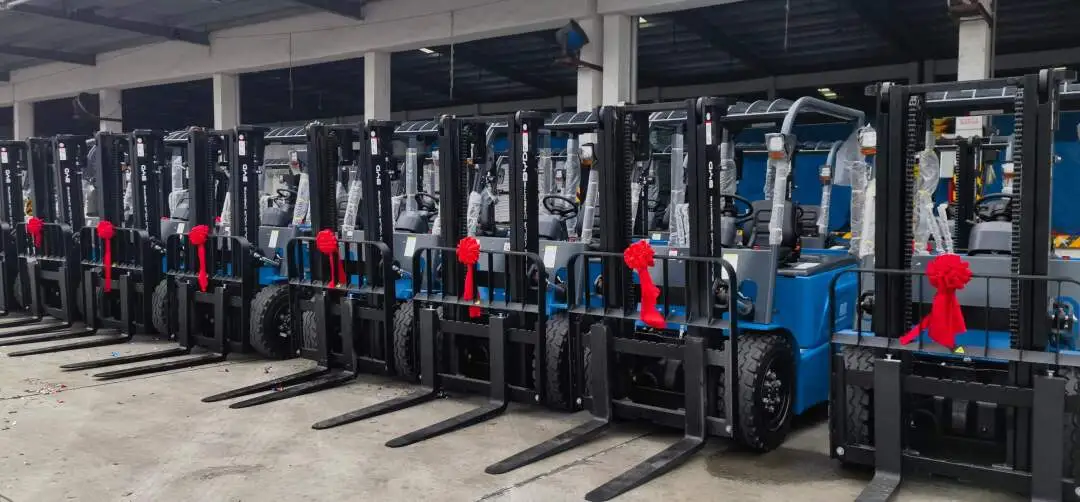
Pain points of routine operation scenarios in manufacturing workshops
At present, the internal transfer links of most manufacturing enterprises above designated size generally face different dimensions of operation pressure. Many enterprises choose traditional handling equipment that is difficult to match the refined management requirements, and there is much room for improvement in overall operation efficiency.
Pain points of heavy-duty high-frequency transshipment demand
In most manufacturing scenarios, the daily transfer frequency of workshop raw materials, work in progress, and finished products can reach dozens of times, and the single load weight requirements are high. Traditional equipment is prone to power attenuation and frequent maintenance, which slows down the overall production flow rhythm.
Narrow channel job space limit pain point
In order to maximize the use of the production area in many workshops, the width of the logistics channels reserved is generally limited, and the channel layout of some old workshops has not been professionally planned, which places higher demands on the body size and steering flexibility of the handling equipment.
Pain points of long-term continuous operation battery life
In some two-shift or even three-shift production workshops, handling equipment is required to maintain operation for a long time. Traditional power equipment takes a long time to supplement energy consumption, making it difficult to achieve seamless integration and prone to job gaps.
ECB27 lithium battery forklift core adaptation dimension analysis
In response to the above common workshop pain points, this lithium-ion forklift can achieve scene adaptation from multiple core dimensions, helping enterprises to overcome internal logistics congestion.
Power output parameter adaptability
The power output of this lithium-ion forklift remains stable and constant, and it can also maintain a stable travel speed under heavy load. It is suitable for the heavy-duty transportation requirements of most conventional materials in the workshop, and there will be no obvious power attenuation problems during long-term high-frequency operation.
Dimensional fit of body structure
The width and turning radius of the entire vehicle have been specifically optimized, allowing for flexible steering, pick-and-place operations even in narrow channels with limited widths, fully adapting to the logistics channel layout of most existing workshops, without the need for additional investment in reforming the channel.
Lithium battery life adaptability
The matching large-capacity lithium battery supports long-term continuous operation, and can cover all the operation requirements of the conventional two-shift shift when fully charged. The energy replenishment method is convenient, and short-term energy replenishment can supplement sufficient battery life, fully adapting to the operation requirements of multi-shift production.
Supporting optimization suggestions for landing applications
After an enterprise introduces the equipment, it can also be paired with corresponding optimization adjustments to further enhance the value of the equipment.
Adjustment of existing workflow
Enterprises can combine the operating efficiency of new equipment to reorganize the internal material transfer routes, plan more reasonable pickup and delivery points, and further reduce the time-consuming of a single transfer.
Key points for building a daily operation and maintenance system
Building a daily operation and maintenance system with reference to the official guidelines of the equipment and regularly inspecting and maintaining core components can effectively extend the service life of the equipment and reduce the comprehensive cost of long-term operation.


