简体中文
简体中文 Deutsch
 日本語
日本語 한국어
한국어 Tiếng Việt
 Русский
 ไทย
ไทย Bahasa Indonesia
 Bahasa Melayu
 Filipino
 لالعربية
 Français

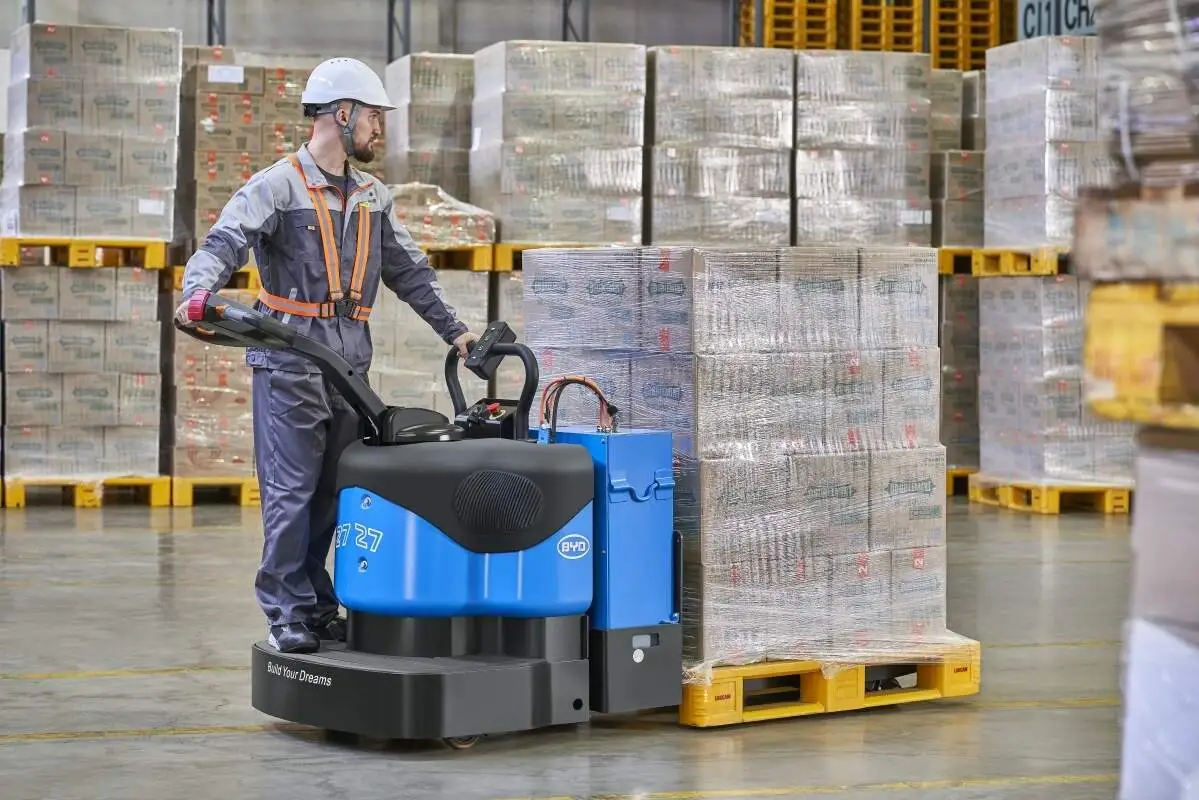
Matching the job scenario with the basic parameters is the first step in selection.
Load and lift height adaptation
When selecting a model, you can't just refer to the rated load marked on the equipment. You need to include the weight of the fork and additional attachments in the calculation. At the same time, consider the load attenuation when lifting to the highest height. It is recommended to reserve 10% to 15% of the load allowance to avoid long-term overload damage to the equipment. The lifting height should match the floor height of the actual storage shelf, and the net height of the operation area should be calculated to avoid bumping into the top pipeline or obstacles during lifting operations.
Workspace adaptation
The body size and turning radius of heavy-duty lithium-ion forklifts are generally larger than those of ordinary light-duty forklifts. Before selecting the type, the width of the working channel should be measured in advance to reserve sufficient traffic allowance. At the same time, the overall height of the gantry in the falling state should be checked to adapt to the traffic requirements of limited spaces such as workshop entrances and elevators to avoid stuck problems.
The core metrics of a lithium battery system are the key to influencing the user experience.
Battery performance verification
The battery of the corresponding capacity should be selected according to the single-day operation time and the operation load strength. For long-term high-load operations, the model that supports fast charging function can be preferred to shorten the waiting time for replenishment. If the operation scenario involves low-temperature cold storage and outdoor winter operations in the north, it is necessary to additionally confirm the low temperature resistance of the battery to avoid significant attenuation of battery life at low temperatures. At the same time, pay attention to the cycle life parameters of the battery to reduce the replacement cost for long-term use.
Motor electronic control performance verification
Under heavy load conditions, it is necessary to choose a drive motor with sufficient peak torque to ensure the stability of power output when climbing and starting at full load. The electronic control system needs to have basic functions such as overload protection and over-temperature protection to avoid downtime problems in long-term high-load operations and improve the safety of the operation process.
Body structure and service assurance also require attention.
Body load-bearing structure verification
Focusing on the material thickness of the frame and the strength parameters of the fork, solid wear-resistant tires are preferred to adapt to the high wear requirements under heavy-duty operations and reduce the frequency of later replacement.
After-sales services adaptation
Preference is given to products with local service outlets, which can provide regular battery testing, vehicle maintenance, and other services. At the same time, it is necessary to confirm the supply efficiency of commonly used accessories, so as to avoid waiting for accessories to delay the progress of the operation when the equipment fails.
When selecting a model, don't just use price as the only criterion for judgment. By checking the above indicators one by one in combination with your actual operating needs, you can choose a more adaptable heavy-duty lithium-ion forklift.