
 简体中文
简体中文 Deutsch
 日本語
日本語 한국어
한국어 Tiếng Việt
 Русский
 ไทย
ไทย Bahasa Indonesia
 Bahasa Melayu
 Filipino
 لالعربية
 Français

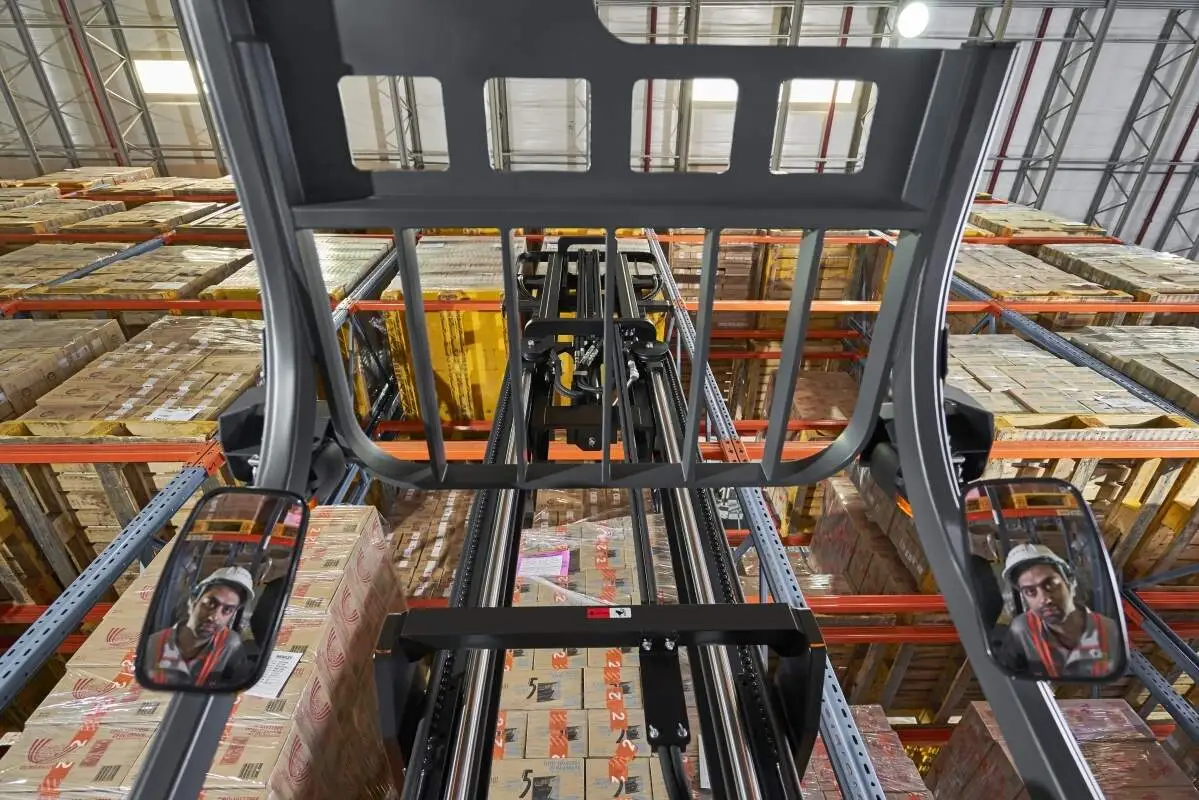
In dust-free workshops with high environmental cleanliness and electrostatic protection requirements such as electronics and medicine, the attachments of ordinary forklifts are often difficult to adapt to special operation needs, and may even affect production safety and product quality due to static electricity accumulation or dust pollution. This article will explain in detail the modification ideas and landing effects of anti-static forklifts attachments in dust-free workshops through specific non-standard modification examples.
The need for modification stems from the strict operating standards of the dust-free workshop: on the one hand, sparks or electrostatic adsorption dust caused by static electricity accumulation are prohibited in the workshop, and the original forklift has no anti-static function; on the other hand, the material specifications in the workshop are special, and the clamping angle, load-bearing range and material matching of ordinary attachments are low, and the handling efficiency is limited. At the same time, the modification process needs to strictly follow the dust-free specifications, and no polluting materials can be introduced or secondary pollution can be generated.
In response to these needs, the refit team developed a targeted plan: first, choose a polymer composite material with stable anti-static properties to make the main body of the accessory to ensure that the static electricity can be released quickly when the material comes into contact and avoid accumulation; secondly, according to the size, weight and handling method of the workshop materials, non-standard customization of the accessory structure is carried out to optimize the clamping force and angle, and improve the adaptability; in addition, the connection gap of the accessory is sealed to reduce the generation of dust during operation, in line with the requirements of a dust-free environment.
The whole process of modification is carried out in the dust-free operation area, the operator wears professional protective equipment, and all parts are cleaned. After the modification is completed, through the detection of professional instruments, the amount of static electricity released by the attachments fully meets the workshop safety standards; in actual operation, the customized equipment can accurately grasp materials, the handling efficiency is increased by about 30% compared with before, and no visible dust is generated during operation, effectively meeting the operation needs of the dust-free workshop.
This modification example proves that the non-standard customization combined with the requirements of the scene can better adapt the forklift to the special environment of the dust-free workshop, providing a practical direction for forklift modification in similar operation scenarios.


