
 简体中文
简体中文 Deutsch
 日本語
日本語 한국어
한국어 Tiếng Việt
 Русский
 ไทย
ไทย Bahasa Indonesia
 Bahasa Melayu
 Filipino
 لالعربية
 Français
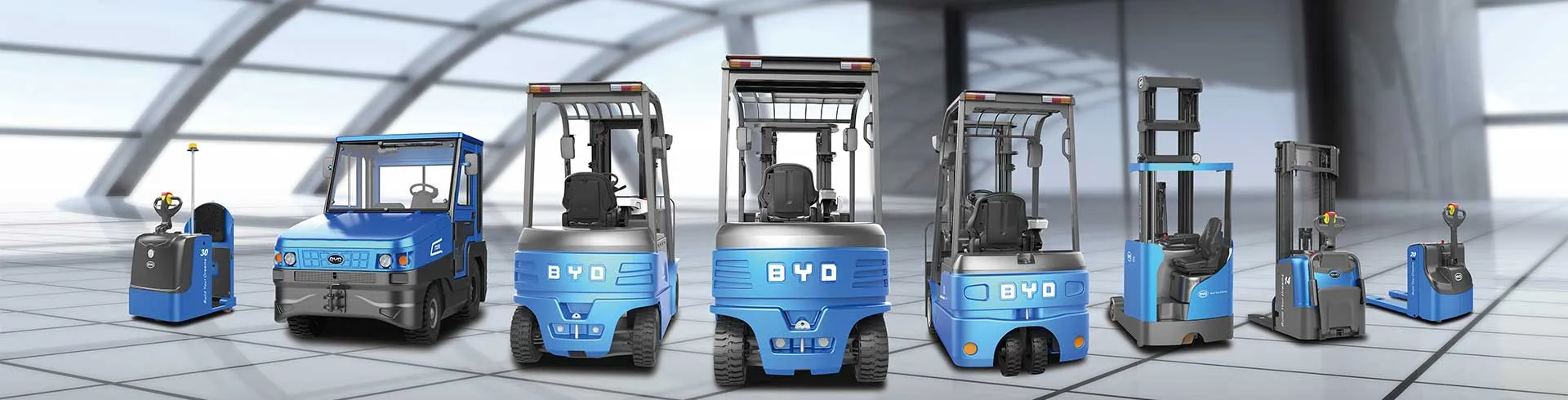
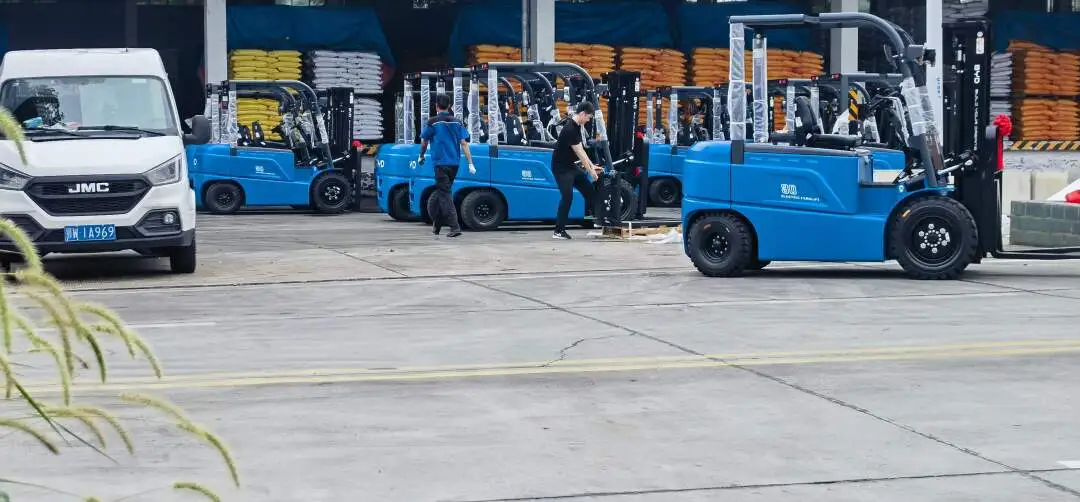
Among the core performance parameters of electric forklifts, the minimum turning radius and climbing ability are the key indicators that directly affect the operation adaptability and efficiency. For ECB50 electric forklifts, the setting of these two parameters fully combines the needs of common operation scenarios and provides reliable support for handling operations in different environments.
Practical Value and Parameter Analysis of Minimum Turning Radius
What is the minimum turning radius?
The minimum turning radius refers to the minimum distance from the steering center on the outside of the vehicle body to the outside of the wheel after the steering wheel turns to the extreme position when the forklift is traveling at low speed. It is the core indicator to measure the spatial mobility of the forklift. The minimum turning radius parameter of the ECB50 electric forklift has been optimized to adapt to the operation scenarios with limited space in small indoor warehouses and workshops. In the storage environment with dense shelves, there is no need to reserve too wide operating channels to complete flexible steering and effectively improve space utilization. At the same time, the smaller turning radius also reduces the operation difficulty of operators in narrow areas, reduces the risk of colliding with shelves or equipment, and ensures the safety of the operation process.
Parameter Meaning and Scene Adaptation of Climbing Ability
The definition and core role of climbing ability
Climbing ability refers to the maximum slope that a forklift can run stably under full load, usually measured in percentage or angle, which directly determines the scope of the forklift's operation scenarios. The climbing ability parameters of the ECB50 electric forklift can meet the operation requirements of the ramp, loading and unloading platform ramp and other scenarios in the factory. Under full load, its power system can maintain a stable output to ensure smooth driving on the ramp without excessive power attenuation. At the same time, the design of this parameter also takes into account the braking performance. When starting or stopping on the ramp, it can maintain the stability of the vehicle body and avoid safety hazards such as rolling. It is suitable for mountain factories, multi-storey warehouses and other scenarios where there are ramp operation needs.
Overall, the minimum turning radius and climbing ability parameters of the ECB50 electric forklift improve the performance from the two dimensions of spatial adaptation and scene expansion respectively. Whether it is in a narrow indoor storage environment or an outdoor operation scene with ramps, these two parameters can provide protection for efficient and safe handling operations, help enterprises adapt to a variety of complex operation requirements, and improve the overall efficiency of logistics handling.


