
 简体中文
简体中文 Deutsch
 日本語
日本語 한국어
한국어 Tiếng Việt
 Русский
 ไทย
ไทย Bahasa Indonesia
 Bahasa Melayu
 Filipino
 لالعربية
 Français
Description of core parameters of vehicle size
Base length, width and height parameters
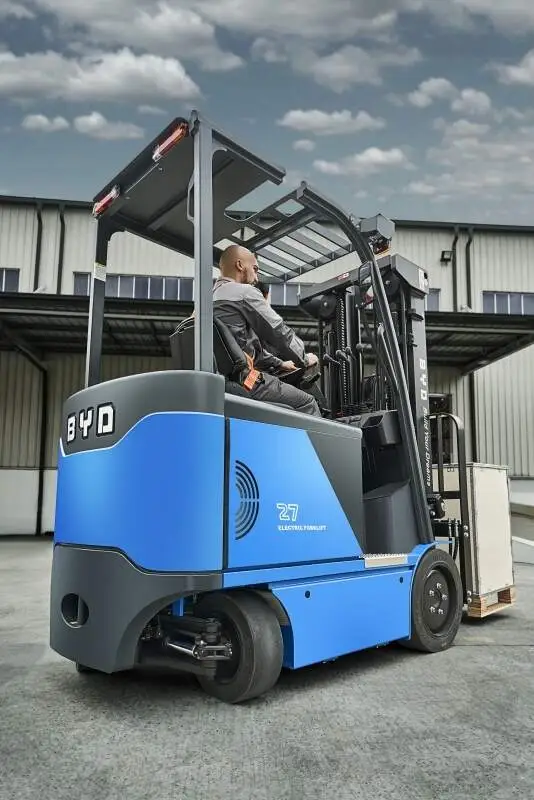
As a 2.7-ton counterbalanced electric forklift, the overall length, width and height parameters of the ECB27 are adapted to the traffic needs of conventional storage scenarios. The length of the body without the fork is controlled within a reasonable range, and it will not take up too much traffic reserved space. The height of the whole vehicle adapts to the floor height standards of most ordinary warehouses when the door frame is lowered, and it can also reduce the risk of collision when entering and leaving the warehouse, ensuring the smooth development of daily operations.
Size adaptation under different working conditions
For the operation scenarios of some low-rise attic shelves, users can choose the appropriate door frame height according to actual needs, and the adjusted vehicle lift state size will also be clearly marked, which is convenient for users to check the operating space balance in advance. In the conventional pallet handling operation scenario, the lateral width of the equipment is also suitable for most double-pallet parallel channel reservation requirements, eliminating the need for large-scale renovations to existing venues.
Practical Interpretation of Turning Radius Parameters
Minimum Turning Radius Core Indicator
The minimum turning radius parameter of this equipment has been adjusted specifically to balance the body load capacity and the flexibility of narrow channel traffic. The turning radius value in the no-load state is suitable for the narrow channel operation requirements of most conventional three-dimensional warehouses, and the operator does not need to reserve too much redundant space to complete the U-turn in the channel.
Scene adaptation reference for turning radius
During the selection process, users can compare and verify the size of the pallet for daily handling, the actual width of the channel reservation, and the public parameters to ensure that the equipment can smoothly complete the whole process of steering, stacking, etc. in the existing working space, effectively improving the flow efficiency of warehousing operations.


