
 简体中文
简体中文 Deutsch
 日本語
日本語 한국어
한국어 Tiếng Việt
 Русский
 ไทย
ไทย Bahasa Indonesia
 Bahasa Melayu
 Filipino
 لالعربية
 Français
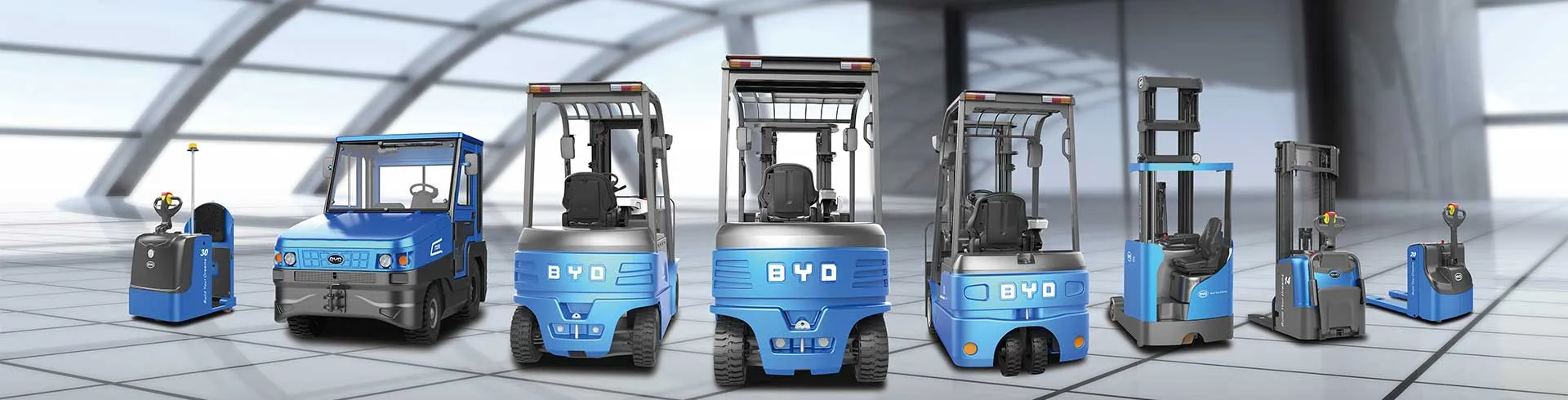
With the acceleration of the digital transformation of the warehousing and logistics industry, the equipment iteration presents three trends of intelligence, greening and efficiency. Electric forklifts, as the core equipment, are becoming the key force to promote the efficiency of the industry.
Iterative trend analysis of warehousing and logistics equipment

H2: Intelligent technology drives the upgrade of warehousing operations
Under the digital wave, the intelligent transformation of warehousing equipment has become the mainstream direction. Automated three-dimensional libraries, AGV/AMR and other equipment through laser navigation, visual recognition technology implementation precision positioning, combined with the WMS system to form a "man-machine-system" closed-loop interaction, real-time optimization of loading and unloading path, inventory management and other processes, reduce human error, improve the operation response speed. Multi-device collaborative operation mode is gradually popularized, different types of equipment can dynamically assign tasks according to order requirements, to achieve efficient scheduling of warehousing resources.
H2: Green and low-carbon have become the core direction of equipment development
The tightening of environmental protection policies has promoted the transformation of equipment to electrification. With the advantages of zero emissions and low noise, electric forklifts have gradually replaced fuel equipment as the mainstream choice. High energy density lithium battery technology breakthroughs, making a single charge battery life capacity enhancement to 8-12 hours, with fast charging system to shorten the charging interval, reduce equipment idle time. Battery management system (BMS) real-time monitoring of power status, optimize the discharge curve, not only extend battery life, but also reduce energy loss, in line with the "double carbon" target industry development needs.
H2: Efficient and flexible remodeling of equipment form
The fast-paced demand of warehousing operations forces equipment performance upgrades. On the one hand, the equipment can shorten the loading and unloading cycle and improve the throughput per unit time by optimizing the transmission system, increasing the power of the motor, shortening the loading and unloading cycle; on the other hand, the modular design supports the rapid replacement of accessories such as forks and side shifters, and adapts to multiple scenarios such as pallets, boxes, and special-shaped goods. The application of the scalable architecture enables the equipment to dynamically adjust the configuration according to the warehouse layout to meet the complex needs of e-commerce in small batches and multiple batches, and large-tonnage handling in the manufacturing industry,
Practical Path to Improve Power Efficiency of Electric Forklift
H2: New energy technologies optimize equipment operation efficiency
The electric forklift adopts high energy density battery and intelligent charging management system to solve the battery life pain points. The equipment supports continuous operation for more than 8 hours on a single charge, and the fast charging technology implementation recharges 80% of the electricity within 2 hours, reducing downtime. The motor and control system upgrade reduces energy consumption loss. Compared with traditional fuel equipment, the comprehensive use cost is reduced by more than 40%, and the long-term operation advantage is significant. The battery thermal management technology guarantees stable operation in extreme environments, and adapts to special storage scenarios such as cold chain and high temperature.
H2: Intelligent control system improves collaborative efficiency
The intelligent dispatching system realizes the seamless connection between the equipment and the warehousing system, automatically receives the order task and plans the optimal path. Laser SLAM navigation and visual assistance positioning technology enable the equipment to achieve ±1cm positioning accuracy in complex environments and reduce the risk of cargo collision. The remote monitoring platform returns the equipment status data in real time, and the fault early warning function recognizes abnormalities in advance to reduce maintenance costs. The human-machine interaction interface simplifies the operation process, reduces the manual training cycle, and improves the speed of new employees to get started.
H2: Modular design adapts to multiple storage scenarios
Standardized modular architecture supports equipment to quickly switch attachments to meet different handling needs such as pallets, boxes, and bulk goods. Lightweight body design reduces ground pressure, adapts to a variety of warehouse ground conditions, and reduces infrastructure transformation costs. For different industry scenarios, equipment can be expanded through software upgrades, such as clean operation mode in the pharmaceutical industry, large-tonnage handling requirements in automobile manufacturing, etc., shortening customer customization cycles and improving scene adaptation capabilities.
At present, warehousing and logistics equipment is evolving from a single tool to an intelligence system. Through technological innovation and scene adaptation, electric forklifts have formed significant advantages in battery life optimization, intelligent collaboration, and flexible operation, providing solid support for the improvement of industry efficiency and promoting warehousing and logistics to develop in a more efficient, green, and intelligent direction.


