
 简体中文
简体中文 Deutsch
 日本語
日本語 한국어
한국어 Tiếng Việt
 Русский
 ไทย
ไทย Bahasa Indonesia
 Bahasa Melayu
 Filipino
 لالعربية
 Français
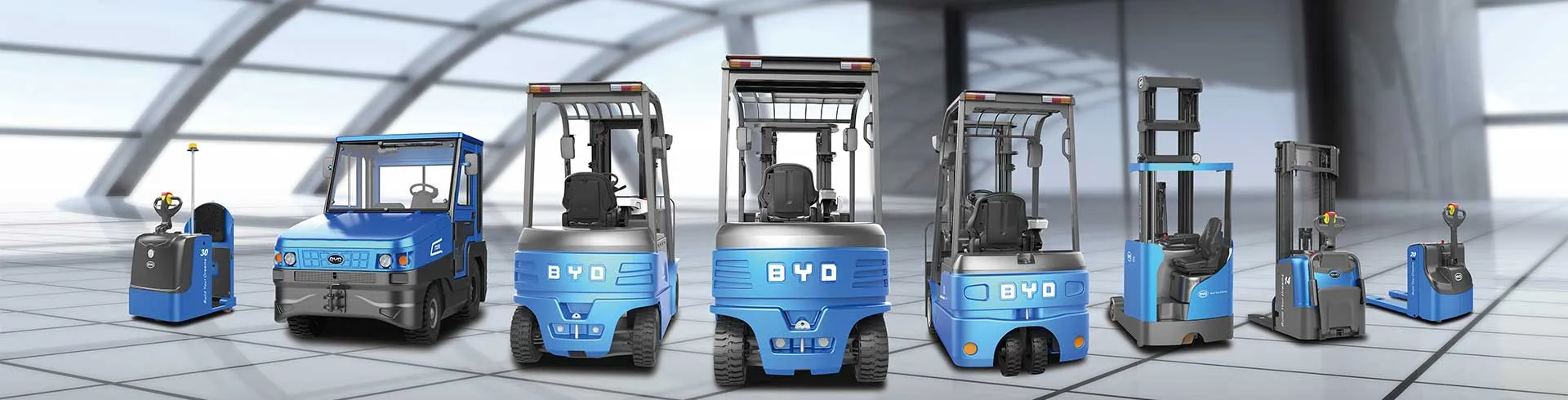

With the booming development of the e-commerce industry and the upgrading of the manufacturing supply chain, modern warehousing has shifted from traditional storage functions to a comprehensive logistics hub that integrates the distribution, sorting and distribution of goods. In this context, warehousing operations place higher requirements on the efficiency, environmental protection and intelligence of equipment. As the core equipment of warehousing and logistics, whether the technical characteristics and operation capabilities of new energy electric forklifts can adapt to the efficient operation requirements of modern warehousing has become a key consideration for enterprises to optimize warehousing operations. This paper will analyze how to meet the efficient operation requirements in warehousing scenarios from three dimensions: the demand changes of modern warehousing, the technical adaptability and practical application value of new energy electric forklifts.
New requirements for logistics equipment in modern warehousing
In the modern warehousing environment, logistics operations present the characteristics of "multi-category, small batch, and fast turnover", which poses new challenges to the performance and function of warehousing equipment. First, in terms of operation efficiency, high-frequency cargo turnover and rapid response to demand require equipment to have high mobility and operation speed. For example, during the peak promotion period such as the "Double Eleven" of e-commerce, warehousing centers need to complete the sorting and outbound of massive orders in a short time. The lifting speed and steering flexibility of equipment directly affect the overall throughput. Secondly, the need for environmental protection and sustainable development is increasingly prominent. With the advancement of the national "dual carbon" policy, carbon emission control in warehousing and logistics has become the focus of corporate compliance. The exhaust emissions and noise pollution problems of traditional internal combustion forklifts make it increasingly difficult to meet green warehousing standards. Finally, intelligence and data management requirements have become the core competitiveness of modern warehousing. Through the Internet of Things, big data and other technologies, the warehouse management system (WMS) needs to realize real-time monitoring and intelligent scheduling of equipment, and the electric forklift needs to have data collection, remote monitoring and the ability to connect with the upper system to optimize resource allocation and operation processes.
Technical Characteristics and Adaptation Logic of New Energy Electric Forklift
Through the innovation of power system, structural design and intelligent functions, the new energy electric forklift has gradually formed the adaptability to the needs of modern warehousing. In terms of power system and energy efficiency performance, electric vehicles use lithium batteries as energy carriers, which have the characteristics of high energy density and fast charging efficiency. The range of a single charge can reach 8-12 hours, meeting the needs of most warehousing enterprises "three shifts". The battery management system (BMS) can monitor the battery status in real time, avoid overcharging and over-discharging, and prolong the battery life to more than 8 years. Compared with traditional internal combustion forklifts, the energy consumption cost of electric forklifts is only 1/3-1/2 of the fuel cost, and the maintenance cost is reduced by more than 40%, which significantly improves the economy of warehousing operations.
In terms of structural design and operation scenario adaptation, the new energy electric forklift has been optimized for the storage environment. The modular body design is convenient for quick disassembly and maintenance. The steering system adopts full hydraulic power, and the steering radius can be as low as 1.5 meters, which is suitable for narrow channel operations. The lifting mechanism is equipped with high-precision sensors, and the lifting speed is stable (no-load lifting speed can reach 0.5 meters/second) to ensure the smooth and safe loading and unloading process of goods. Some models support customized transformation, such as the installation of explosion-proof devices and low-temperature heating systems, which can be adapted to special storage scenarios such as chemical, pharmaceutical, and cold chain, expanding the application boundary of the equipment.
Intelligent management functions are the key to adapting new energy electric forklifts to modern warehousing. With built-in sensors and intelligent control systems, forklifts can achieve automatic obstacle avoidance, path planning and task allocation. For example, laser-guided forklifts can complete autonomous handling between shelves without human intervention, and forklifts with integrated RFID readers can automatically identify cargo information and upload it to the WMS system, reducing manual input errors. Equipment can also be remotely monitored through mobile APP or cloud platform to view equipment location, power and operation data in real time, support multi-machine coordinated scheduling, avoid "empty driving" or "congestion" phenomenon, and improve the overall operation efficiency of warehousing.
The practical application value of new energy electric forklift in storage operations
The new energy electric forklift has shown significant value advantages in practical applications through the deep integration of technical characteristics and modern warehousing needs. In terms of improving operation efficiency, its rapid response ability can effectively shorten the turnaround time of goods. For example, in the e-commerce warehousing scene, the electric forklift can complete the sorting of 300 goods and put them on the shelves within 5 minutes, which improves the operation efficiency by more than 20% compared with traditional equipment; in the automated three-dimensional warehouse, the collaborative operation of the forklift and the AGV system can realize the whole process of "warehousing-storage-outbound" unmanned, and the utilization rate of warehousing space can be increased to more than 80%.
From the perspective of operating cost control, the advantages of new energy electric forklifts are even more prominent. Although the initial procurement cost is slightly higher than that of traditional forklifts, in long-term use, the energy consumption cost is reduced by 60%, the maintenance cost is reduced by 50%, and the comprehensive cost can be overtaken in 3-5 years. In addition, electric forklifts do not require additional fuel purchases, avoiding the risk of oil price fluctuations, and the battery can be recycled, which is in line with the concept of circular economy and enhances the sustainable competitiveness of enterprises.
As the "execution layer" of the intelligent warehouse system, the data collection and transmission function of the new energy electric forklift provides the foundation for the digitalization of the warehouse. Through the real-time uploaded operation data, enterprises can analyze the equipment utilization rate, bottleneck links and other issues, optimize the warehouse layout and operation process; combined with AI algorithms, the system can predict equipment maintenance needs and reduce sudden downtime. Driven by the "double carbon" goal, the low-carbon characteristics of the electric forklift help enterprises obtain environmental protection certification, improve brand perception and enhance market competitiveness.
The demand for efficient operation of modern warehousing has shifted from a single "cargo handling" to "full-link collaborative optimization". With power system upgrade, structural design optimization and intelligent empowerment, new energy electric forklifts are becoming the core equipment suitable for warehousing scenarios. Its comprehensive value in efficiency improvement, cost control and digital transformation not only meets the current operational needs of enterprises, but also fits the development trend of green warehousing and smart logistics in the future. For warehousing enterprises, choosing a new energy electric forklift that suits their own needs is an important path to achieve efficient operation and sustainable development of warehousing.


