简体中文
简体中文 Deutsch
 日本語
日本語 한국어
한국어 Tiếng Việt
 Русский
 ไทย
ไทย Bahasa Indonesia
 Bahasa Melayu
 Filipino
 لالعربية
 Français

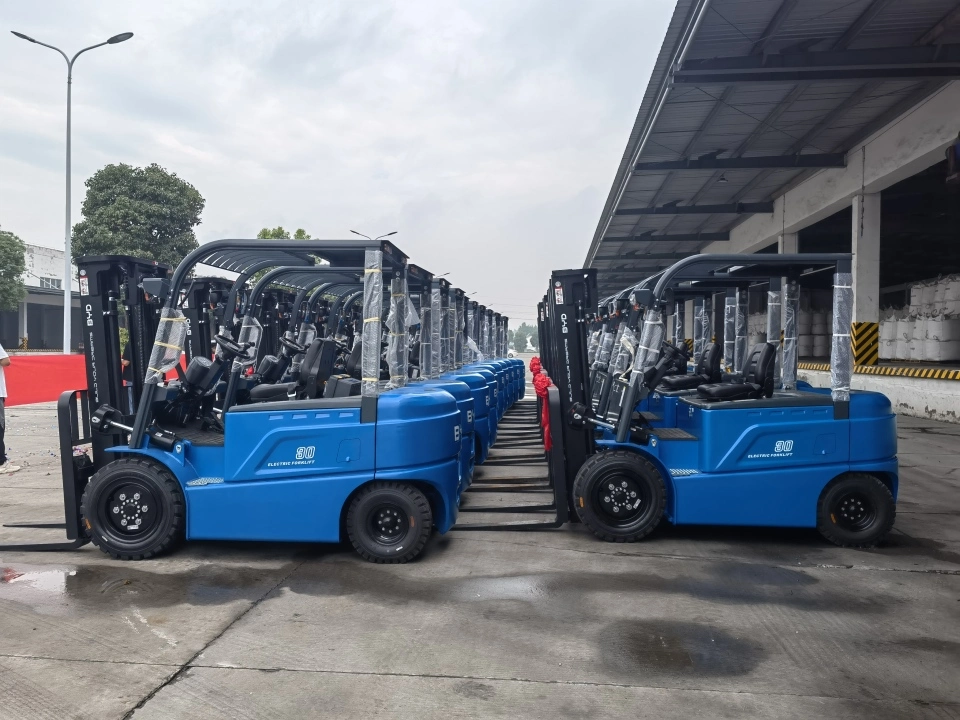
Due to its flexible operation, environmental protection and energy saving characteristics, 3-ton lithium-ion forklifts are widely used in warehousing, loading and unloading, logistics and other scenarios. Battery life is one of the core indicators that many users pay great attention to during the purchase and use process. Many users will find differences in the actual battery life and nominal value of the same forklift during use. In fact, this is related to multiple actual influencing factors.
The state of the battery itself is the core foundation that affects battery life
Degree of battery attenuation
The number of cycles of a lithium battery has a conventional range. As the use time increases, the active substances inside the battery will wear out normally, the available capacity of the battery will gradually decrease, and the cruising range will also decrease. If you use an irregular charging method for a long time, it will also speed up the battery decay and further shorten the battery life.
ambient temperature
The discharge efficiency of lithium batteries is more sensitive to the ambient temperature. When the ambient temperature is lower than 0 degrees Celsius, the activity of lithium ions will decrease significantly, the battery discharge efficiency can be reduced by 20% to 30%, and the battery life will be shortened. When the ambient temperature exceeds 40 degrees Celsius, the battery heat dissipation pressure increases, and the discharge efficiency will also decrease, which will also increase the risk of battery loss.
Job scenario characteristics directly change energy consumption levels
load-bearing weight
The nominal battery life of a 3-ton lithium-ion forklift is generally the result of testing under standard loads. If it is often fully loaded during daily operations, the power consumption required for the forklift to drive and lift goods will increase significantly, the power consumption will be accelerated, and the actual battery life will be lower than the standard value.
Working road conditions
If the road surface in the operation area is uneven, the slope is large, or it needs to pass through speed bumps frequently, the resistance to be overcome during the driving process of the forklift will be greater, and the power consumption per mileage will increase significantly. Relatively speaking, in the flat and hardened indoor storage road operation, the forklift's battery life will be longer.
Use and maintenance habits can also affect battery life
Driving habits
If you often step on the accelerator to accelerate and brake urgently during daily driving, it will generate a lot of unnecessary energy consumption and accelerate power consumption. Smooth control of the vehicle and reduction of unnecessary sudden acceleration and sudden braking can effectively reduce energy consumption and prolong battery life.
Daily maintenance
If the tire pressure is insufficient, the contact area between the tire and the ground will increase, the driving resistance will increase, and the power consumption will also increase. Regularly checking the tire pressure and promptly adding lubricating oil to the transmission parts to reduce friction can reduce unnecessary energy consumption and ensure the normal battery life of the vehicle.
By understanding these factors, users can adjust their usage habits and maintain their vehicles during daily use, ensuring the battery life of a 3-ton lithium-ion forklift as much as possible, improving operating efficiency and reducing operating costs.