简体中文
简体中文 Deutsch
 日本語
日本語 한국어
한국어 Tiếng Việt
 Русский
 ไทย
ไทย Bahasa Indonesia
 Bahasa Melayu
 Filipino
 لالعربية
 Français
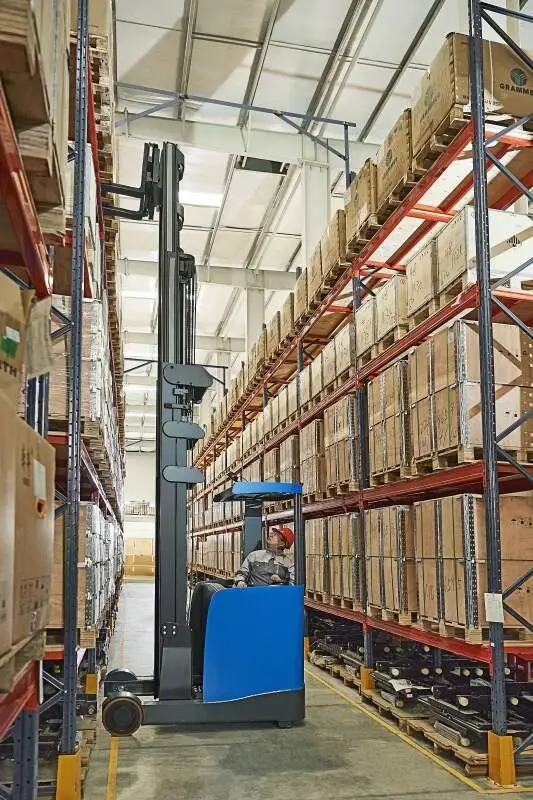
As the cost of warehousing land continues to rise, more and more warehousing operators are choosing a layout model of narrow aisles with high shelves to improve storage capacity per unit area. However, such scenarios also place higher requirements on the adaptation of operating equipment.
The core operation pain points of narrow channel warehousing
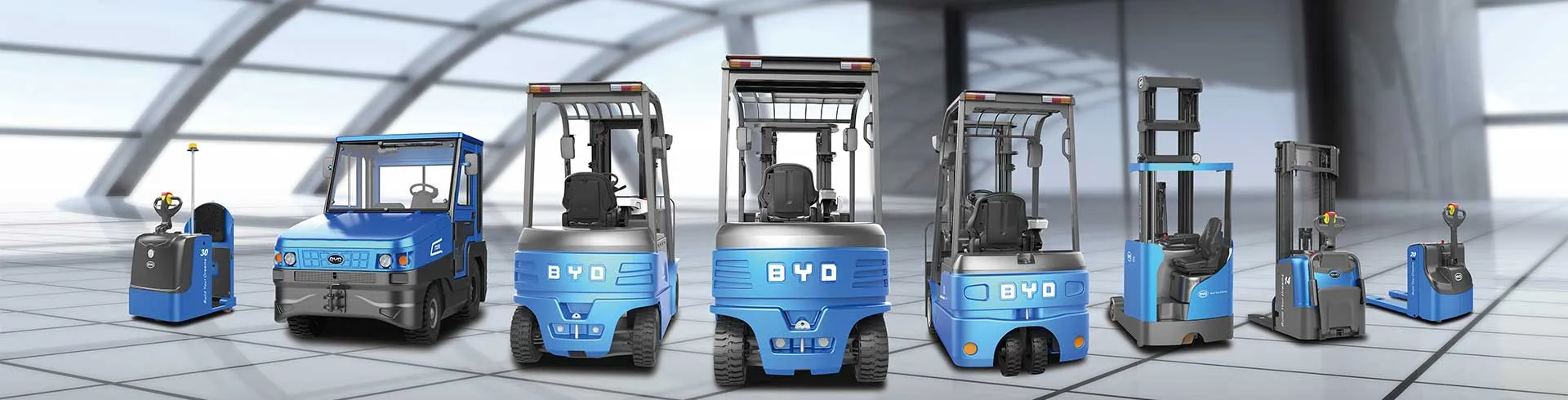
The traditional counterbalanced forklift operation requires a large channel width. If it is used in a narrow channel scenario, it will greatly waste limited storage space and be prone to the risk of scratching shelves and goods. The lifting height of ordinary stacking equipment is limited, which cannot adapt to the stacking needs of high-level shelves. And the stability of the center of gravity is insufficient during the operation, and the safety hazard when picking and unloading goods at high levels is high, which will also slow down the overall operation efficiency.
Adaptation advantages of high gantry reach forklift
Spatial fit performance
The turning radius of the high-gantry forward forklift is smaller, and the required operating channel width is much lower than that of the traditional counterbalanced forklift, which can effectively compress the storage area occupied by the channel, help the operator to increase the storage capacity ratio under the original site conditions, and fully release the space advantage of the narrow channel layout.
job performance adaptation
The lifting height of this type of forklift can be adapted to the stacking needs of mainstream high-end shelves. The special structural design of the forward-moving type allows the equipment to have a more stable center of gravity when picking and unloading goods, greatly reducing the safety risks of high-level operations. At the same time, the electric drive mode has no exhaust emissions, lower operating noise, fully adapts to the environmental protection requirements of closed storage scenarios, and has lower energy costs for long-term operation.
Notes on the application of narrow channel scenarios
Before selecting this type of forklift, it is necessary to accurately measure the actual channel width of the warehouse, the total height of the shelf, the weight of the goods in routine operations and other core parameters in advance, and select the equipment model that matches the parameters to avoid adaptation problems. Operators need to receive special project operation training in advance to be familiar with the operation specifications of narrow channel scenarios to avoid safety risks caused by illegal operations. Regular maintenance should also be completed in accordance with equipment requirements in daily operation to ensure the operation stability and service life of the equipment.
For operators with high-density storage needs, matching the corresponding high-gantry forward forklift according to their own scenario parameters can effectively balance space utilization and operation efficiency, making it a practical solution for narrow-channel storage scenarios.