简体中文
简体中文 Deutsch
 日本語
日本語 한국어
한국어 Tiếng Việt
 Русский
 ไทย
ไทย Bahasa Indonesia
 Bahasa Melayu
 Filipino
 لالعربية
 Français

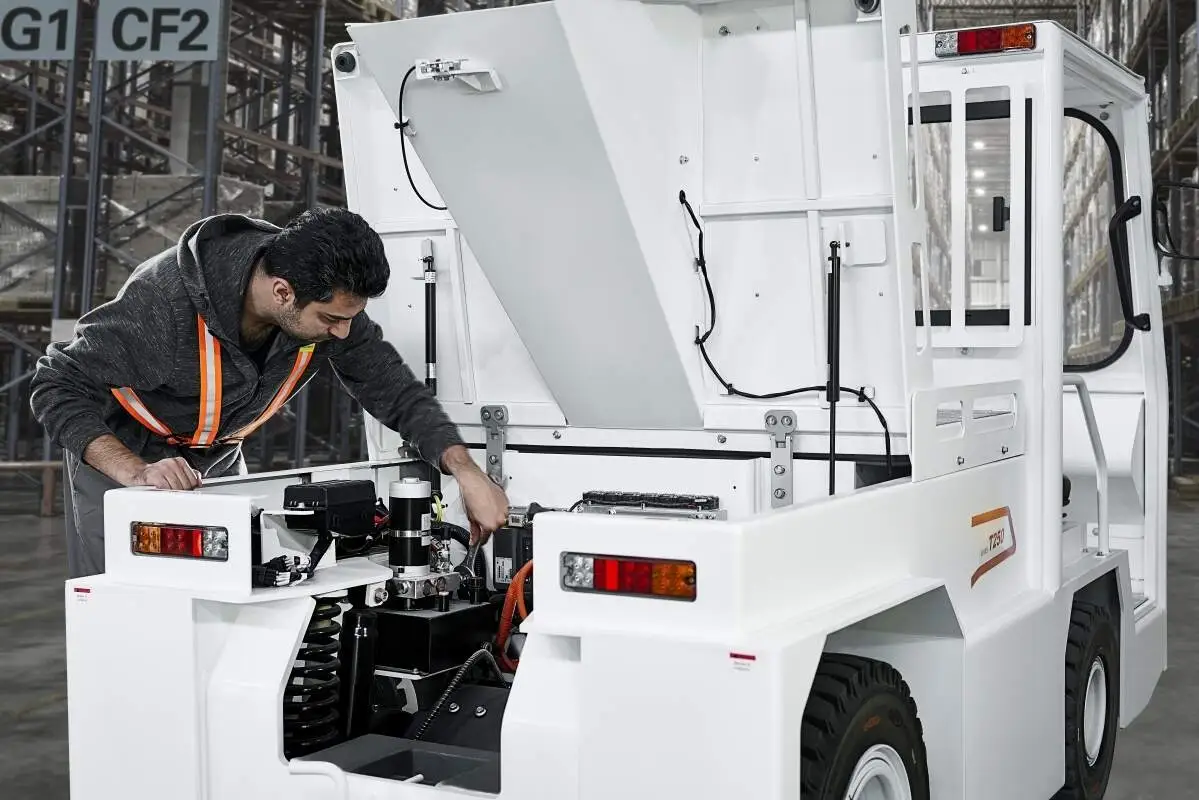
With the development of the warehousing and logistics industry, electric forklifts have become the core equipment for material handling in many enterprises due to their advantages of environmental protection, low noise, and convenient operation. However, many purchasers do not have a good understanding of electric forklifts, and they are prone to misunderstandings when purchasing, which not only causes waste of funds, but also may affect the efficiency of daily operations.
Only look at the procurement cost and ignore the long-term use cost.
When purchasing electric forklifts, many purchasers first compare the quotations of different products and prioritize the lower-priced option, but ignore the core indicators such as the quality of the product's core accessories, battery life, and energy consumption level. Low-cost electric forklifts often use lower-quality batteries and motors, which not only have short battery life and low operating efficiency, but are also prone to failure. The subsequent maintenance costs and shutdown losses add up, and the overall cost of use is much higher than that of qualified products.
Ignore the adaptability of job scenarios
Different operating scenarios have great differences in the parameter requirements of electric forklifts. For example, cold storage operations require forklifts to be equipped with low temperature resistant batteries and circuits. Narrow channel operations require forklifts to have a smaller steering radius and a more compact body size. High shelf operations require forklifts to meet corresponding standards. If you do not sort out your own operating scene requirements before purchasing, and only buy according to common parameters, it is likely that forklifts cannot be adapted to the scene, and even bring safety hazards.
Ignore the importance of after-sales services
Electric forklifts are high-frequency industrial equipment, and daily maintenance and fault repair require professional operation. Many purchasing personnel only pay attention to the parameters and price of the product itself, without examining the supplier's after-sales response speed, door-to-door service coverage, and parts supply capacity. When subsequent forklifts fail, it is difficult to obtain timely maintenance services, which will directly affect the normal operation of the warehouse and cause unnecessary losses.
Excessive pursuit of unnecessary extras
Some purchasers believe that the richer the functions of electric forklifts, the better. They will choose many additional functions that are not used in their own operation scenarios, which will greatly increase the procurement cost and cause unnecessary waste of funds. When purchasing, it is recommended to give priority to ensuring that core functions such as load, lift height, and battery life meet the needs. Then, combined with their actual operation needs, they can choose the corresponding additional functions on demand without paying for unnecessary functions.
Purchasing an electric forklift is a task that requires comprehensive consideration. It is recommended to sort out your own operating requirements and budget range before purchasing, and then compare them from multiple dimensions such as product quality, adaptability, and after-sales to avoid common purchase mistakes. You can choose an electric forklift that is cost-effective and meets your needs.