
 简体中文
简体中文 Deutsch
 日本語
日本語 한국어
한국어 Tiếng Việt
 Русский
 ไทย
ไทย Bahasa Indonesia
 Bahasa Melayu
 Filipino
 لالعربية
 Français
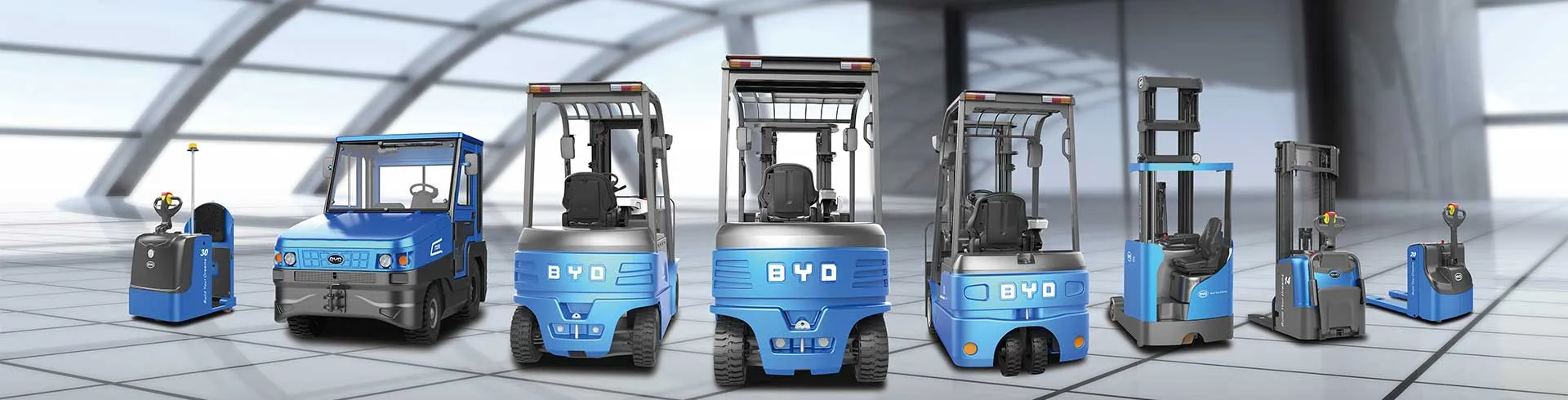
.webp "BYD ECB16D Lithium Battery Forklift Operation Cost Analysis: Annual Cost Reference(Image1)")
The core components of annual operating costs
Energy consumption cost
The energy consumption of lithium-ion forklifts is an important part of the annual operating cost. Compared with traditional internal combustion forklifts, its power utilization rate is higher, and there is no need to consume fuel or liquefied gas. If calculated according to the average daily operation of 8 hours and the annual operation of 250 days, combined with the average electricity price of industrial electricity, the annual energy consumption cost is within a reasonable range, and there is no need to pay additional fuel procurement and transportation costs, which is the core embodiment of its cost advantage.
Maintenance cost
The core components of a lithium-ion forklift are lithium batteries and motors. Compared with the engine, gearbox and other components of an internal combustion forklift, the structure is simpler and the maintenance requirements are less. The annual maintenance mainly focuses on routine inspections such as the circuit system and brake system. There is no need to replace oil, filter elements and other consumables. The annual maintenance cost is about one-third of that of an internal combustion forklift, further reducing the annual expenditure.
Other hidden costs
The ease of charging of lithium-ion forklifts reduces the operation loss caused by waiting time, and at the same time, due to the absence of exhaust emissions, there is no need to pay for waste gas treatment related expenses. These hidden cost savings will be allocated to the annual operation, enhancing the overall cost-effectiveness.
Calculation Logic of Annual Usage Cost Reference
When calculating the annual cost of use, it is necessary to consider the average daily operating hours of forklifts, operating conditions, local electricity prices and other variables. Under light working conditions (such as light handling in warehouses), the annual cost is about 40% -50% of that of internal combustion forklifts; under heavy working conditions (such as port heavy-loading operations), although the cost advantage is slightly reduced, it still remains at about 60%. The specific value can be adjusted according to the actual use scenario.


