
 简体中文
简体中文 Deutsch
 日本語
日本語 한국어
한국어 Tiếng Việt
 Русский
 ไทย
ไทย Bahasa Indonesia
 Bahasa Melayu
 Filipino
 لالعربية
 Français
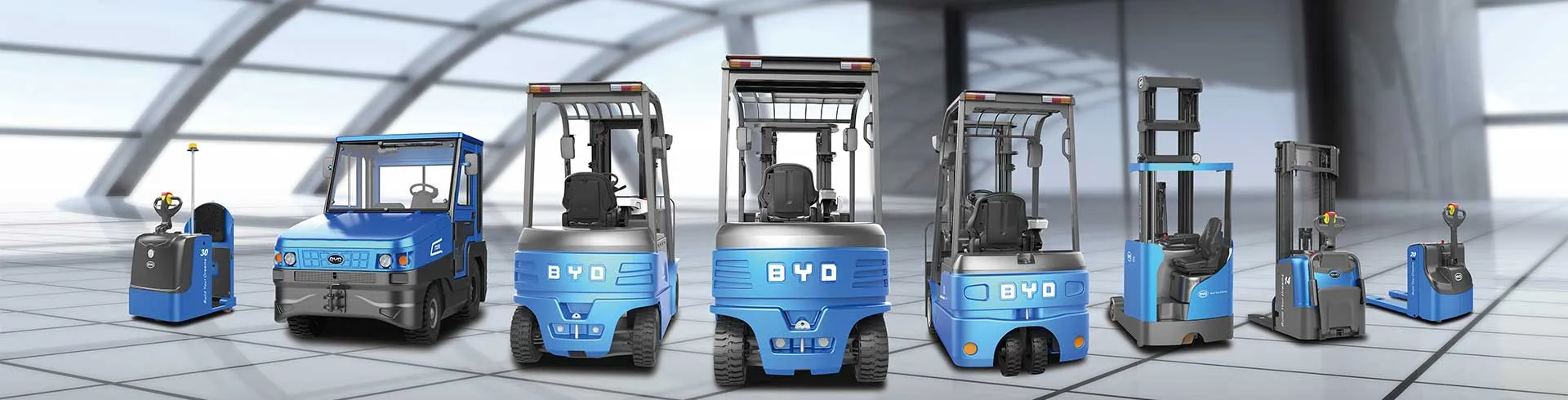
The core difference between three-point and four-point forklifts
steering characteristic difference
The three-point forklift adopts a three-point support structure, with a smaller minimum turning radius when steering, making it more flexible when operating in narrow passages and suitable for storage areas with limited space. The four-point forklift is supported by four points, providing stronger stability when steering and suitable for heavy-duty operations in open fields.
Site adaptation and operation efficiency
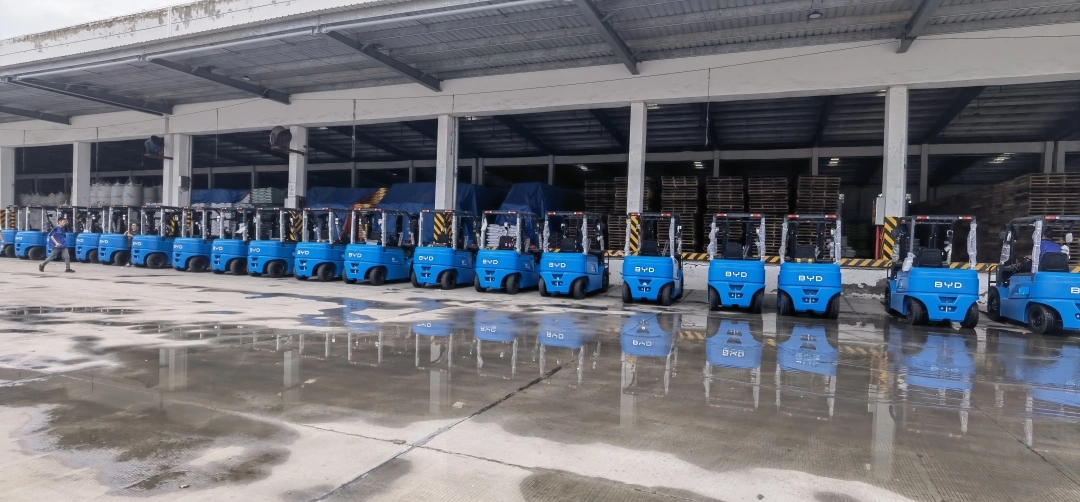
Taking a 1.6-ton electric forklift as an example, the three-pivot model is suitable for dense shelf areas with narrow passages, resulting in higher single-turn efficiency; the four-pivot model can withstand greater vertical loads, and in a flat and open loading and unloading site, the operation stability is more prominent, suitable for routine handling of heavy goods.
Load and stability performance
The load capacity of both is influenced by the structural design. In the 1.6-ton electric forklift, the three-point model focuses on flexible control and is suitable for lightweight and high-frequency storage operations; the four-point model focuses on stable support, suitable for long-distance handling of heavy loads and low frequencies, and has better anti-rollover ability.
Overall, when selecting a model, users need to consider core factors such as the width of the working site, the weight of the goods, and the frequency of daily operations to match the forklift of the corresponding structure, taking into account both operational efficiency and operational safety.


