
 简体中文
简体中文 Deutsch
 日本語
日本語 한국어
한국어 Tiếng Việt
 Русский
 ไทย
ไทย Bahasa Indonesia
 Bahasa Melayu
 Filipino
 لالعربية
 Français

Lithium forklifts are widely used in the field of warehousing and logistics due to their advantages of environmental protection and high efficiency. As its core power source, the service life of the battery directly affects the cost of equipment use and the continuity of operations. Scientific daily maintenance is the key to prolonging battery life. The following 5 practical habits, from daily inspection to standardized operation, help users effectively maintain the battery performance of lithium forklifts and reduce failure and replacement costs.
Habit 1: Regularly check the battery status and do daily health monitoring
In daily use, the health of the battery directly affects its service life and equipment operating efficiency. It is recommended that operators develop the habit of checking the battery status before daily operation: first observe the appearance of the battery to see if there is bulging, leakage or obvious corrosion marks in the shell. If any abnormalities are found, it is necessary to stop the machine in time for inspection; secondly, check the connection wiring harness to ensure that the electrode pile head is firmly connected to the cable without loosening or oxidation. It can be cleaned by surface oxides (such as using a clean cloth dipped in a small amount of distilled water to wipe) to maintain good contact; at the same time, pay attention to the power display system. If there is an abnormality in the display or the power drops too quickly, it may be a battery cell problem or poor connection. It needs to Regular inspections not only detect potential problems in a timely manner, but also avoid the rapid degradation of battery performance due to the accumulation of minor faults, laying the foundation for prolonging battery life.
Habit 2: Standardize the charging process to avoid overcharging or undercharging
Battery charging is a key link affecting the lifespan, and standardized charging operation can significantly reduce the aging speed of the battery. When using the matching charger, it is necessary to confirm in advance that the output parameters of the charger match the battery specifications to avoid abnormal charging due to incompatible parameters; check the battery temperature before charging. If the surface temperature of the battery exceeds 45 ° C, it should be stopped to cool to room temperature before charging; try to avoid forklift movement or vibration during charging to prevent uneven force on the internal plates of the battery; disconnect the power supply in time after being fully charged. Long-term plug-in storage may cause the battery to be overcharged, causing electrolyte evaporation and plate active substances to fall off, shortening the cycle life. In addition, if the forklift is idle for more than a week, it is recommended to use the "shallow charge and shallow discharge" method to charge, that is, to keep the battery power in the range of 30% -50% to supplement, to avoid long-term power loss leading to plate vulcanization.
Habit 3: Avoid deep discharge and maintain a reasonable range of battery power
Excessive deep discharge can cause irreversible damage to the battery plate, which is a common reason for shortening battery life. In daily operations, it should be avoided that the battery power is lower than 20% and still runs continuously. It is recommended to charge it in time when the power drops to 30%, and keep the battery in the safe use range of 20% -80%. The operator can judge the remaining battery power by observing the power meter or referring to the prompt information in the equipment manual, plan the operation route reasonably, and give priority to completing tasks with high power demand. If the operation environment is complicated and the power consumption is fast, a backup charging device can be equipped next to the battery to ensure that there is no low power shutdown in the middle. Maintaining a reasonable range of battery power can effectively reduce the vulcanization problem caused by deep discharge of the plate, and maintain the battery capacity and cycle times.
Habit 4: Control the ambient temperature and reduce the influence of external factors
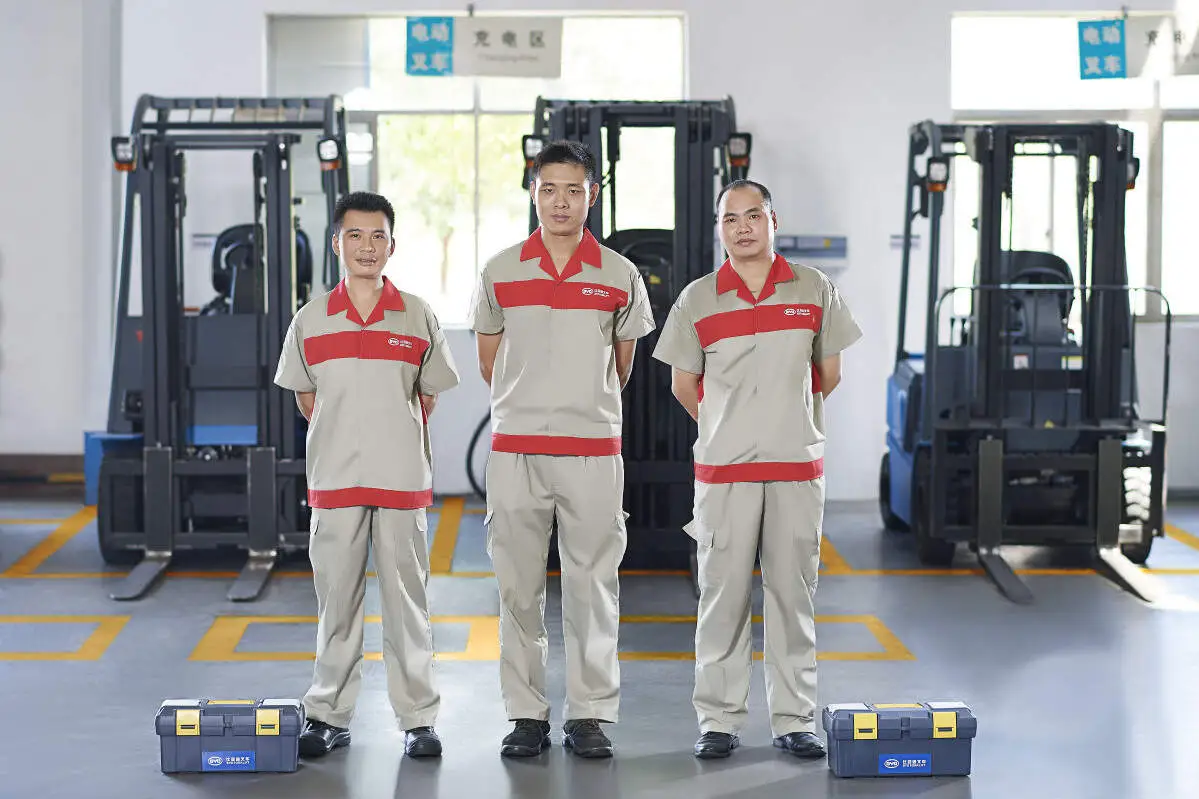
Ambient temperature has a significant impact on battery chemical reactivity. Excessive or too low temperature will accelerate battery aging. In high-temperature environments (such as open-air warehouse operations in summer), continuous high-intensity operations should be avoided. Stop for 10 minutes every hour of work to allow the battery to dissipate heat naturally, while ensuring that the battery surface is unobstructed and well ventilated; if the ambient temperature is lower than 5 ° C, the battery can be preheated before operation, or the forklift can be parked indoors for charging as much as possible to avoid low temperature causing electrolyte fluidity to decline and affecting battery charging and discharging efficiency. When storing the forklift for a long time, the battery needs to be fully charged and placed in a dry environment at 15-25 ° C, and the power should be replenished regularly (every 15 days) to prevent the battery from self-discharging to a power loss state A suitable temperature environment can reduce the change of the internal impedance of the battery and maintain stable charging and discharging performance.
Habit 5: Standardize operation and storage to reduce battery mechanical wear and tear
In addition to charging and discharging management, the operation mode and storage status of the forklift will also indirectly affect the battery life. Avoid sudden acceleration, sudden braking and frequent start and stop during operation to reduce the instantaneous high current shock of the battery; distribute the weight evenly when loading goods to avoid uneven force on the battery due to unilateral overload, which affects the stability of the internal structure; When the forklift is parked, the gear should be hung into neutral and the handbrake should be pulled up to avoid mechanical loss under the continuous power supply state of the battery. For forklifts that have been idle for a long time, it is recommended to disassemble the battery from the vehicle and store it separately. After it is fully charged, wrap the electrode pile head with insulating tape to prevent short circuits. At the same time, check the battery status once a month to ensure that the power is maintained at about 50 Standardized operation and storage can reduce battery wear and tear due to mechanical stress and environmental factors, prolonging its physical service life.
In short, the life of a lithium-ion forklift battery depends not only on the quality of the battery itself, but also closely related to daily maintenance habits. By developing the five habits of regular inspection, standardized charging, reasonable discharge, temperature control, and standardized operation, operators can effectively reduce the probability of battery failure and prolong its cycle life. It is recommended that users incorporate these habits into the daily management process, and flexibly adjust them in combination with the frequency of equipment use and environmental characteristics, which can not only ensure the efficient operation of the forklift, but also reduce maintenance costs in long-term use, and realize the sustainability of warehousing operations.


