简体中文
简体中文 Deutsch
 日本語
日本語 한국어
한국어 Tiếng Việt
 Русский
 ไทย
ไทย Bahasa Indonesia
 Bahasa Melayu
 Filipino
 لالعربية
 Français

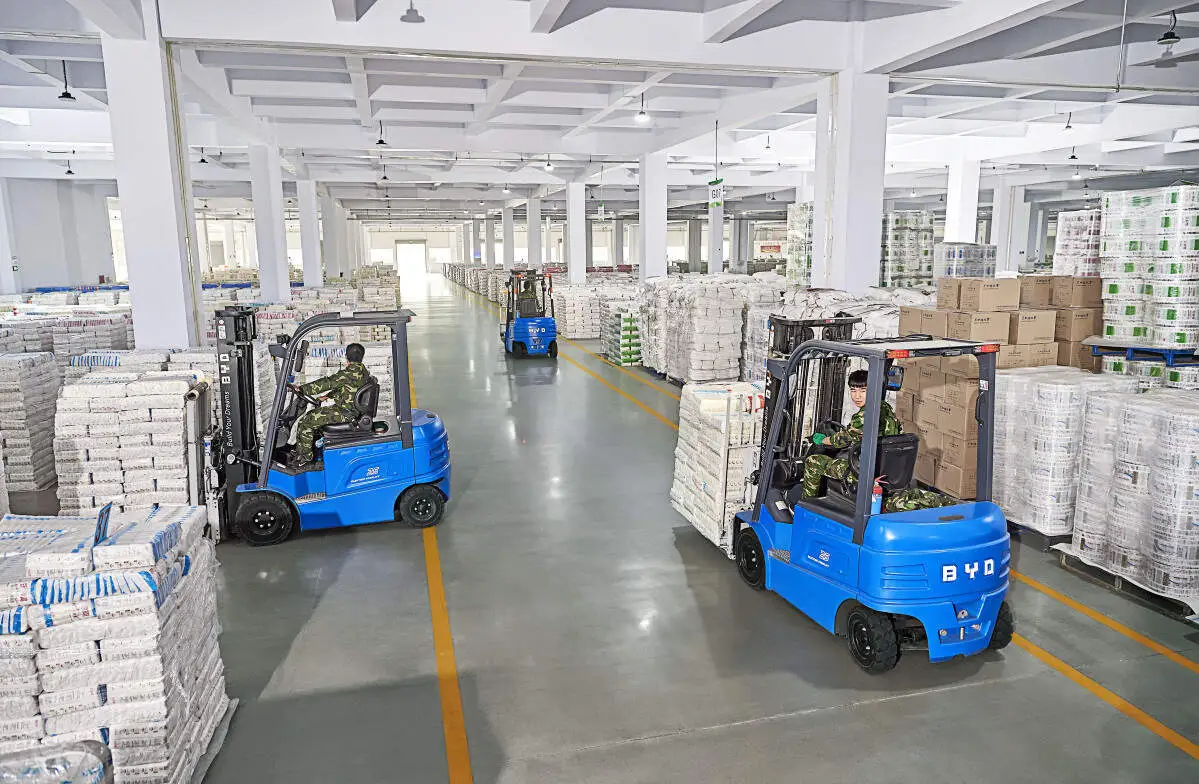
With the popularity of lithium-ion forklifts in warehousing, logistics, and other scenarios, their high-efficiency and environmentally friendly characteristics have been recognized by many users, but it is inevitable that some minor faults will be encountered during daily use. By mastering basic investigation methods and daily operation and maintenance skills, equipment downtime can be greatly reduced, and operation and maintenance costs can be reduced.
Troubleshooting methods for common small problems
Vehicle failure to start is a very common minor problem. When encountering such a situation, first check the basic items, first check whether the vehicle's main power switch is on, then check whether the connector of the lithium battery is loose, and whether there are dust, water stains, and other foreign objects at the interface that affect the conduction. At the same time, confirm whether the remaining power of the battery has been exhausted. After eliminating the above problems, check whether the starting line has a virtual connection or falling off.
If you encounter a situation of insufficient driving power, first confirm whether the current load exceeds the rated load range of the vehicle, whether the slope of the driving road exceeds the allowed climbing threshold of the vehicle, and then check whether the tire pressure meets the standard. If the brake is locked and not reset, if used in a low temperature environment, it is also necessary to confirm whether the lithium battery has triggered the low temperature protection mechanism.
The lifting operation card is also a minor problem that occurs at high frequencies. First, check whether there are foreign objects stuck in the fork arm and guide rail, whether there is a partial load of goods, and then check whether the guide rail lacks lubricating oil, whether the hydraulic oil level is up to standard, and whether there is any leakage in the hydraulic pipeline.
Key points for daily operation and maintenance
Before starting the car every day, do a good basic inspection. Before each use of the vehicle, first go around the car to check for any obvious bumps in the appearance and damage to the outer skin of the line. After confirming that the tire pressure is normal, test whether the braking and lifting functions are normal. Confirm that the remaining battery power can meet the needs of the day before starting the operation.
Lithium battery operation and maintenance is the core of daily maintenance. Do not over-discharge during daily use. Charging can be arranged with about 20% of the remaining power remaining. Do not overcharge. Unplug the power supply in time after it is fully charged. Keep about 50% of the power stored when it is idle for a long time. Recharge once a month. When charging, choose a ventilated and dry environment. Do not stack flammable and explosive items near the charging port. Do not wipe the battery parts with a damp rag.
It is also necessary to do regular maintenance. Every half month, special lubricating oil is added to the rotating parts of the fork arm guide rail, wheel shaft, etc., and the interface of the vehicle line is tightened and checked every quarter. Hydraulic oil is checked for turbidity and liquid level every six months and replaced as needed.
As long as you do a good job of daily minor problem investigation and basic operation and maintenance, you can effectively reduce the failure rate of lithium-ion forklifts, prolong the service life of the equipment, and make daily use more worry-free.