简体中文
简体中文 Deutsch
 日本語
日本語 한국어
한국어 Tiếng Việt
 Русский
 ไทย
ไทย Bahasa Indonesia
 Bahasa Melayu
 Filipino
 لالعربية
 Français
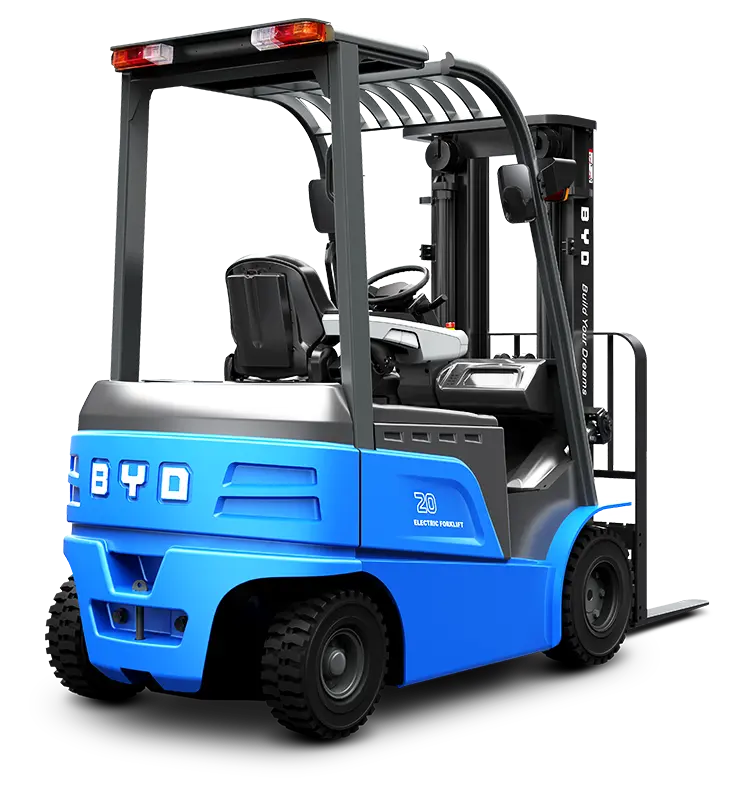
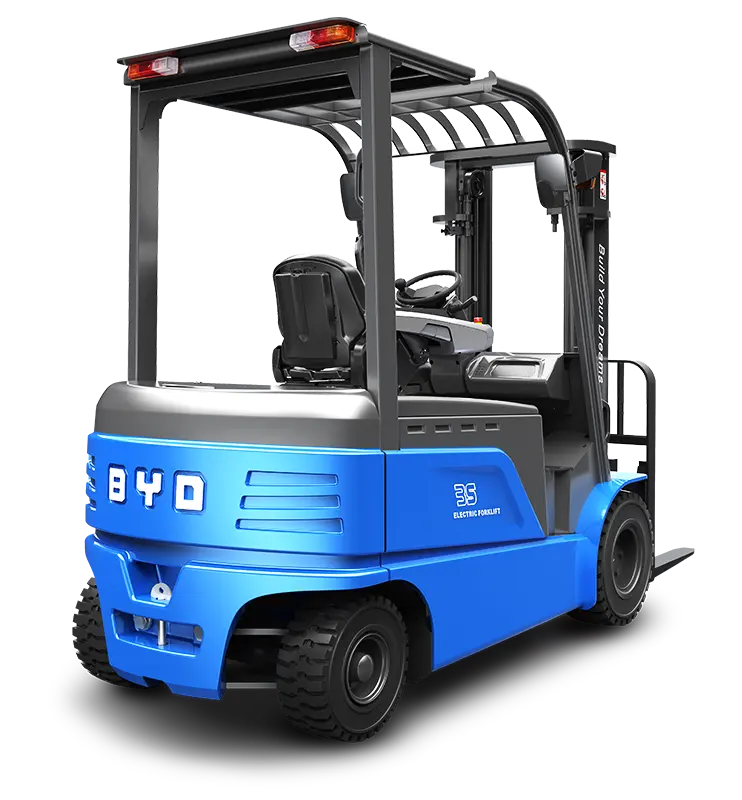
In short-distance handling operations in light warehouses, manufacturing workshops, etc., 2-ton electric forklifts have been widely used due to moderate load, high lithium-ion drive efficiency, and convenient maintenance. For users who are ready to purchase or use such equipment, the rated load and lifting height are the core basic practical parameters, and their meanings and requirements need to be accurately understood.
First of all, let's talk about the rated load. The rating here is not the temporary load limit that the equipment can withstand, but refers to the maximum safety quality that the vehicle can smoothly handle and stack when the fork is in a horizontal standard spacing and the load center distance is fixed at a specified value. The standard load center distance of a 2-ton lithium forklift is usually 500mm or 600mm. For details, you can check the parameter nameplate of the equipment.
There are three main factors that affect the rated load. First, the load placement position. When the center of gravity of the cargo is farther away from the load center, the actual bearing capacity of the vehicle will decrease proportionally. For example, if the center of gravity exceeds the standard center distance of 100 mm, the load may be reduced by about one-fifth. Second, the driving state of the vehicle, under conditions such as downhill and sharp turns, the load-bearing quality should be appropriately reduced for safety reasons. Third, the battery state, although the energy stability of lithium batteries is high, when the power is extremely low, the control system may limit the lifting or driving power, which indirectly affects the normal handling of the rated load. The use of timing will ensure that the center of gravity of the goods is controlled within the standard range to avoid overloading or partial loading, which will not only reduce the carrying capacity, but also may lead to safety issues such as vehicle rollover and fork deformation.
Next, let's talk about the lifting height. Here we mainly focus on two common indicators, one is the free lifting height, and the other is the maximum lifting height. The free lifting height refers to the height that the fork can reach when lifting from the ground and the total height of the door frame remains unchanged. This indicator is very important when operating in low spaces such as containers and low factories. The maximum lifting height refers to the vertical distance when the fork is smoothly lifted from the horizontal state of the ground to the highest position, which is a key reference when stacking operations.
The common 2-ton lithium forklift free lifting height is generally between 150 mm and 500 mm, and the maximum lifting height can be selected according to different configurations according to user requests. The common ones are 3 meters, 4 meters, 4.5 meters, 5 meters, etc. Generally, about 3 meters is suitable for ordinary warehouse shelf stacking, and more than 4 meters needs to be combined with higher shelves to select.