
 简体中文
简体中文 Deutsch
 日本語
日本語 한국어
한국어 Tiếng Việt
 Русский
 ไทย
ไทย Bahasa Indonesia
 Bahasa Melayu
 Filipino
 لالعربية
 Français

In the daily use of electric forklifts, lithium-ion forklift chargers are key equipment for battery energy replenishment, and their choice is directly related to battery life, operation efficiency and equipment safety. Wrong charger selection may lead to rapid battery capacity decay, frequent charging failures, and even cause safety hazards. This article will start from the importance of lithium-ion forklift chargers, analyze in detail the difference between original and third-party chargers, and provide practical purchase avoidance points to help users make informed choices.
First of all, the performance and adaptability of a lithium-ion forklift charger determine the health of the battery. A high-quality charger can accurately match the charging curve of the battery, meeting the charging needs while reducing the chemical reaction loss inside the battery; while a charger with mismatched parameters may cause the aging of the battery plate to accelerate, the capacity to plummet, and even cause problems such as battery bulging and leakage due to overcharging, overdischarge or unstable charging current. In addition, the compatibility of the charger will also affect the operation continuity of the forklift. If the charging efficiency is low or frequently interrupted, it will directly reduce the efficiency of the equipment and increase operating costs.
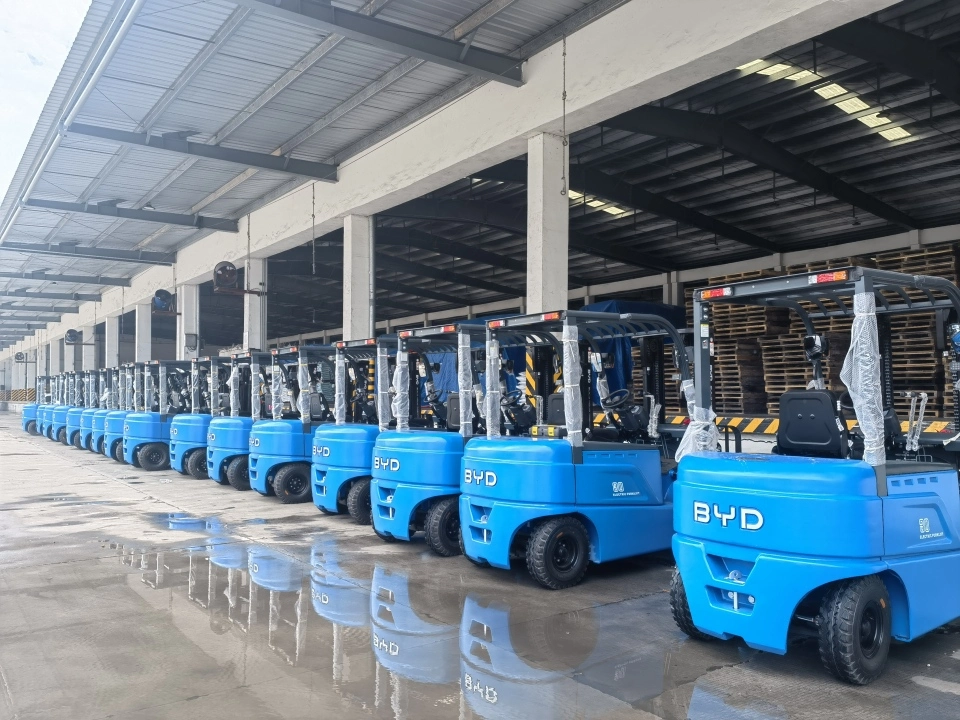
The original charger is a device customized and developed by the forklift manufacturer for its own battery characteristics and vehicle electrical system. Its core feature is high adaptability. From the hardware parameters, the output voltage, current, charging power, etc. of the original charger have been strictly tested and are fully compatible with the communication protocol of the battery management system (BMS), enabling accurate charging control. In terms of safety protection mechanism, the original product usually integrates multiple functions such as overcurrent protection, overvoltage protection, short circuit protection and temperature monitoring, which can dynamically adjust the charging strategy according to the battery status to avoid damage to the battery caused by overcharging. From the point of view of after-sales guarantee, the original charger of regular manufacturers generally provides perfect quality assurance service, and is connected with the vehicle quality assurance system. If there is a quality problem, it can quickly respond to maintenance or replacement, reducing the user's worries.
Third-party chargers are adapted products produced by non-original manufacturers, and their characteristics are significantly different from the original. Some third-party products attract users at lower prices, but they may have deficiencies in parameter matching, such as output voltage and charging curve that do not match the requirements of the original battery, which can easily lead to uneven battery during charging and affect the overall capacity. In terms of safety design, the protection mechanism of third-party products may be simplified, such as unreasonable setting of overcharge protection threshold, or lack of cooperative working ability with BMS, long-term use may lead to shortened battery life. In addition, details such as heat dissipation performance and interface durability of third-party chargers may also be compromised due to cost control, increasing the risk of failure during charging.
The core differences between original and third-party chargers are mainly reflected in four aspects: First, the degree of parameter matching, the original charger parameters are highly matched with the battery and vehicle system, and the charging process is smooth; third-party products may cause charging efficiency fluctuations or battery damage due to inaccurate parameters. Second, the safety mechanism, the original product has passed the full-scene test of the original factory, and the protection function is more comprehensive; third-party products may only meet the basic safety standards, and lack customized protection for battery characteristics. Third, compatibility and stability. The original charger can work together with the vehicle for a long time to reduce charging interruptions caused by protocol incompatibility. Third-party products have weak compatibility in multi-brand battery mixing scenarios. Fourth, after-sales services, original products rely on the manufacturer's after-sales system to respond in a timely manner; if third-party products lack a formal service network, they may face the dilemma of no door to maintenance.
When purchasing a lithium battery forklift charger, you need to pay attention to the following pit avoidance points: First, give priority to confirming the original parameters. Consult the forklift manual or consult the manufacturer before purchasing to clarify the battery rated voltage, capacity and charging protocol requirements. Avoid blindly selecting chargers that do not match the parameters. Secondly, check the certification and qualifications, and choose products with national mandatory product certification (3C certification) or industry safety certification to ensure that the protection functions such as overcurrent and overvoltage meet the standards. Third, pay attention to the adaptability of the interface. The charger interface needs to be completely matched with the vehicle battery interface to avoid equipment damage due to poor contact. Fourth, evaluate the heat dissipation and durability. High-quality chargers should have a good heat dissipation design, and the shell material needs to withstand long-term temperature changes to avoid malfunctions due to poor heat dissipation. Fifth, keep the formal purchase certificate and choose products with a clear quality assurance period, so as to protect your rights in time when there is a problem. Finally, be wary of the low price trap and do not ignore the quality due to the low price of third-party products. In the long run, the replacement cost caused by battery damage may be much higher than the price difference of the original charger.
In summary, the choice of lithium battery forklift charger needs to take into account adaptability, safety and reliability. The original charger can effectively ensure battery life and equipment safety with the advantage of customization; although third-party products may be less expensive, they need to be strictly checked in terms of parameter matching, safety certification, etc. When purchasing, users should give priority to the original factory recommendation as the core, combine their own usage scenarios and equipment characteristics, and choose a compliant and reliable charger to avoid the long-term stable operation of the forklift due to small losses.


