
 简体中文
简体中文 Deutsch
 日本語
日本語 한국어
한국어 Tiếng Việt
 Русский
 ไทย
ไทย Bahasa Indonesia
 Bahasa Melayu
 Filipino
 لالعربية
 Français
Core Considerations in the Selection of Forklifts for Cold Storage Operations
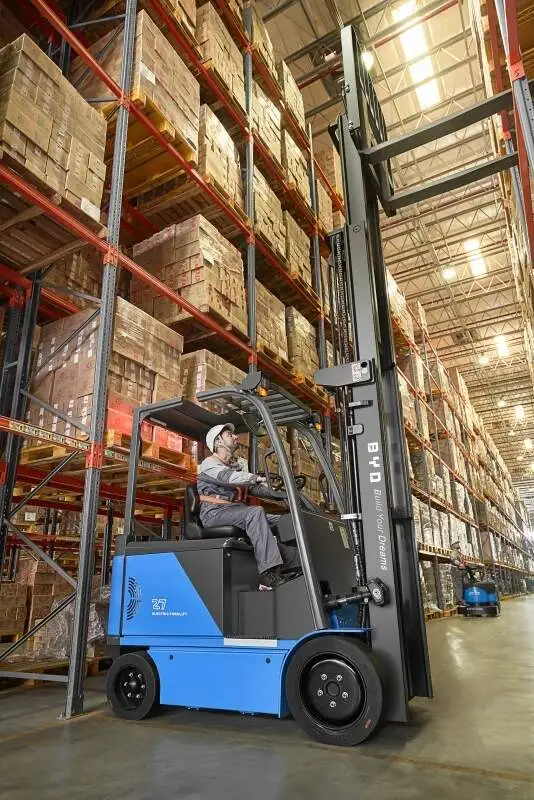
Cold storage operations are characterized by low temperature, narrow space, and dense cargo turnover. The performance requirements for forklifts are much higher than those in ordinary scenarios. When selecting models, it is necessary to focus on the three core dimensions of low temperature adaptation, space utilization, and operation efficiency to avoid affecting the stability of cold storage operations due to improper selection.
Low temperature environment tolerance
The cold storage usually maintains a constant low temperature of minus 18 to minus 30 degrees Celsius, and the components of ordinary forklifts are prone to problems such as power attenuation and control cards due to low temperatures. When selecting a model, it is necessary to confirm whether the battery, hydraulic system, and control components of the forklift have been optimized for low temperatures to ensure continued operation performance in low temperatures.
Space adaptation and operational efficiency
Cold storage passages are generally narrow, shelves are densely arranged, and the turning radius of forklifts and the lifting height of the gantry are key parameters that affect space utilization. Appropriate parameters can reduce the risk of space collision during operation, improve the efficiency of tray access, and adapt to the high turnover requirements of cold storage.
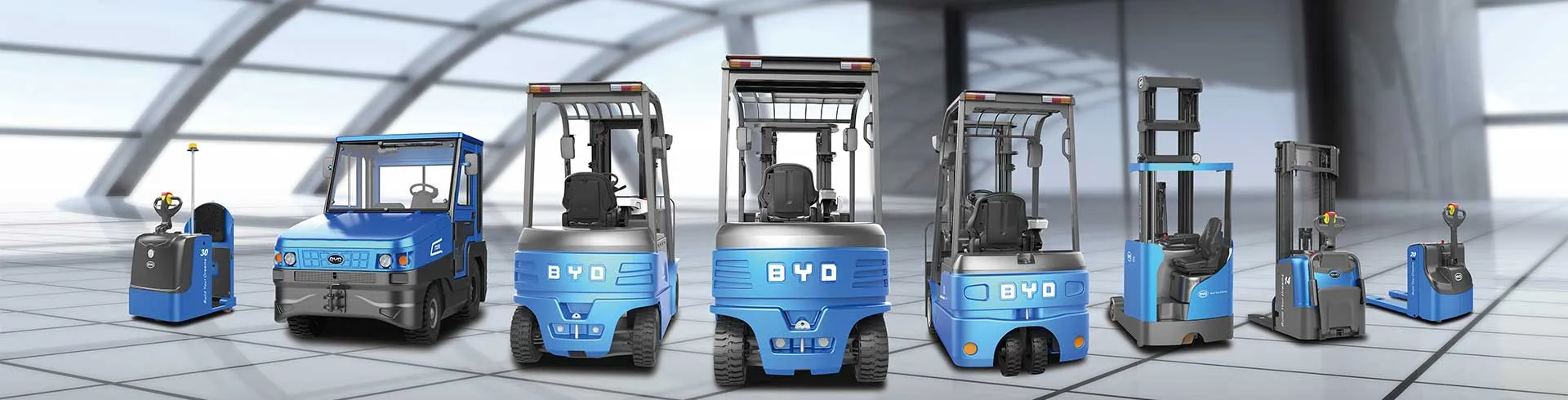
Comprehensive analysis of BYD ECB18S suitability
The forklift has been multi-dimensionally optimized for the core requirements of cold storage operations, firstly, the strengthening design of low-temperature components, the battery adopts a low-temperature performance optimization scheme, and the sealing performance of the hydraulic system is upgraded to maintain a stable power output in a low-temperature environment. Secondly, the steering system is optimized to reduce the steering radius and adapt to the narrow channel operation of the cold storage. Furthermore, its control interface adopts an easy-to-operate design to adapt to the needs of wearing gloves in a low-temperature environment, improving the convenience of operation. In addition, the application of low-loss components also reduces the operation and maintenance costs of the cold storage, reducing the probability of failure at low temperatures, and providing reliable support for cold storage operations.


