简体中文
简体中文 Deutsch
 日本語
日本語 한국어
한국어 Tiếng Việt
 Русский
 ไทย
ไทย Bahasa Indonesia
 Bahasa Melayu
 Filipino
 لالعربية
 Français
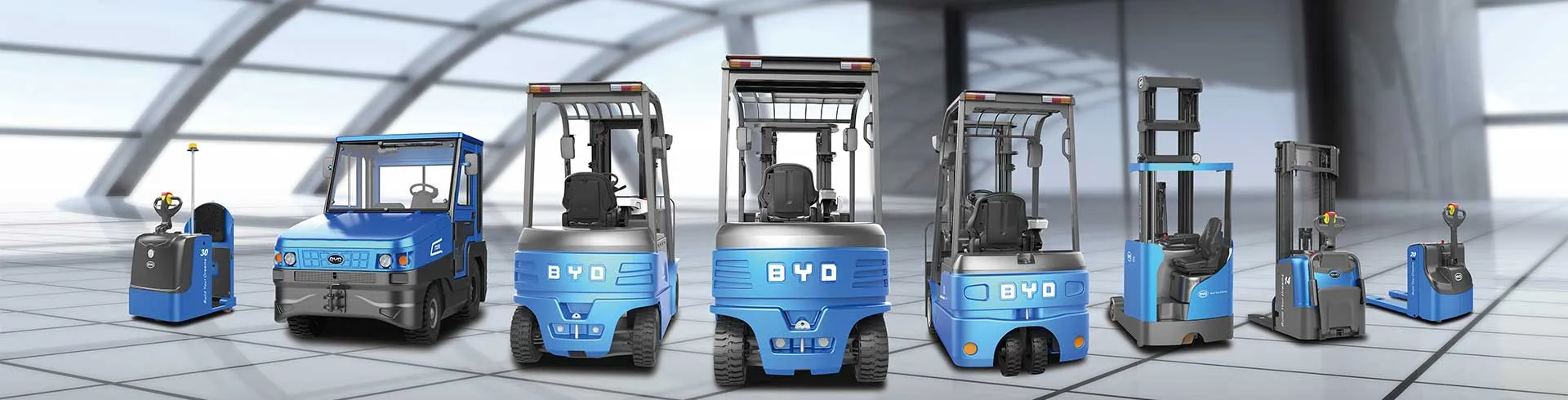
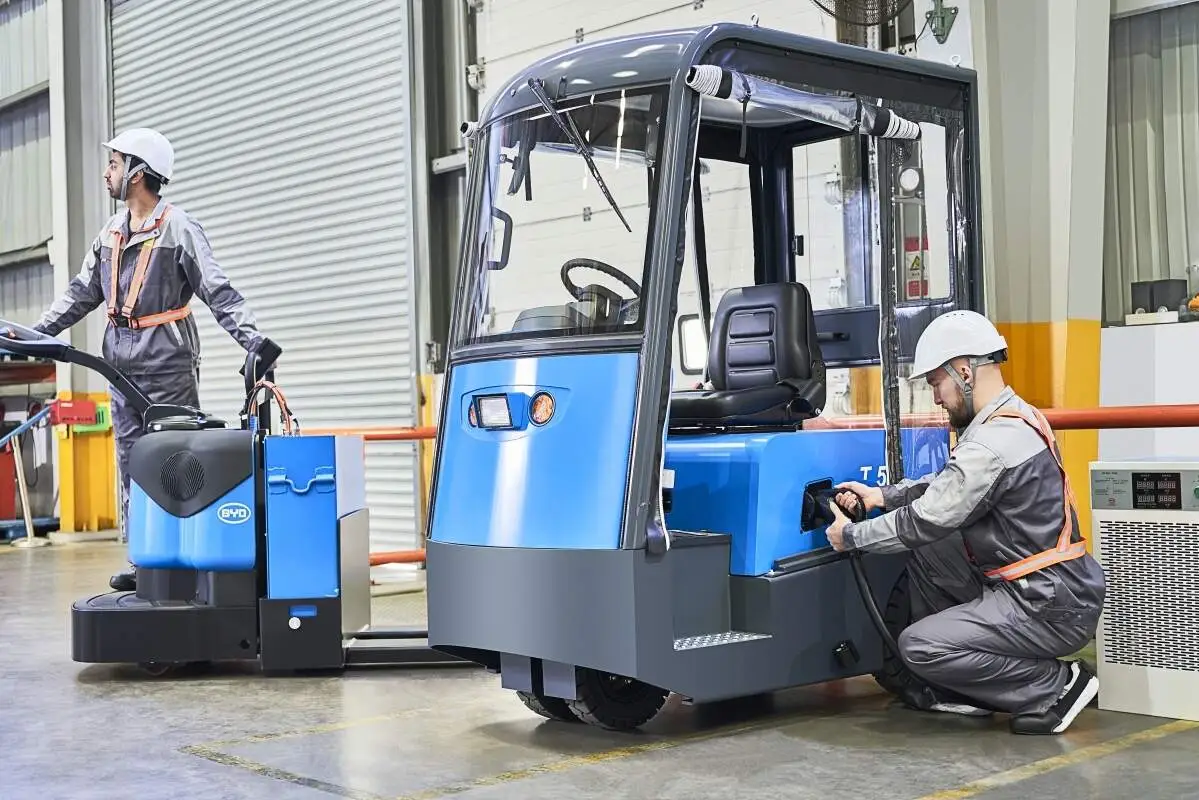
In warehousing and logistics operations, pallet trucks are the core equipment to improve the efficiency of cargo turnover, and different types of equipment are suitable for different operation needs. The following will compare the differences between BYD P20SII and P20JS pallet trucks from multiple dimensions to help practitioners clearly select the type.
Differences between operation mode and applicable scenarios
The core difference between the two devices lies in the operation mode. The P20SII is a walking pallet truck, and the operator needs to follow the equipment on foot. The body design is compact and flexible, and the minimum turning radius is smaller. It is suitable for scenes with limited space such as narrow passages and small picking areas. For example, the fragmented order processing link of e-commerce warehousing can easily shuttle between dense shelves. The P20JS is a standing pallet truck, equipped with a standing operation platform. The operator can stand on the platform and move with the equipment. It is more suitable for long-distance and large-scale cargo handling scenarios, such as cross-regional cargo transfer inside the warehouse, which can reduce the physical exertion of the operator.
The difference between operation experience and operation efficiency
The walking P20SII has a lower control threshold, and the operating handle integrates functions such as forward, backward, and lift. Novices can also get started quickly, and the flexibility advantage is obvious in the operation scene of frequent start and stop in a small area. The P20JS is equipped with a more ergonomic control device, and the operation platform has a shock absorption design, which can reduce the operator's fatigue during long-term operation. At the same time, the equipment travels relatively faster, which can effectively improve the overall operation efficiency during long-distance handling.
Differences in battery life and configuration details
In terms of battery life, both devices are equipped with reliable power systems, but they are adapted for different operating scenarios. The P20SII focuses on lightness, with moderate battery capacity to meet the battery life needs of short-distance and high-frequency operations. The charging time is short, which is suitable for interstitial operating scenarios. The P20JS is equipped with a larger capacity battery, which has a longer range and can support long-term continuous operation. It is suitable for storage environments with high operating intensity. In addition, the P20JS is also equipped with emergency braking devices, anti-skid pedals, etc., to further enhance the safety of the operation.
Warehouse selection suggestions
If the warehouse space is narrow and small pieces are mainly handled piecemeal, the P20SII is preferred; if the operation distance is long, the cargo handling volume is large, and the operator's physical exertion needs to be reduced, the P20JS is a more suitable choice. Practitioners can choose the appropriate pallet handling truck based on the actual layout, operation process and staffing of their own warehouse to maximize operation efficiency.