简体中文
简体中文 Deutsch
 日本語
日本語 한국어
한국어 Tiếng Việt
 Русский
 ไทย
ไทย Bahasa Indonesia
 Bahasa Melayu
 Filipino
 لالعربية
 Français
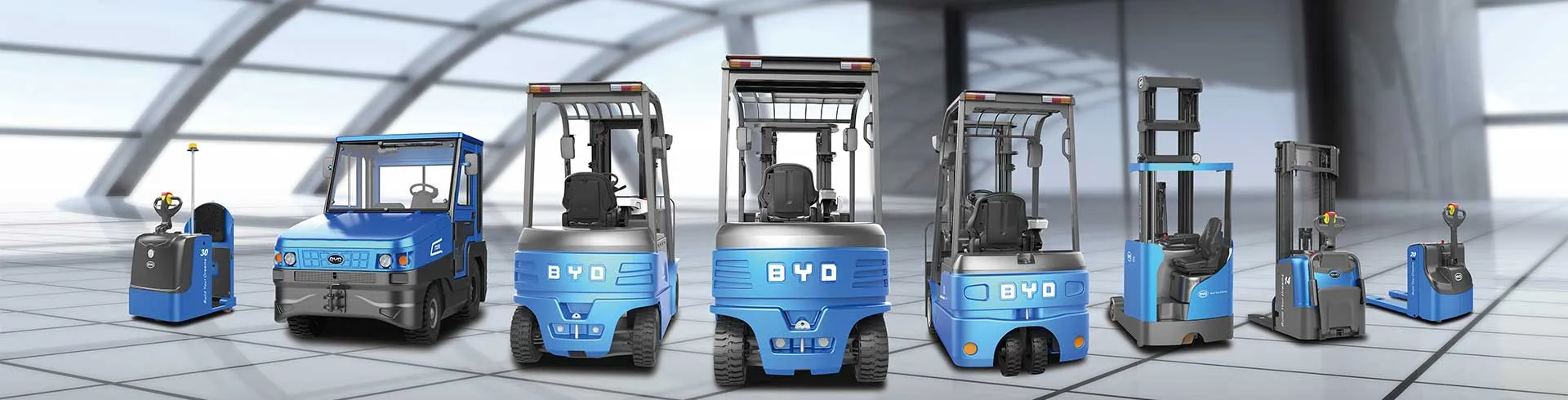
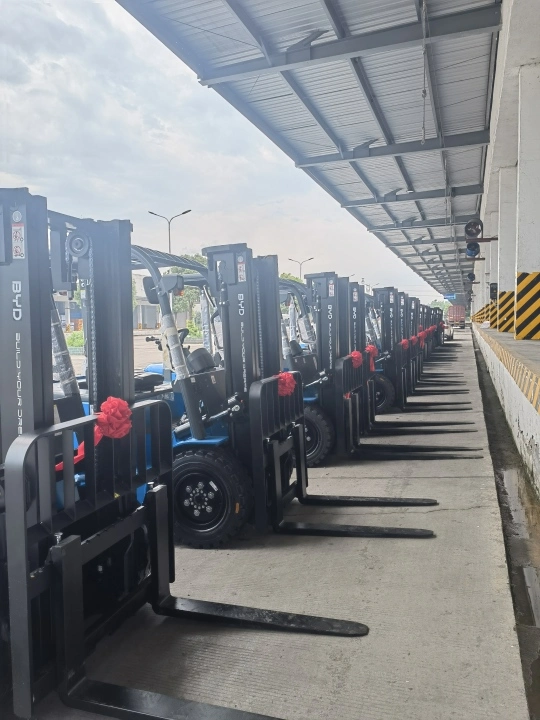
With the popularity of lithium-ion forklifts in warehousing, logistics, and other scenarios, battery cycle life and attenuation have become the core cost indicators that users pay attention to. Understanding relevant laws can effectively help users use batteries rationally and reduce long-term operating costs.
Lithium forklift battery cycle life has clear industry judgment standards. Usually, when the actual usable capacity of the battery drops to 80% of the rated capacity, the total number of complete charge and discharge cycles completed before is the nominal cycle life of the battery. The complete charge and discharge cycle here refers to the complete process of discharging the battery from the fully charged state to the set cut-off voltage and then filling it up to the rated voltage. The shallow charge and shallow discharge in daily use will not be counted as a single cycle, so the total number of cycles in actual use is often higher than the basic value of the product nominal.
Under different usage scenarios, the attenuation rate of lithium-ion forklift batteries varies significantly. In conventional operating scenarios, the ambient temperature is maintained between 10 degrees Celsius and 30 degrees Celsius, the single operating load does not exceed 70% of the rated load, and the single discharge depth is controlled at about 60%. The attenuation rate of the battery will remain at a low level. For every 100 complete cycles, the capacity decrease is usually between 0.3% and 0.5%. If it is in an extreme operating environment for a long time, such as the ambient temperature is lower than minus 10 degrees Celsius or higher than 45 degrees Celsius, or it is often discharged with a full load and a large current, and the battery is emptied to the cut-off voltage every time before charging, the battery's attenuation rate will increase by 2 to 3 times. In high temperature environments, the consumption of internal electrolyte may also increase, further shortening the actual service life of the battery.
Master the reasonable use and maintenance methods, which can effectively delay the battery attenuation and prolong the cycle life. In the daily charge and discharge management, try to avoid completely emptying the battery booster charge, and replenish the battery in time after the operation. When the battery is idle for a long time, keep the power between 40% and 60%. Complete a complete charge and discharge every 1 to 2 months, and calibrate the battery capacity parameters. Try to avoid extreme temperature environments during operation. In high temperature or low temperature weather, the single operation time can be appropriately shortened to avoid the battery being overheated or overcooled for a long time. Check the contact of the battery interface every quarter during daily maintenance to avoid abnormal discharge caused by poor contact, clean the dust and oil on the battery surface in time, and keep the heat dissipation channel unobstructed, which can also reduce the probability of abnormal attenuation.