简体中文
简体中文 Deutsch
 日本語
日本語 한국어
한국어 Tiếng Việt
 Русский
 ไทย
ไทย Bahasa Indonesia
 Bahasa Melayu
 Filipino
 لالعربية
 Français
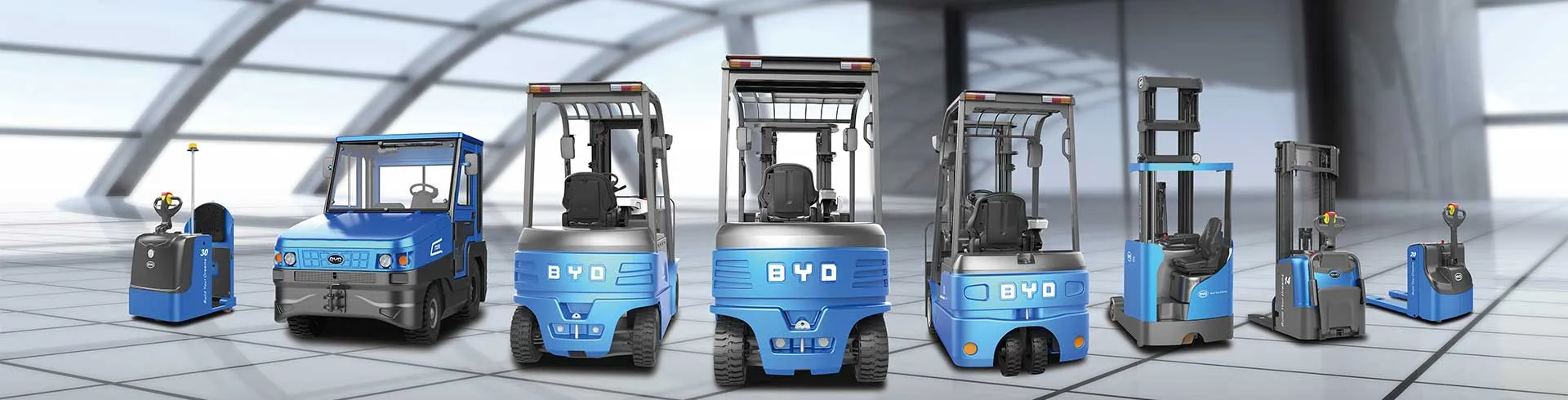
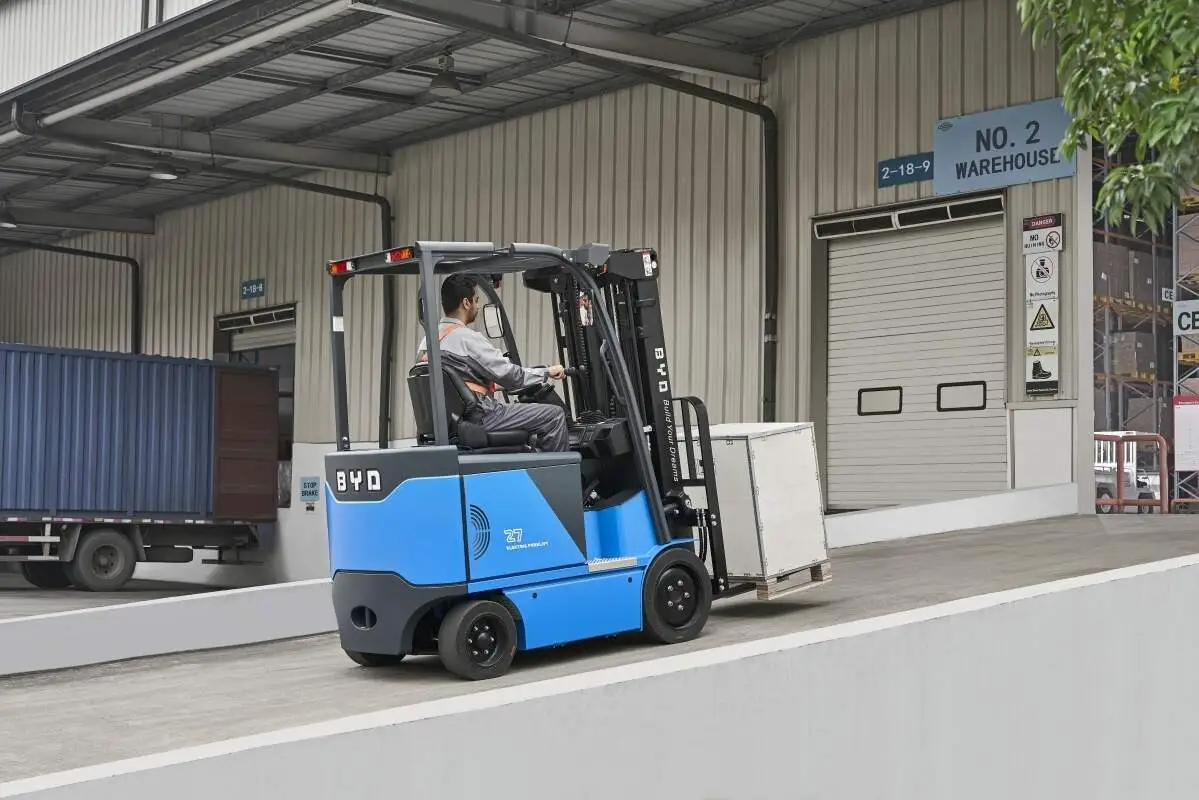
As a common equipment in logistics warehousing and industrial handling scenarios, 2-ton electric pallet trucks play a key role in improving operational efficiency. BYD's P20JW and P20PS VII are popular models in this tonnage segment. Understanding the differences between the two can help accurately match demand.
Performance Configuration Core Difference
Power and battery life
Both models are equipped with a rated carrying capacity of 2 tons, but the power system has a targeted design. The battery capacity of the P20JW is moderate, the charging speed is faster, and it is more suitable for short-distance and high-frequency turnover operations, which can meet the needs of frequent starts and stops in small warehouses; the P20PS VII is equipped with a large-capacity battery, which has a longer range and can support long-term continuous handling. It is suitable for cross-regional and long-distance operation scenarios.
Walking and steering systems
The steering structure of the P20JW has been optimized, resulting in a smaller steering radius, more flexible operation in narrow storage passages, shelf gaps, and other spaces, making it easy to achieve accurate steering. The P20PS VII has a more stable walking system, and is equipped with anti-skid tires that can adapt to slightly complex ground environments, such as stone roads and slightly bumpy roads in industrial parks, ensuring the stability of heavy-duty handling.
Application scenario distinction
Warehouse internal operation scenario
In scenarios such as e-commerce warehousing and small finished product warehouses, which mainly focus on sorting, replenishment, and short-distance transshipment, the P20JW's flexible handling is more advantageous, which can effectively improve the efficiency of operations in narrow spaces and reduce the time occupied by channels. For long-distance transshipment operations in large-scale raw material warehouses and finished product warehouses, the long battery life of the P20PS can reduce the frequency of midway charging and adapt to the needs of continuous operations.
Outdoor and semi-outdoor work scenarios
If the operation scenario involves open-air handling and cross-plant transportation in the park, the P20PS VII has stronger weather resistance, better adaptability to temperature and humidity changes, and can operate stably in a non-closed environment. The P20JW is more suitable for indoor storage environments with constant temperature and humidity, giving full play to its flexible handling characteristics.
Operation and maintenance differences
Ease of operation
The P20JW's control handle is designed to be lighter, with a simple button layout, allowing novice operators to get started quickly after simple training, lowering the threshold for operation. The P20PS VII's control system has richer functions and is equipped with a number of auxiliary operation buttons, making it suitable for experienced operators to carry out refined and heavy-duty handling operations.
Routine maintenance cost
The core components of the P20JW are highly versatile, making it easier to purchase and replace parts during daily maintenance, and the maintenance cost is relatively low. Although the special components of the P20PS VII require professional maintenance, the failure rate of the components is lower, and the maintenance frequency is less after long-term use. It is suitable for users who focus on long-term stability.
Overall, when purchasing two models, it is necessary to consider factors such as their own operating scenarios, operating intensity, and operator proficiency in order to select a 2-ton electric pallet truck that meets their requirements.