2026-07-05

Einsteigerbedienung BYD GX20 Stapler Grundbetrieb Tutorial Sharing

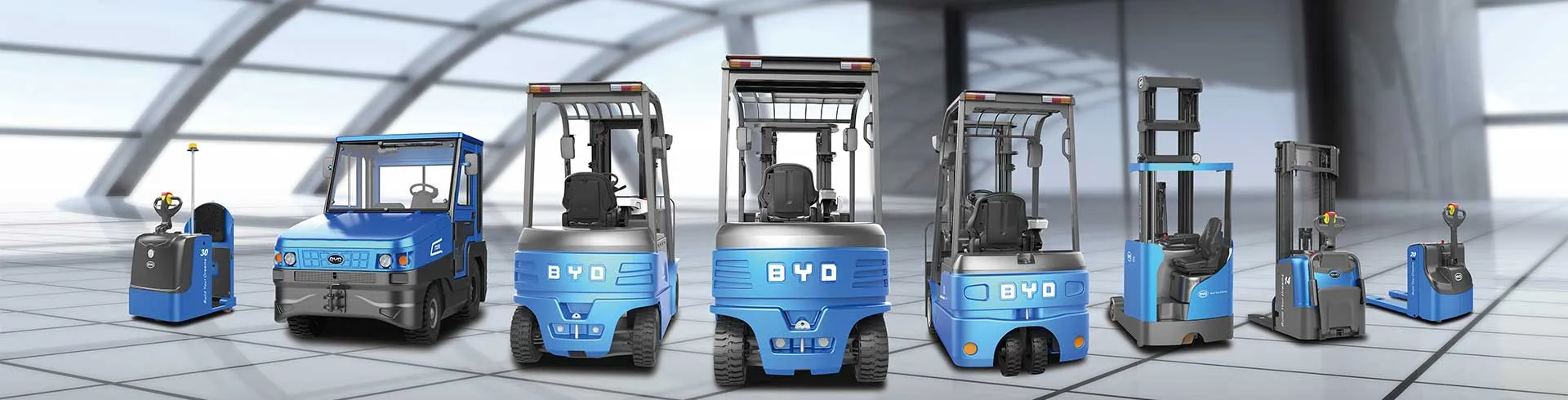
Einsteigerbedienung BYD GX20 Stapler Grundbetrieb Tutorial Sharing(Figur1)

Vorbereitungsprüfung vor der Inbetriebnahme

Inspektion des Aussehens und der Teile

Bevor der Anfänger den Stapler bedient, sollte er zunächst das Aussehen überprüfen. Gehen Sie um das Auto herum, um zu sehen, ob die Karosserie durch Stöße beschädigt ist, ob der Reifendruck normal ist und ob Verschleiß oder Risse vorhanden sind. Überprüfen Sie vor allem, ob die Gabeln nicht verformt oder gerissen sind und ob die Gabeln fest sind. Achten Sie gleichzeitig auf die Dichtigkeit der Regalkette, um sicherzustellen, dass sie nicht bricht oder rostet.

Strom- und Systembestätigung

Überprüfen Sie nach dem Betreten der Kabine zunächst die Leistungsanzeige der Instrumententafel, um sicherzustellen, dass die Leistung den Anforderungen dieses Vorgangs gerecht wird. Überprüfen Sie dann verschiedene Kontrollleuchten, um sicherzustellen, dass die Fehlerleuchte, die Betriebsleuchte usw. normal angezeigt werden. Treten Sie vorsichtig auf das Bremspedal, um zu spüren, ob die Bremsrückmeldung empfindlich ist, und vermeiden Sie Probleme mit Bremsausfällen während des Betriebs.

Grundlegende Fahrweise

Start- und Leerlaufeinstellung

Setzen Sie den Schlüssel ein und schrauben Sie ihn in die Ausgangsposition. Nachdem die Instrumententafel normal aufleuchtet, lassen Sie das Bremspedal langsam los. Zu diesem Zeitpunkt geht der Staplerwagen in den Leerlaufzustand über, und die Leerlaufdrehzahl kann über den Bedienhebel an die Startanforderungen verschiedener Betriebsszenarien angepasst werden. Achten Sie darauf, dass beim Anfahren keine Personen oder Hindernisse in der Nähe sind, um einen sicheren Start zu gewährleisten.

Vorwärts- und Rückwärtsoperationen

Suchen Sie den Vorwärts- und Rückwärtshebel, drücken Sie nach vorne, um sich vorwärts zu bewegen, und ziehen Sie nach hinten, um sich zurückzubewegen. Drücken Sie während des Betriebs langsam, um eine schnelle Beschleunigung zu vermeiden, die dazu führt, dass das Fahrzeug die Kontrolle verliert. Halten Sie während der Fahrt eine niedrige Geschwindigkeit ein, insbesondere beim Abbiegen in engen Bereichen, verlangsamen Sie im Voraus und beobachten Sie die Umgebung, bevor Sie die Lenkung ausführen.

Lenkung und Bremssteuerung

Der Lenkvorgang wird über das Lenkrad ausgeführt, und die Drehkraft ist moderat, um ein Auftreffen auf die Richtung zu vermeiden. Die Bremsen werden in Fußbremse und Handbremse unterteilt. Die Fußbremse wird für normales Fahren verwendet, und die Handbremse muss beim Parken gezogen werden. Im Notfall können Sie direkt auf das Bremspedal drücken, um sicherzustellen, dass das Fahrzeug schnell anhält.

Stapelvorgang von Gütern

Einstellung der Gabelsteigung

Passen Sie den Abstand der Gabeln entsprechend der Breite der Ware an, so dass die Gabeln gleichmäßig unter der Ware verteilt sind, um Teilbelastungen zu vermeiden. Kontrollieren Sie beim Einstellen das Öffnen und Schließen der Gabeln durch die Betätigungsstange, um sicherzustellen, dass der Abstand angemessen ist, und nähern Sie sich dann langsam der Ware.

Fracht heben und fallen lassen

Nachdem Sie die Gabelzähne in den Boden der Ware eingeführt haben, betätigen Sie langsam die Hubstange, damit die Ware reibungslos aufsteigt. Achten Sie während des Hebevorgangs auf den Zustand der Ware, um Erschütterungen und Stürze zu vermeiden. Beim Abstieg sollten Sie auch langsam vorgehen, um sicherzustellen, dass die Ware reibungslos landet und Schäden an der Ware oder den Fahrzeugen durch Stöße vermieden werden.

Vorsichtsmaßnahmen beim Stapeln von Gütern

Achten Sie beim Stapeln der Güter darauf, dass der Boden, auf dem die Güter gestapelt sind, eben ist, um ein Kippen des Fahrzeugs zu vermeiden. Nachdem die Güter auf die Zielhöhe angehoben wurden, halten Sie eine Weile an und vergewissern Sie sich, dass sie stabil sind, bevor Sie das Fahrzeug bewegen. Senken Sie nach Abschluss des Stapelns die Gabeln rechtzeitig in die niedrigste Position, um Kollisionen während der Fahrt zu vermeiden.

Sicheres Parken und Veredelungsarbeiten

Parkvorschriften

Stellen Sie das Fahrzeug nach Beendigung der Arbeit in dem dafür vorgesehenen Bereich ab, ziehen Sie die Handbremse hoch und schalten Sie den Strom ab. Vergewissern Sie sich vor dem Abnehmen des Schlüssels erneut, dass die Gabeln auf den Boden abgesenkt sind und sich der Hebel in einer neutralen Position befindet.

Abschlussprüfung

Prüfen Sie nach dem Parken erneut, ob die Gabeln, Ketten und andere Komponenten in Ordnung sind, und beseitigen Sie die Ablagerungen auf der Oberfläche des Gehäuses. Wenn das Gerät längere Zeit nicht benutzt wird, empfiehlt es sich, den Hauptschalter zu trennen, um einen Stromausfall zu vermeiden.

Telefon

WeChat

Whatsapp

E-Mail Adresse

We use cookie to improve your online experience. By continuing to browse this website, you agree to our use of cookie.

Cookies

Please read our Terms and Conditions and this Policy before accessing or using our Services. If you cannot agree with this Policy or the Terms and Conditions, please do not access or use our Services. If you are located in a jurisdiction outside the European Economic Area, by using our Services, you accept the Terms and Conditions and accept our privacy practices described in this Policy.
We may modify this Policy at any time, without prior notice, and changes may apply to any Personal Information we already hold about you, as well as any new Personal Information collected after the Policy is modified. If we make changes, we will notify you by revising the date at the top of this Policy. We will provide you with advanced notice if we make any material changes to how we collect, use or disclose your Personal Information that impact your rights under this Policy. If you are located in a jurisdiction other than the European Economic Area, the United Kingdom or Switzerland (collectively “European Countries”), your continued access or use of our Services after receiving the notice of changes, constitutes your acknowledgement that you accept the updated Policy. In addition, we may provide you with real time disclosures or additional information about the Personal Information handling practices of specific parts of our Services. Such notices may supplement this Policy or provide you with additional choices about how we process your Personal Information.


Cookies

Cookies are small text files stored on your device when you access most Websites on the internet or open certain emails. Among other things, Cookies allow a Website to recognize your device and remember if you've been to the Website before. Examples of information collected by Cookies include your browser type and the address of the Website from which you arrived at our Website as well as IP address and clickstream behavior (that is the pages you view and the links you click).We use the term cookie to refer to Cookies and technologies that perform a similar function to Cookies (e.g., tags, pixels, web beacons, etc.). Cookies can be read by the originating Website on each subsequent visit and by any other Website that recognizes the cookie. The Website uses Cookies in order to make the Website easier to use, to support a better user experience, including the provision of information and functionality to you, as well as to provide us with information about how the Website is used so that we can make sure it is as up to date, relevant, and error free as we can. Cookies on the Website We use Cookies to personalize your experience when you visit the Site, uniquely identify your computer for security purposes, and enable us and our third-party service providers to serve ads on our behalf across the internet.

We classify Cookies in the following categories:
 ●  Strictly Necessary Cookies
 ●  Performance Cookies
 ●  Functional Cookies
 ●  Targeting Cookies


Cookie List
A cookie is a small piece of data (text file) that a website – when visited by a user – asks your browser to store on your device in order to remember information about you, such as your language preference or login information. Those cookies are set by us and called first-party cookies. We also use third-party cookies – which are cookies from a domain different than the domain of the website you are visiting – for our advertising and marketing efforts. More specifically, we use cookies and other tracking technologies for the following purposes:

Strictly Necessary Cookies
These cookies are necessary for the website to function and cannot be switched off in our systems. They are usually only set in response to actions made by you which amount to a request for services, such as setting your privacy preferences, logging in or filling in forms. You can set your browser to block or alert you about these cookies, but some parts of the site will not then work. These cookies do not store any personally identifiable information.

Functional Cookies
These cookies enable the website to provide enhanced functionality and personalisation. They may be set by us or by third party providers whose services we have added to our pages. If you do not allow these cookies then some or all of these services may not function properly.

Performance Cookies
These cookies allow us to count visits and traffic sources so we can measure and improve the performance of our site. They help us to know which pages are the most and least popular and see how visitors move around the site. All information these cookies collect is aggregated and therefore anonymous. If you do not allow these cookies we will not know when you have visited our site, and will not be able to monitor its performance.

Targeting Cookies
These cookies may be set through our site by our advertising partners. They may be used by those companies to build a profile of your interests and show you relevant adverts on other sites. They do not store directly personal information, but are based on uniquely identifying your browser and internet device. If you do not allow these cookies, you will experience less targeted advertising.

How To Turn Off Cookies
You can choose to restrict or block Cookies through your browser settings at any time. Please note that certain Cookies may be set as soon as you visit the Website, but you can remove them using your browser settings. However, please be aware that restricting or blocking Cookies set on the Website may impact the functionality or performance of the Website or prevent you from using certain services provided through the Website. It will also affect our ability to update the Website to cater for user preferences and improve performance. Cookies within Mobile Applications

We only use Strictly Necessary Cookies on our mobile applications. These Cookies are critical to the functionality of our applications, so if you block or delete these Cookies you may not be able to use the application. These Cookies are not shared with any other application on your mobile device. We never use the Cookies from the mobile application to store personal information about you.

If you have questions or concerns regarding any information in this Privacy Policy, please contact us by email at . You can also contact us via our customer service at our Site.