2026-07-15

Die Umsetzung der Öl-für-Strom-Subventionspolitik hat die Bereitschaft der Hersteller gestärkt, Elektrostapler auf den neuesten Stand zu bringen

In letzter Zeit wurden zahlreiche Maßnahmen zur Förderung von Öl für Strom intensiv umgesetzt, die der Modernisierung der Ausrüstung von Fertigungsunternehmen neuen Schwung verliehen haben. Unter dem doppelten Druck strengerer Umweltschutzanforderungen und der Kontrolle der Betriebskosten nimmt die Bereitschaft der Hersteller, Elektrostapler auf den neuesten Stand zu bringen, erheblich zu, und das Tempo der elektrischen Transformation auf dem Gabelstaplermarkt beschleunigt sich weiter.

Früher waren Kraftstoffstapler aufgrund ihrer starken Leistung und unbegrenzten Batterielebensdauer die Hauptausrüstung für den Materialumschlag in Fertigungsunternehmen. Mit der Verschärfung der Ölpreisschwankungen und der kontinuierlichen Verschärfung der Umweltschutzaufsicht werden jedoch allmählich die Nachteile von Kraftstoffstaplern deutlich. Einerseits steigt der Anteil des Kraftstoffverbrauchs an den Materialumschlagskosten der Unternehmen weiter an, was für die Unternehmen einen großen wirtschaftlichen Druck bedeutet; andererseits entsprechen die von den Kraftstoffstaplern ausgestoßenen Abgase nicht den Umweltschutzanforderungen einiger Regionen, und die Unternehmen sind mit Compliance-Risiken konfrontiert, insbesondere in wichtigen Umweltschutzgebieten wie Beijing-Tianjin-Hebei und dem Jangtse-Delta. Übermäßige Emissionen können auch mit Geldstrafen geahndet werden.

Die Umsetzung der Öl-für-Strom-Subventionspolitik hat gerade die Kernbedürfnisse der Unternehmen getroffen. Die an verschiedenen Orten eingeführten Fördermaßnahmen betreffen den Austausch, den Kauf und andere Verbindungen von Gabelstaplern, und die Höhe der Subventionen reicht von Tausenden bis zu Zehntausenden von Yuan, wodurch die Kostenschwelle für Unternehmen beim Austausch von Elektrostaplern direkt gesenkt wird. Nach Berechnungen stellten viele Unternehmen fest, dass die Anschaffungskosten von Elektrostaplern mit Subventionen fast genauso hoch sind wie die von Kraftstoffstaplern. Langfristig gesehen sind die Betriebs- und Wartungskosten von Elektrostaplern niedriger, die Ladekosten betragen nur etwa ein Drittel der Kraftstoffkosten, und auch die Nachwartung ist einfacher, ohne häufigen Austausch von Öl, Filterelementen und anderem Zubehör.

Im Rahmen der politischen Dividende haben immer mehr Unternehmen des verarbeitenden Gewerbes damit begonnen, Elektrostapler in ihre Pläne zur Aktualisierung der Ausrüstung aufzunehmen. Einige große Fertigungsunternehmen haben mit dem Austausch von Chargen begonnen und ersetzen nach und nach die Kraftstoffstapler in der Fabrik durch Elektrostapler, was nicht nur die Betriebskosten senkt, sondern auch die spezielle Projektinspektion der Umweltschutzabteilung erfolgreich bestanden hat; einige kleine und mittlere Unternehmen untersuchen ebenfalls aktiv, vergleichen die Leistung und die Kosten verschiedener Modelle von Elektrostaplern und formulieren entsprechende Aktualisierungspläne. Darüber hinaus eignen sich Elektrostapler für eine Vielzahl von Szenarien. Ob es sich um die Lagerung und Handhabung in Innenräumen oder um den Betrieb in Außenanlagen handelt, sie können entsprechende Produkte finden, die den unterschiedlichen Bedürfnissen der Unternehmen weiter entsprechen.

Neben den Kosten- und Umweltfaktoren sind auch die intelligenten Eigenschaften von Elektrostaplern für Unternehmen attraktiv. Viele neue Elektrostapler sind mit intelligenten Managementsystemen ausgestattet, die den Batteriestatus, die Fahrbahn und andere Daten in Echtzeit überwachen können und Unternehmen dabei helfen, Materialhandhabungsprozesse zu optimieren und die betriebliche Effizienz zu verbessern. Dadurch wird den Unternehmen auch klar, dass der Ersatz von Elektrostaplern nicht nur eine Aktualisierung der Ausrüstung, sondern auch eine Verbesserung des Produktionsmanagements darstellt.

Die Umsetzung der Öl-für-Strom-Subventionspolitik hat nicht nur die Modernisierung der Ausrüstung von Unternehmen des verarbeitenden Gewerbes gefördert, sondern auch die elektrische Transformation der Gabelstaplerindustrie unterstützt. Mit der kontinuierlichen Umsetzung der Politik und der kontinuierlichen Verbesserung der Lademöglichkeiten werden Elektrostapler in Zukunft einen größeren Marktanteil in der verarbeitenden Industrie einnehmen und die Unternehmen bei der Kostensenkung, Effizienzsteigerung und umweltfreundlichen Entwicklung stark unterstützen.
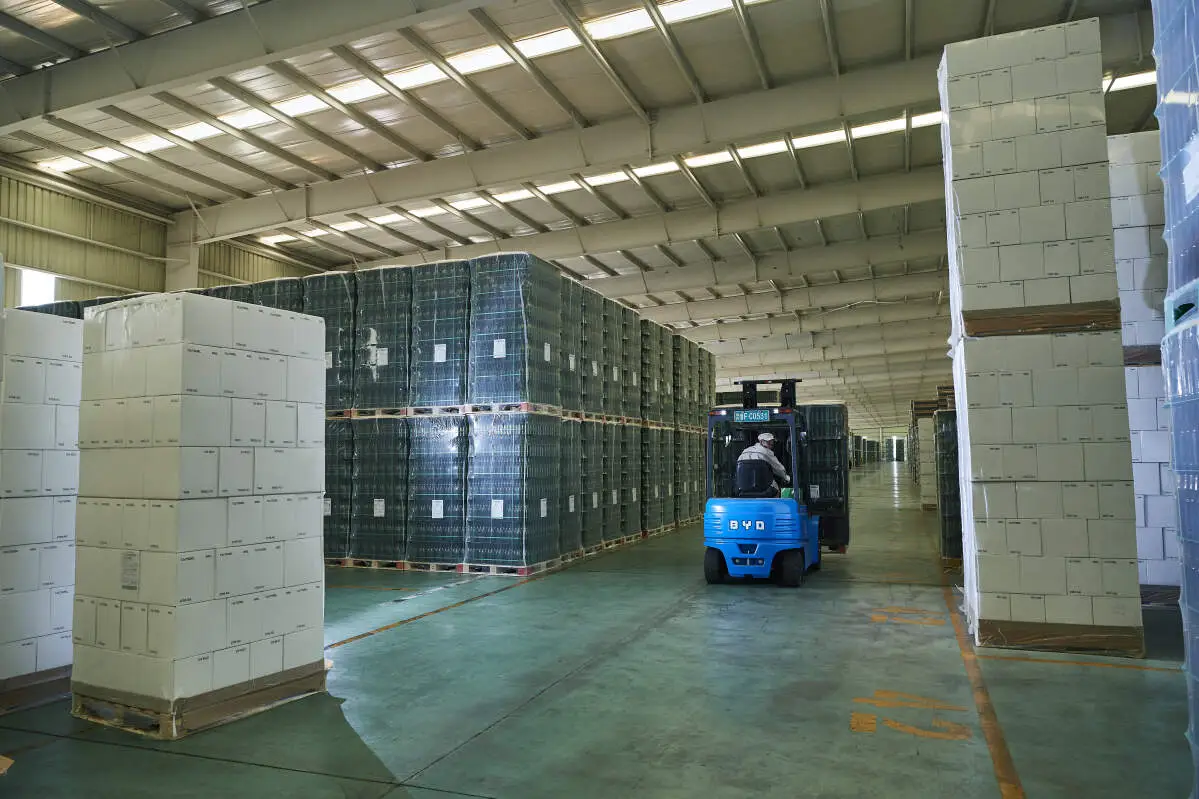
Die Umsetzung der Öl-für-Strom-Subventionspolitik hat die Bereitschaft der Hersteller gestärkt, Elektrostapler auf den neuesten Stand zu bringen(Figur1)

Telefon

WeChat

Whatsapp

E-Mail Adresse

We use cookie to improve your online experience. By continuing to browse this website, you agree to our use of cookie.

Cookies

Please read our Terms and Conditions and this Policy before accessing or using our Services. If you cannot agree with this Policy or the Terms and Conditions, please do not access or use our Services. If you are located in a jurisdiction outside the European Economic Area, by using our Services, you accept the Terms and Conditions and accept our privacy practices described in this Policy.
We may modify this Policy at any time, without prior notice, and changes may apply to any Personal Information we already hold about you, as well as any new Personal Information collected after the Policy is modified. If we make changes, we will notify you by revising the date at the top of this Policy. We will provide you with advanced notice if we make any material changes to how we collect, use or disclose your Personal Information that impact your rights under this Policy. If you are located in a jurisdiction other than the European Economic Area, the United Kingdom or Switzerland (collectively “European Countries”), your continued access or use of our Services after receiving the notice of changes, constitutes your acknowledgement that you accept the updated Policy. In addition, we may provide you with real time disclosures or additional information about the Personal Information handling practices of specific parts of our Services. Such notices may supplement this Policy or provide you with additional choices about how we process your Personal Information.


Cookies

Cookies are small text files stored on your device when you access most Websites on the internet or open certain emails. Among other things, Cookies allow a Website to recognize your device and remember if you've been to the Website before. Examples of information collected by Cookies include your browser type and the address of the Website from which you arrived at our Website as well as IP address and clickstream behavior (that is the pages you view and the links you click).We use the term cookie to refer to Cookies and technologies that perform a similar function to Cookies (e.g., tags, pixels, web beacons, etc.). Cookies can be read by the originating Website on each subsequent visit and by any other Website that recognizes the cookie. The Website uses Cookies in order to make the Website easier to use, to support a better user experience, including the provision of information and functionality to you, as well as to provide us with information about how the Website is used so that we can make sure it is as up to date, relevant, and error free as we can. Cookies on the Website We use Cookies to personalize your experience when you visit the Site, uniquely identify your computer for security purposes, and enable us and our third-party service providers to serve ads on our behalf across the internet.

We classify Cookies in the following categories:
 ●  Strictly Necessary Cookies
 ●  Performance Cookies
 ●  Functional Cookies
 ●  Targeting Cookies


Cookie List
A cookie is a small piece of data (text file) that a website – when visited by a user – asks your browser to store on your device in order to remember information about you, such as your language preference or login information. Those cookies are set by us and called first-party cookies. We also use third-party cookies – which are cookies from a domain different than the domain of the website you are visiting – for our advertising and marketing efforts. More specifically, we use cookies and other tracking technologies for the following purposes:

Strictly Necessary Cookies
These cookies are necessary for the website to function and cannot be switched off in our systems. They are usually only set in response to actions made by you which amount to a request for services, such as setting your privacy preferences, logging in or filling in forms. You can set your browser to block or alert you about these cookies, but some parts of the site will not then work. These cookies do not store any personally identifiable information.

Functional Cookies
These cookies enable the website to provide enhanced functionality and personalisation. They may be set by us or by third party providers whose services we have added to our pages. If you do not allow these cookies then some or all of these services may not function properly.

Performance Cookies
These cookies allow us to count visits and traffic sources so we can measure and improve the performance of our site. They help us to know which pages are the most and least popular and see how visitors move around the site. All information these cookies collect is aggregated and therefore anonymous. If you do not allow these cookies we will not know when you have visited our site, and will not be able to monitor its performance.

Targeting Cookies
These cookies may be set through our site by our advertising partners. They may be used by those companies to build a profile of your interests and show you relevant adverts on other sites. They do not store directly personal information, but are based on uniquely identifying your browser and internet device. If you do not allow these cookies, you will experience less targeted advertising.

How To Turn Off Cookies
You can choose to restrict or block Cookies through your browser settings at any time. Please note that certain Cookies may be set as soon as you visit the Website, but you can remove them using your browser settings. However, please be aware that restricting or blocking Cookies set on the Website may impact the functionality or performance of the Website or prevent you from using certain services provided through the Website. It will also affect our ability to update the Website to cater for user preferences and improve performance. Cookies within Mobile Applications

We only use Strictly Necessary Cookies on our mobile applications. These Cookies are critical to the functionality of our applications, so if you block or delete these Cookies you may not be able to use the application. These Cookies are not shared with any other application on your mobile device. We never use the Cookies from the mobile application to store personal information about you.

If you have questions or concerns regarding any information in this Privacy Policy, please contact us by email at . You can also contact us via our customer service at our Site.

