简体中文
简体中文 Deutsch
 日本語
日本語 한국어
한국어 Tiếng Việt
 Русский
 ไทย
ไทย Bahasa Indonesia
 Bahasa Melayu
 Filipino
 لالعربية
 Français
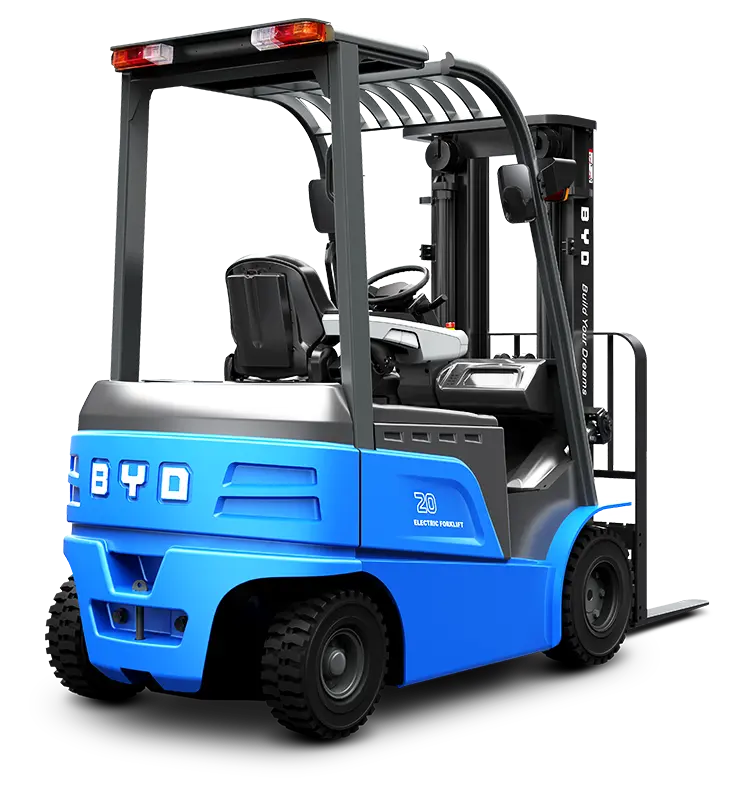
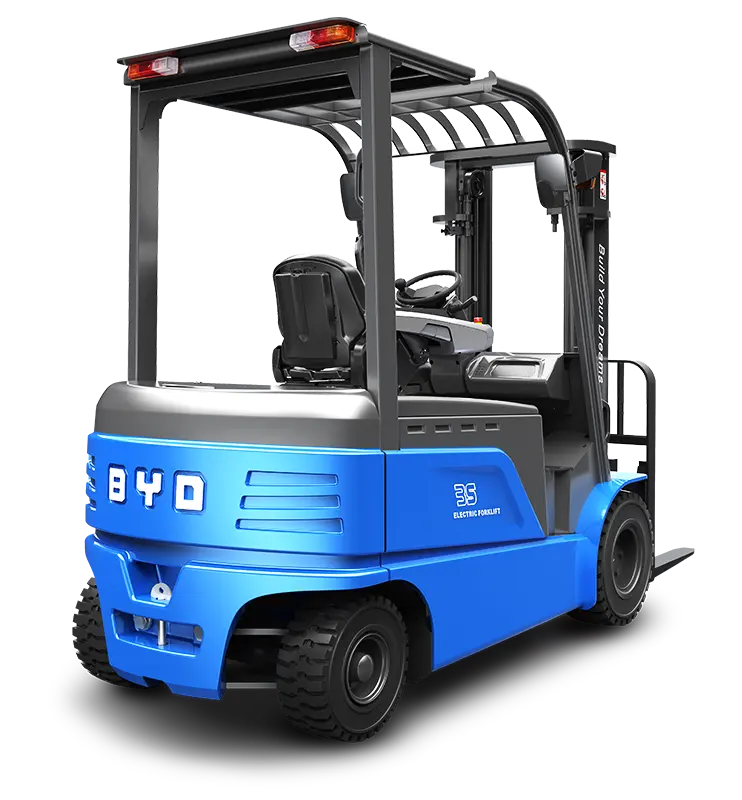
With the improvement of space utilization requirements in the warehousing industry, more and more high-level shelves with three layers and above are used. The three-section gantry 3.5-ton lithium-ion forklift truck suitable for such scenarios has also become one of the commonly used equipment. Today, from the perspective of standardized operation, share the key points and precautions of daily operations. The standard inspection before the high-level stacking of the three-section gantry 3.5-ton lithium-ion forklift truck is the basis for safe and efficient operation. On the one hand, it is necessary to check the vehicle itself. Check the operation manual in advance to confirm that the tire air pressure is uniform and meets the requirements. The battery power meets the needs of this operation and the return journey. The gantry chain is moderately elastic, the front and rear tilting rollers rotate without a clear graphics card. The response of the brake pedal and steering wheel is flexible and effective. The wear amount of the fork is within the normal allowable range. If the fork On the other hand, it is necessary to do a good job in environmental and cargo inspections to confirm that the width of the stacking channel matches the turning radius of the vehicle, that there are no suspended or temporarily stacked obstacles within the height range of the channel and the target cargo space, that the working area is fully lit, and that the ground is flat without water accumulation and oil pollution and slippery areas. At the same time, the weight of the stacked goods is checked, and the single piece is controlled within the rated load of the vehicle. The goods are stacked neatly without loose deformation. The center of gravity and the force center of the fork should be coincident as much as possible to avoid partial loading. The core operation steps of the high-level stacking of the three-section gantry 3.5-ton lithium- The first is to start and approach, confirm that there is no one around and sound a warning sound, slowly release the handbrake to start, plan the driving route in advance, slow down to walking speed in advance when approaching the target cargo space, and lift the fork slightly below the edge of the bottom tray of the cargo space in advance, keeping the body parallel to the cargo space and moderately spaced. The second is to lift and fine-tune, hang the corresponding working gear, slowly lift the fork at a constant speed, and stop when it rises to the bottom of the tray just aligned with the support structure of the cargo space. By fine-tuning the front and back tilt angle of the gantry and adjusting the body position slightly, ensure that the fork enters the tray fork hole completely and smoothly. Then stacking and stabilizing, observe the stability of the cargo space again, slowly lift the pallet to the target cargo height at a uniform speed, gently push the door frame to lean forward a little to make the pallet slightly closer to the shelf, and then lower the pallet at a uniform speed to confirm that the pallet is completely and smoothly placed on the cargo space beam or lower goods, gently pull the door frame back to a safe angle, and then completely lower the fork for a distance to ensure that the fork is completely separated from the pallet. Finally, exit and reset, slowly reverse at a uniform speed, continue to observe whether the fork will touch the cargo space or lower goods during the reversing process, completely lower the door frame after confirming the safe distance, turn off the warning tone and return to the designated parking area, pull the handbrake, and turn off the vehicle power. There are also a few safety operation tips for the high-level stacking of the three-mast 3.5-ton lithium-ion forklift. Operators must undergo professional training and obtain the corresponding operation qualification certificate. Wear a hard hat and non-slip work shoes when working. When the lifting height exceeds the top of the cab, it is forbidden to continue driving forward or turn quickly. It is forbidden to stand or pass under the lifting goods. It is forbidden to overload and eccentric loads. Park the vehicle in a designated ventilated and dry area to charge in time after operation. Do not over-discharge. Regularly check whether the appearance of the battery is damaged and whether the connecting cable is loose and oxidized.