简体中文
简体中文 Deutsch
 日本語
日本語 한국어
한국어 Tiếng Việt
 Русский
 ไทย
ไทย Bahasa Indonesia
 Bahasa Melayu
 Filipino
 لالعربية
 Français

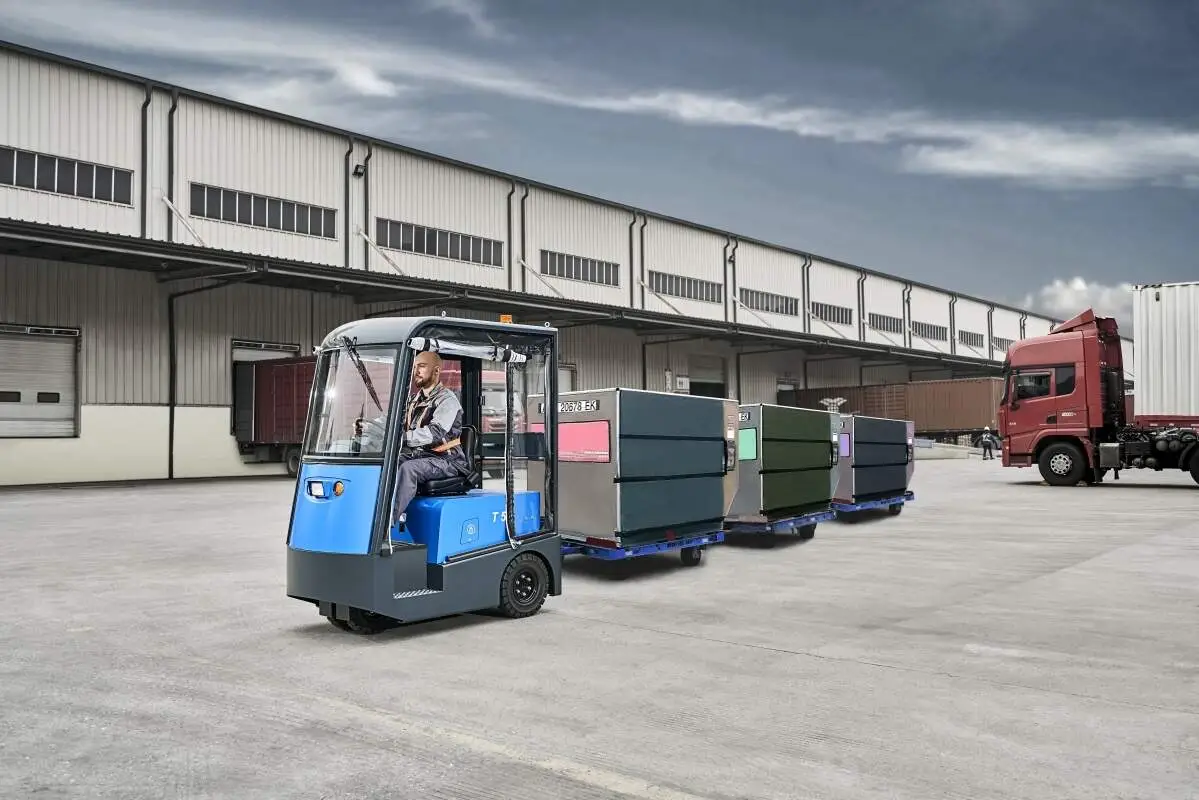
Adaptation prerequisites for handling in standard elevators
Universal size range of elevator space
In the internal material handling scene, the standard elevator is a common vertical transfer carrier, and its space size directly determines whether the electric forklift can enter and exit smoothly. At present, the internal net width of the standard freight elevator on the market is between 1.8 meters and 2.2 meters, the depth is usually 2 meters to 2.5 meters, and the internal net height is maintained at about 2.2 meters to 2.5 meters. These parameters are the basic reference basis for the electric forklift to adapt to the elevator. Before operation, the actual size of the target elevator needs to be confirmed in advance to avoid the inability to operate due to insufficient space.
Analysis of Blue Ant P15 Body Dimensions and Elevator Adaptation
Core body size parameters
As an electric forklift designed for narrow spaces, the body size of the Blue Ant P15 has been optimized. Under no load, the body width is about 1.2 meters, the body length without forks is about 2.1 meters, and the height of the whole vehicle is about 2.1 meters. At the same time, its minimum turning radius is about 1.5 meters, which is crucial for steering operations in the elevator and can effectively reduce the demand for space.
Practical Verification of Elevator Adaptation
Combined with the general size of standard elevators, a safety gap of 0.6 meters to 1 meter can be reserved between the body width of the Blue Ant P15 and the net width of the elevator to avoid scratching the elevator sidewall when entering and leaving. In terms of depth, the 2.1-meter body length is suitable for elevators with a depth of more than 2 meters. Just retract the fork completely and adjust the body angle to enter the elevator smoothly. The vehicle height of 2.1 meters is also lower than the net height of most standard elevators, and there will be no top collision.
Precautions for handling in the elevator
Safety requirements for space reservation
When carrying out handling operations in the elevator, it is necessary to ensure that there is sufficient safety clearance between the forklift and the inner wall and door of the elevator. Usually, at least 10 to 15 centimeters are reserved on the left and right sides, and 5 to 10 centimeters are reserved in the front and rear directions. This can not only prevent scratching equipment, but also ensure the safety of operators.
Size confirmation steps before the job
Before the formal operation, first measure the internal clear width, depth and height of the target elevator accurately, and compare it with the body parameters of the Blue Ant P15 one by one. Secondly, check whether the fork of the forklift is fully retracted and whether there are additional protruding parts in the body to ensure that the whole vehicle is in the minimum size state, and then try to enter the elevator.
Overall, the body size design of the Blue Ant P15 fully takes into account the spatial characteristics of standard elevators, which can better adapt to the handling needs of elevators in most scenarios, providing a practical solution for the internal narrow space material transfer of enterprises.