简体中文
简体中文 Deutsch
 日本語
日本語 한국어
한국어 Tiếng Việt
 Русский
 ไทย
ไทย Bahasa Indonesia
 Bahasa Melayu
 Filipino
 لالعربية
 Français
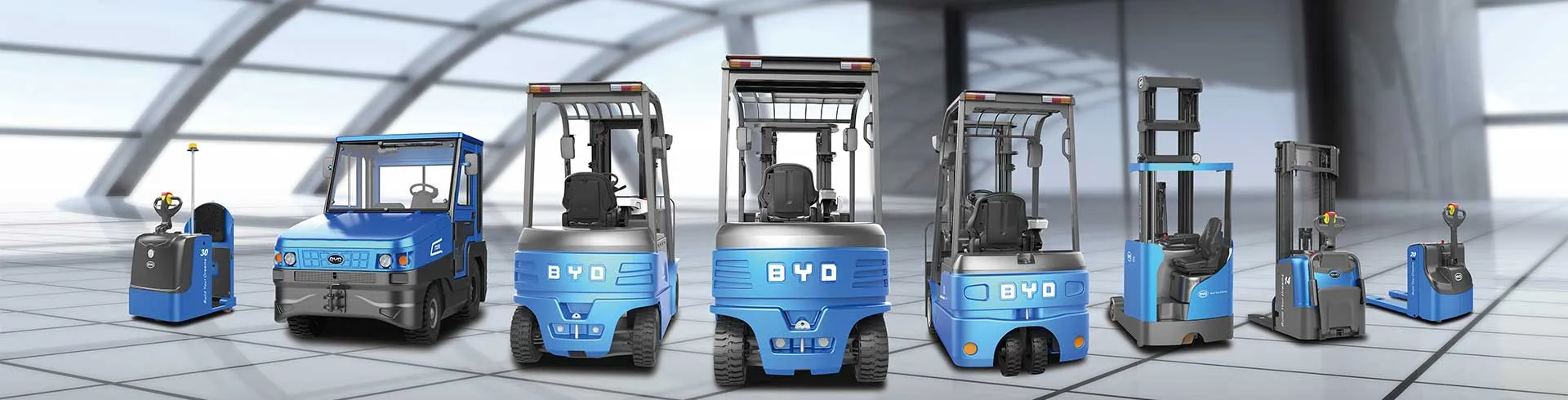
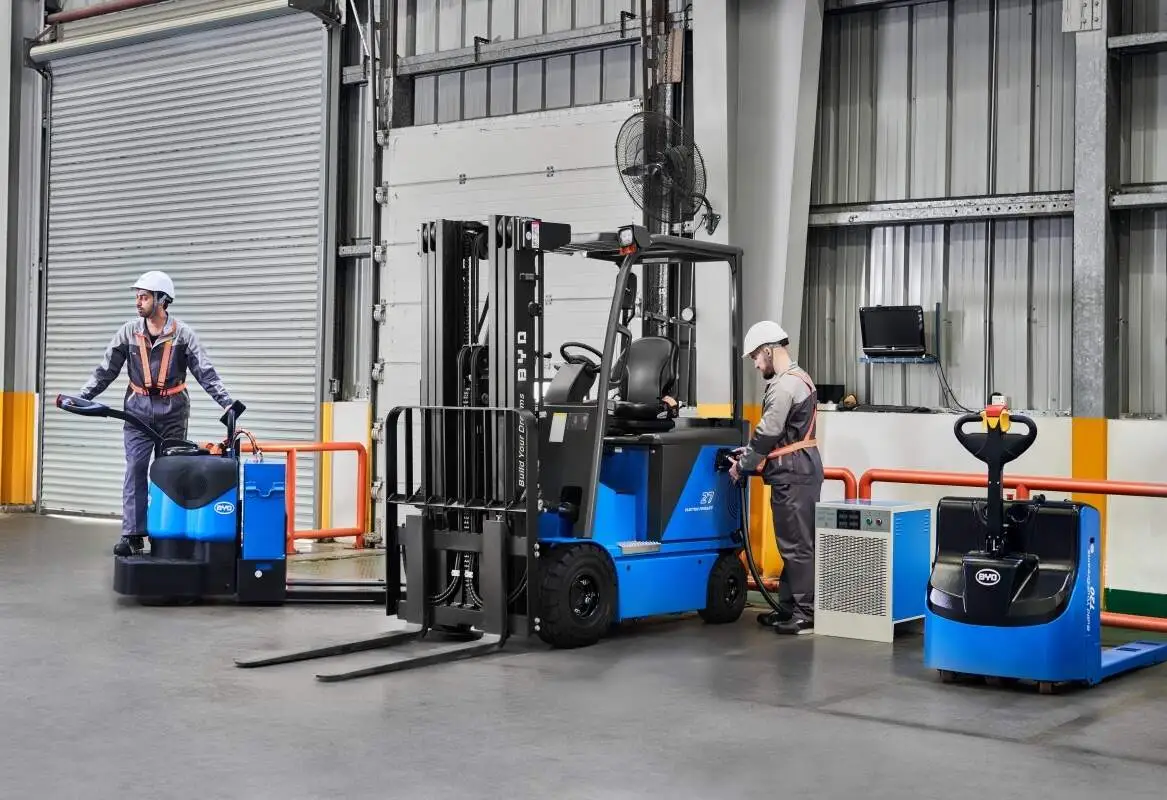
Second-hand three-point lithium-ion forklifts have attracted more attention from narrow-channel storage scenarios due to their strong site adaptability, zero emissions, and low cost of use. However, multi-dimensional testing is required when purchasing to reduce the risk of subsequent use.
The body structure inspection is the first step. First observe the overall appearance, check whether the main metal parts such as the frame, door frame, and top guard are obviously deformed, cracked, and corroded in a large area. Whether the solder joints are flat and firm, and whether there are traces of later repair welding repairs, which may affect the load-bearing and stability of the vehicle. Then check the wear degree of the seat, instrument panel, operating handle and other interior components, whether the seat is stable, whether the instrument panel display is clear and accurate, whether the buttons and dials of the operating handle are flexible, and there is no stagnation or failure. Then you can simply shake the body to feel whether the clearance of the door frame, steering wheel, and driving wheel is too large. Excessive clearance may require timely replacement of parts, increasing the cost of use.
The detection of the core component lithium battery is particularly important. First of all, you can check the battery usage records that come with the vehicle to understand the production date and the number of charges and discharges of the battery. Generally speaking, batteries with more charges and discharges and longer use time will have a reduced battery life. If there is no complete usage record, you can conduct a simple charge and discharge test on site. Observe the heating of the battery during charging, and see if there is any abnormal bulging or leakage. When discharging, you can drive a distance without load or load to see if the power drop on the dashboard is uniform and whether the vehicle power is stable. You can also check whether the connection cable of the battery is in good condition, and whether there is oxidation or loosening at the interface, which may affect the normal use and safety of the battery.
The detection of the drive steering system cannot be ignored. In terms of the drive system, after starting the vehicle, listen to whether the running sound of the motor is smooth, there is no harsh noise or abnormal vibration. When driving in gear, whether the shift is smooth, whether the power transmission is timely, and there is no obvious sense of frustration. In terms of the steering system, conduct steering tests in narrow channels or open fields to observe whether the steering is flexible and accurate, whether the steering radius conforms to the design range of the three-point forklift, and whether there is abnormal resistance or noise when steering in place. Check whether the steering wheel wears evenly, whether the pattern is clear, and the steering wheel with serious wear needs to be replaced in time.