简体中文
简体中文 Deutsch
 日本語
日本語 한국어
한국어 Tiếng Việt
 Русский
 ไทย
ไทย Bahasa Indonesia
 Bahasa Melayu
 Filipino
 لالعربية
 Français
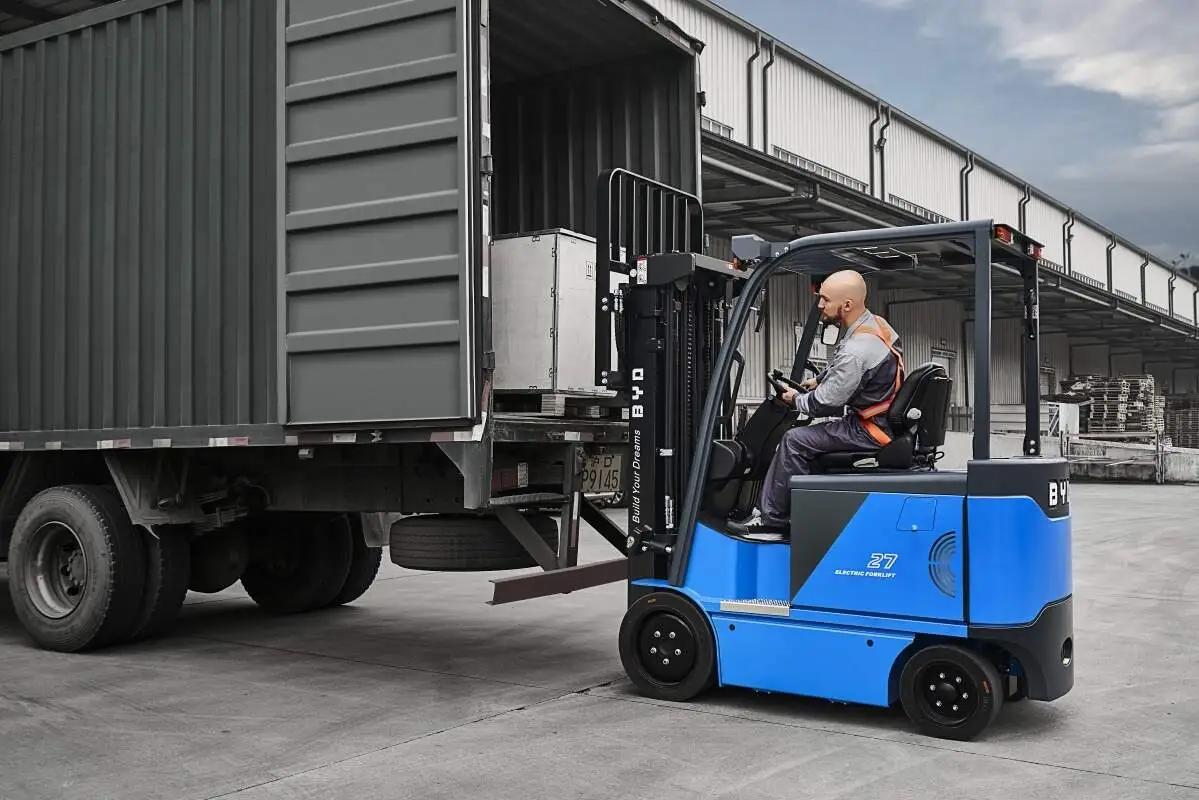
At present, in the process of foreign trade container warehousing and loading and unloading, forklifts with a load capacity of 1.5 tons are one of the commonly used main forces, which can adapt to the needs of most conventional industrial pallets and goods. With the improvement of global environmental protection and terminal access requirements, electric forklifts have gradually replaced internal combustion models as the mainstream choice. Among them, lithium-ion forklifts are more favored by export-related enterprises due to their stable battery life, fast charging and less maintenance. To make 1.5-ton lithium-ion forklifts operate efficiently in containers, it is first necessary to clarify the core elements of adaptation.
The core elements can be viewed from both the body size and the basic configuration. In terms of body size, the effective working width inside the standard general-purpose container is generally between 2.2 meters and 2.4 meters, and the internal height limit also has different specifications. It is more secure to choose a narrow body design with a body width of less than 2 meters for the conventional operation model; at the same time, the short wheelbase can reduce the steering radius, which is convenient for flexible adjustment of position in the limited space of the container. On the basic configuration, the fork spacing of the standard adapted pallet, the adjustable height of the gantry, and the optional side-shifting device are all practical designs to improve efficiency. Export models also need to know the access certification rules of the target market in advance.
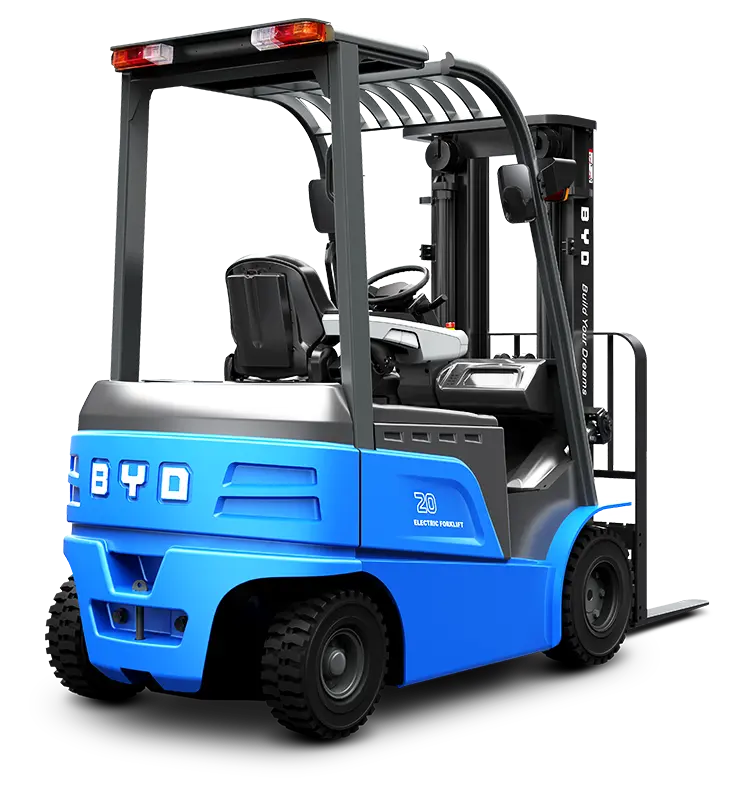
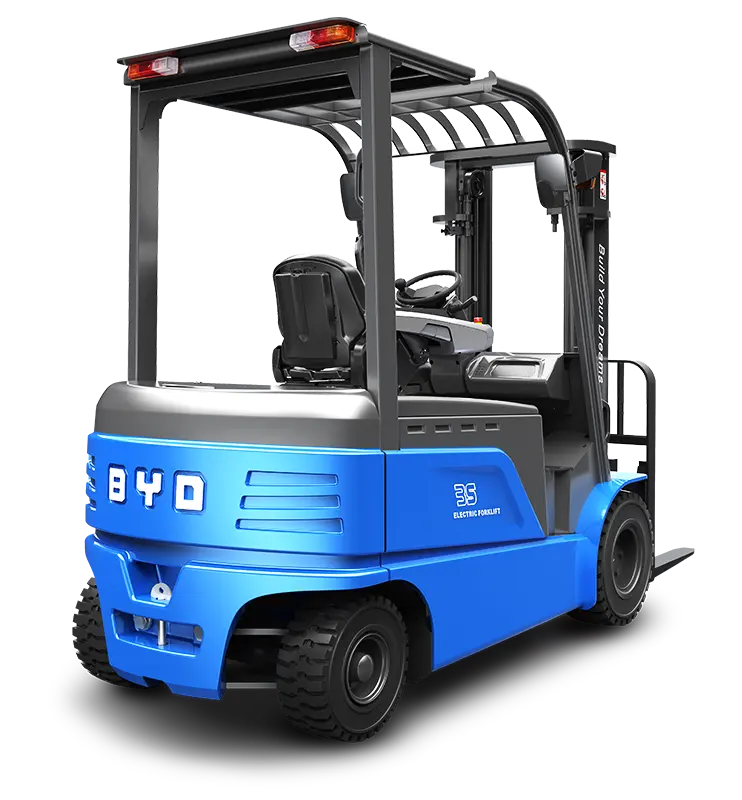
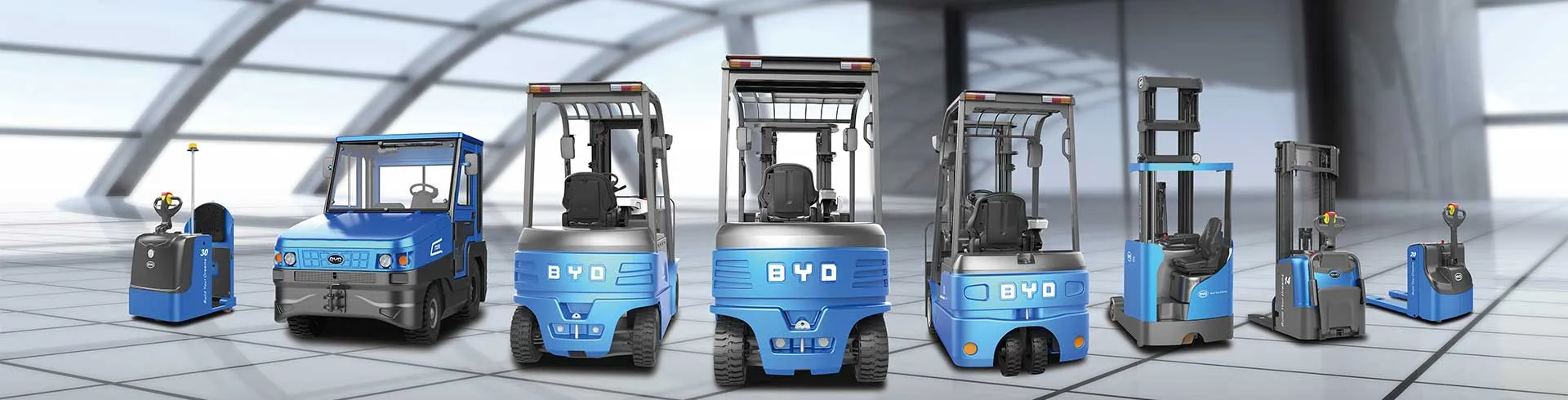
Based on these factors, there are several common suitable models to choose from on the market. The first is the narrow-body short-wheelbase counterweight 1.5-ton lithium-ion forklift, which is mostly controlled at about 1.9 meters in width. The steering flexibility brought by the short wheelbase can meet the loading and unloading and small-scale stacking needs of conventional containers. The counterweight design also makes cargo handling more stable, suitable for daily stacking scenarios with one or lower layers. The second type is the forward-moving 1.5-ton lithium-ion forklift. The gantry of this type of model can be retracted to within the top of the body, reducing the height of the whole vehicle. At the same time, the forward-moving function can adjust the position of the goods without changing the position of the body. The number of stacking layers is more than the counterweight type, which is suitable for the situation where the goods need to be piled up in the container but the space is limited. The third type is the three-point 1.5-ton lithium-ion forklift. This type of model usually has only three support points, and the steering radius is smaller than the first two. Some models can even achieve in-situ steering in a limited space, which has better adaptability to particularly narrow areas in the container or irregular cargo placement.
When selecting, enterprises can consider the weight specifications of their own container cargo, stacking height requirements, and the specific access conditions of the terminal and warehouse, and determine the suitable model after comprehensive consideration.